Showing posts with label Local topics. Show all posts

April 9, 2018

Bounty of the Sea and Bounty of the Mountains/海の幸、山の幸

I am currently living in my parents' house to support them, which happens to be at the heart of the Boso Peninsula. Yesterday, I got a yama no sachi (lit. happiness of the mountains; bounty of the mountains) from a neighbor, moso bamboo, as well as an umi no sachi (lit. happiness of the sea; bounty of the sea) from another neighbor, wakame seaweed.
現在、両親をサポートするため両親の実家に住んでいますが、実家は房総半島の真ん中にあります。昨日は、近所の人から山の幸、孟宗竹(もうそうちく)を頂き、 別の人から海の幸、若布(わかめ、ワカメ)を頂きました。
 
A common way to prepare a bamboo shoot is to boil it in a pot of water plus some rice bran or "kome no togi jiru" (milky water resulting from washing white rice before cooking). Unfortunately, I had no rice bran in the kithen, and I had no kome no togi jiru because I had planned to eat leftover rice the next morning. So, I tried preparing these bamboo shoots with plain tap water. The neighbor suggested boiling them for an hour or so, but I shortened the cooking time to about 30 minutes or so.
This morning, I tasted the bamboo shoots and found they were very tasty!
筍(竹の子、たけのこ、タケノコ)を下ごしらえする一般的な方法は、水に米ぬかを少し入れて、または米のとぎ汁で煮ることですが、残念ながら、家には米ぬかはなく、また、翌朝は残りごはんを食べる予定だったので、米のとぎ汁もありませんでした。そこで、ただの水道水で下ごしらえしてみました。筍を下さった方から、1時間程度煮るよう言われましたが、30分程度に短縮しました。
今朝、筍を味見すると、とても美味しかったです!
 
I had to use one very large pot and another large pot.
極大の鍋一つと大きな鍋一つ使いました。
After boiled:
茹でた後:
Wakame seaweed:
若布: 
Still brown.
まだ茶色です。
 
Preparing wakame is simple. Rinse and put in a pot of boiling water. It changes its color to vivid green in an instant. Drain and cool with tap water.
若布の下ごしらえは簡単です。洗って、沸騰したお湯に入れます。一瞬で鮮やかな緑色に変わります。お湯を切り、水道水で冷やします。 
Shown on the right in the photo above are hard stems of the wakame.
上の写真の右側に見えるのは、若布の硬い茎です。 
 
***
My mother died of cerebral infarction at the age of 84 on March 7. Nothing makes you sadder than to lose your beloved mom.
3月7日、母が脳梗塞で亡くなりました。84歳でした。愛する母を失うことほど悲しいことはありません。

August 24, 2017

Uni in a Milk Bottle/牛乳瓶入りのウニ

Uni is a Japanese word for sea urchin or sea urchin gonad.
ウニとは、sea urchinやsea urchinの性腺、生殖腺のことです。

I learned about uni in a milk bottle from Yamako Katagiri Sengyo Ten, a fishmonger located in Kamaishi city, Iwate prefecture, back in 2009, as I described here. My family had the uni as toppings for nigiri sushi like this. At that time, I vaguely assumed that selling uni in such a unique style was the fishmonger's idea.
牛乳瓶入りのウニについては、ここに書いたように、2009年に岩手県釜石市にある鮮魚店、「ヤマコー片桐鮮魚店」さんから知りました。そのウニはここに書いたように、家族でに握り寿司のネタとして食べました。その頃は、このユニークなウニの売り方はこの鮮魚店のアイディアなのかなあと漠然と思っていました。

The August 10, 2017 edition of the famous TV show, Himitsu no Kenmin Show, which featured uni in a milk bottle, has clarified everything about this product. You can still watch this edition of the show by clicking dailymotion video, although it has no subtitles in English.
2017年8月10日のテレビ番組「秘密のケンミンSHOW!」は、牛乳瓶入りのウニを取り上げており、これで、このウニに関してすべて明らかになりました。dailymotion videoをクリックすれば、その番組を見ることができます(英語の字幕はありませんが)。

Here are some bits of information that I have learned from the edition:
その番組で知ったことをいくつか紹介します。

It is said that putting fresh uni in a milk bottle started in Yamada machi (town), Iwate prefecture about 50 years ago. Before then, uni were sold in bags to customers nearby. To deliver them to distant customers, a more sturdy container was necessary. One day, a certain uni shop put uni in an empty milk bottle that happened to be there. Uni in a milk bottle has become popular throughout Iwate prefecture ever since because the milk bottle can be tightly sealed, keeps the uni from disintegrating during transport, and is transparent, making the uni look beautiful.
生ウニを牛乳瓶に入れるのは、岩手県の山田町で約50年前に始まったと言われています。それまでは、ウニは袋入りで近場で売られていたが、遠くに出荷するにはもっとしっかりした容器が必要でした。ある時、とあるウニ屋が、たまたまあった牛乳の空き瓶にウニを入れ、その後、岩手県各地に広まったそうです。牛乳瓶は、密閉できる、運搬中に身が崩れるのを防げる、透明でウニがきれいに見えるそうです。

Uni in a milk bottle are additive free. To have uni in a milk bottle, you need not use soy sauce for seasoning, because the bottle contains sterile seawater, which makes the uni taste sweeter to the taste buds. (Before having the uni, I drained them. I should have done that!)
牛乳瓶入りのウニは無添加です。牛乳瓶入りのウニを食べるのに、しょう油は要りません。瓶には殺菌した海水が入っていて、それでウニがより甘く感じられます。(私は食べる前に海水を切ってしまいました!)

Uni arranged neatly in a wooden container are called ita uni. Usually, alum is used to keep such uni from disintegrating.
木製の容器にきれいに並んだウニは板ウニと呼ばれ、通常、身が崩れるのを防ぐためミョウバンが使われています。
Images of ita uni/板ウニのイメージ

One milk bottle can contain about 30 large pieces (gonads) or 50 small ones. Kita murasaki uni (Northern sea urchin) is a popular variety in Iwate prefecture.
牛乳瓶一本に、大きいウニなら30粒(生殖腺)、小さいウニなら50粒入るそうです。岩手県では、キタムラサキウニが一般的だそうです。

In Iwate prefecture, uni is called kaze.
岩手県では、ウニは「かぜ」と呼ばれているそうです。

***
My father's birthday is in late August, when uni are not in season. I was thinking about presenting him some cheap uni imported from Chile, available from a local supermarket, just when I received an email from Yamako Katagiri Sengyo Ten, saying that they would get uni after a long interval. I immediately placed an order for two bottles. They have arrived today.
父の誕生日は8月下旬で、ウニは旬ではありません。父には、地元のスーパーで買えるチリ産の安いウニを贈ろうかと思っていたのですが、ちょうどその時、ヤマコー片桐鮮魚店さんから、ウニが久しぶりに入荷するというメールを頂きました。すぐにウニを二瓶(ふたびん)注文しました。今日届きました。


Great present for my father's 89th birthday!
父の89歳の誕生日へのすごいプレゼントです!

Edited to add some photos on Aug. 27:
8/27、写真を追加:

On the morning of August 25, my father had half the uni in one bottle for breakfast, with vinegared rice. Here is a photo of the remaining half.
8/25の朝、父は朝食に一瓶の半分のウニを酢飯と一緒に食べました。残りの半分の写真です。
He had the remaining half for lunch the same day.
残りの半分は同じ日の昼食に食べました。

The expiration date of the uni was August 27. Here is a photo of the uni in the other milk bottle on the morning of August 27.
ウニの賞味期限は8/27でした。8/27の朝の、もう一つの牛乳瓶入りのウニの写真です。
 
Just like he did with the first bottle, my father had the half of it for breakfast with vinegared rice.
最初の瓶と同様、父は半分を朝食に酢飯と一緒に食べました。

December 6, 2016

Otoji/おとうじ

My father comes from Nagano (aka Shinshu). Like any other area in Japan, Shinshu has some wonderful local dishes, one of which is otoji. There are several variations of this local dish, and my father's version uses hiyamugi (wheat noodles thicker than somen and thinner than udon) rather than soba (buckwheat noodles) and uses soy sauce (and mirin) rather than miso.
父は長野(信州)出身です。日本の他の地域同様、信州には、素晴らしい郷土料理があります。その一つが「おとうじ」です。この料理にはいくつかバリエーションがありますが、父の「おとうじ」は、そばではなく冷麦(ひやむぎ)を使い(冷麦とは素麺(そうめん)より太く、うどんより細い小麦の麺)、味噌ではなく、しょう油(とみりん)を使います。

I've been familiar with this local dish since childhood, but this is the very first time that I have made otoji.
この郷土料理は子供の頃から知っていますが、作るのは初めてです。 
Many hiyamugi products contain some noodles colored green and pink.
冷麦では、緑やピンクに色付けした麺が入っている製品が多いです。
I wanted to arrange the boiled hiyamugi beautifully into individual coils, but I was just unable to.
茹でた冷麦を美しくコイル状にしたかったのですが、ちょっとできませんでした。
The soup contains daikon, Chinese cabbage, carrot, abura age, naga negi, and three mushrooms (enoki, nameko, and shiitake), and is seasoned with instant dashi and soy sauce (no mirin, because my father doesn't like the soup to be sweetened).
汁には、大根、白菜、人参、油揚げ、長ネギ、3種のきのこ(えのき、なめこ、しいたけ)を入れ、出汁の素としょう油で味付けしました(父は汁を甘くするのは嫌いなので、みりんは入れていません)。
To have otoji in a proper way, you need a wooden basket with a handle called toji kago. Surprisingly, I found that my father did not have a single toji kago!
おとうじを正しく食べるには、柄のついた竹製のかご(とうじかご)が必要ですが、驚いたことに、父は、とうじかごを持っていませんでした!

So, the proper way to have otoji is like this: You put a coil of boiled hiyamugi in the toji kago, and dip the toji kago into the pot of soup for a while, transfer the hiyamugi to a bowl, and put some soup and some of the ingredients to the bowl.
というわけで、正しいおとうじの食べ方は、次の通りです:コイル状にした茹でた冷麦をとうじかごに入れ、かごを汁にしばらく漬けて、冷麦をお椀に移し、汁と具を少しお椀に入れます。

These and other YouTube videos may clarify how to eat otoji properly:
次のようなYouTubeのビデオでおとうじの正しい食べ方が分かると思います。
Video 1
Video 2

December 5, 2016

Obitsu Ten, Mirai, JA Kimitsu/JAきみつ 味楽囲(みらい) おびつ店

Today, on my way back home from hospital, I dropped by Obitsu Ten, Mirai, JA Kimitsu.
今日は、病院の帰り道、JAきみつ 味楽囲(みらい) おびつ店に寄ってきました。

On the premises of this farmers' market, ground water pumped up from a depth of 250 m is available for free.
この直売所の敷地では、250mの深さから汲み上げた地下水が無料でもらえます。

There were more people that I had anticipated, many of whom seemed local people. Local people know where they can get good water!
予想以上に人がいて、多くは地元の人たちのようでした。地元の人はどこでおいしい水が手に入るか知っているようです!
Some of the items I bought at the farmers' market:
Cans of soy milk, dried shiitake, yose dofu (< tofu), and hana (flower) zushi (< sushi)
直売所で買った物の一部:
缶入りの豆乳、干ししいたけ、寄せ豆腐、花寿司
Naturally, I got 4 liters of the ground water described above.
もちろん、上述した地下水も4リットルもらいました。
Close-ups:
クローズアップ:


Hana zushi (flower sushi) was very beautiful, and tasty, too.
花寿司はとてもきれいで、おいしかったです。

October 3, 2016

Shinmai no Jin Festival in Shiozawa/塩沢の新米の陣(しんまいのじん)

On October 2, a small festival, "Shinmai no Jin" was held on Bokushi Dori (Stree) in the Shiozawa area of Minami-Uonuma city.
Shinmai = Newly harvested rice
no = 's
Jin = Camp, territory, etc.
10月2日、「新米の陣」という小さなお祭りが南魚沼市塩沢地域の牧之通りで行われました。
Mushroom soup was offer for 200 yen per bowl.
きのこ汁は一杯200円。 
It used to be offered free of charge, though.
昔は無料だったのですが。
 
Newly harvested rice was offered free of charge.
新米は無料でした。 


Koshihikari rice produced in Minami-Uonuma, naturally!
もちろん、南魚沼産のコシヒカリです! 


August 31, 2016

Nagaoka's Italian Made in a Simple Way/簡単な方法で作った長岡のイタリアン

In Nagaoka city, Niigata prefecture, there is a thing called "Italian". It's essentially yakisoba (fried noodles) with meat source poured over it.
新潟県の長岡市には、「イタリアン」というものがあります。基本的には、焼きそばにミートソースをかけたものです。

I have posted a photo of a fast food version of it here (fourth photo).
I have also posted photos of a home-made version, made from a store-bought pack here.
ファーストフード店のイタリアンの写真をここに載せました(4番目の写真)。
また、市販のパックで作った手作りのイタリアンの写真をここに載せました。

For lunch today, I have made my first attempt to make it at home, using spaghetti.
First, I needed to turn spaghetti into ramen noodles, using my recipe.
今日の昼ご飯には、スパゲティを使って家で作ることに初めて挑戦しました。
まず、私のこのレシピでスパゲティをラーメンの麺に変えました。
 
I was a bit worried because the liquid was not very yellowish.
液があまり黄色ぽっくないのでちょっと心配しました。
I transferred the contents (spaghetti and water) of the container to a frying pan. I thought that I could turn the spaghetti into ramen noodles simply by heating.
容器の中身(スパゲティと水)をフライパンに移しました。単に加熱すれば、スパゲティをラーメンの麺に変えられると思いました。 
I was wrong. Within one minutes after the start of heating, the liquid turned gluey.
間違っていました。1分もたたぬうちに液は糊状になってしまいました。 
I had add some hot water from the thermos to boil the spaghetti.
魔法瓶にお湯を少し足して、スパゲティを茹でました。 
I then rinsed it and drained.
水洗いして、水を切りました。 
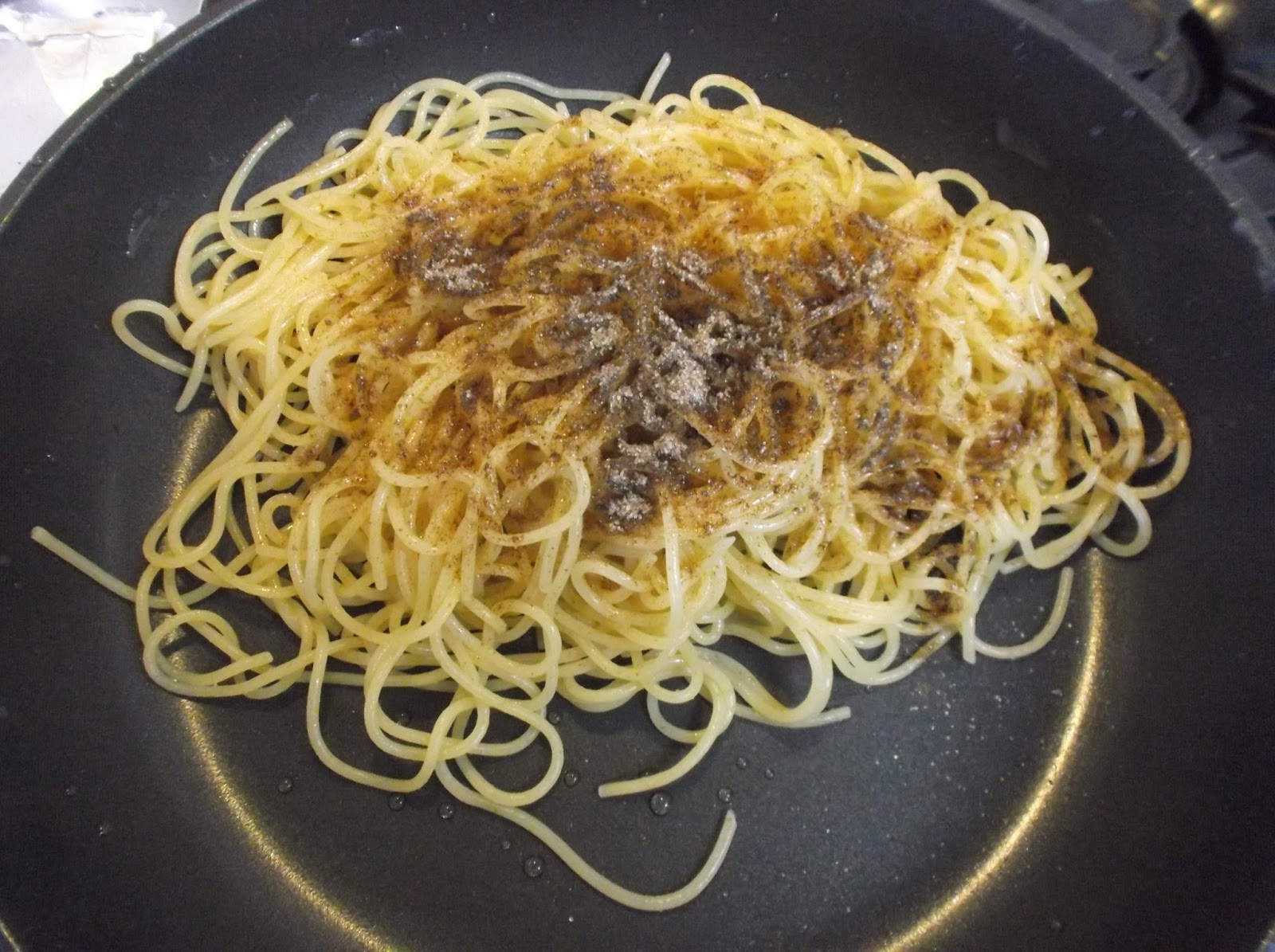
I was planning to use chuunou sauce (a type of Worcestershire sauce), but luckily, I found leftover yakisoba sauce in the fridge.
中濃ソースを使おうと思っていたのですが、運よく、冷蔵庫に焼きそばソースの残りがありました。 
I sprinkled it over the noodles,
麺に振りかけて、  
mixed, and heated for some time.
まぜて、しばらく加熱しました。
The noodles were already very tasty, even without meat sauce.
麺は、ミートソースなしでも、すでに美味しかったです。

I transferred the noodles to a plate,
麺をお皿に移し、
poured some store-bought meat sauce.
市販のミートソースをかけました。 
Because the meat sauce was fridge-cold and the noodles needed some additional heating, I wrapped the plat with plastic wrap and microwaved it for 1 minute.
ミートソースは冷蔵庫に入れてあったし、麺ももう少し加熱が必要だったので、ラップをして、電子レンジで1分加熱しました。 
Voila!
できました! 

Very tasty indeed!
本当に美味しかったです!