Showing posts with label Mushimono (steamed dishes). Show all posts

July 5, 2013

Tofu Shumai/豆腐のシューマイ

As part of supper last night, my wife made this:
昨日の夕飯には、妻がこれを作りました:
She said they were tofu shumai, which she had learned from the TV show, Miracle Recipe. Unlike common recipes, this particular one calls for tofu (momen tofu), but what differentiates it from others is that it says to cut shuman skin into thin stripes and coat the filling with them.
テレビ番組ミラクルレシピで知った豆腐のシューマイ(シュウマイ、しゅうまい、焼売)だそうです。普通のレシピと異なり、豆腐(木綿豆腐)を使うのですが、他のレシピと最も異なる点は焼売の皮を細切りにして、それを具をつける点です。

I personally don't think this recipe is a miraculous one. It calls for as many as 60 sheets of shumai skin to make four shumai! That translates into 15 sheets per shumai! Isn't that crazy?
My wife used only one bag of shumai skin.
私としてはミラクルなレシピとは思いません。焼売4個作るのに焼売の皮を何と60枚も使います。1個当たり15枚ということです。馬鹿げてませんか?
妻は焼売の皮を一袋使っただけですが。

June 9, 2013

Nikuman/肉まん

Today, I made nikuman after lunch.
nikuman = niku + man
niku = meat
man < manju
Nikuman is one type of chuka (Chinese-style) man. Anman is another. Other types, such as pizza man and curry man, have gained popularity.
The term nikuman is used in Kanto (Eastern Japan), while the term butaman (buta = pig) is used in Kansai (Western Japan). This reflects the fact that meat is pork by default in Kanto, while it is beef by default in Kansai.
    
今日は昼ごはんの後に肉まんを作りました。
肉まんとは、中華まんの一種です。あんまんもそうです。ピザまんやカレーまんなど他の種類も人気があります。
関東では「肉まん」と言い、関西では豚まんと言います。これは、関東で肉と言えば豚肉、関西では牛肉を指すからです。
 
Ingredients for 6 nikuman
 
Dough:
300 g cake flour
2 tbsp sugar
3 1/2 tsp baking powder
150 ml lukewarm water
 
Filling:
50 g ground pork
(I used 200 g!)
2 dried shiitake
(Sadly, I had none in the storage space!)
10 cm naga negi
2 tsp sesame oil
1 tsp potato starch
1 tsp sake
Pinch of sugar
Small amount of salt
 
Directions:
(The original recipe is more complicated. I have a bad habit of simplifying recipes.)
1. In a mixing bowl, combine flour, sugar, baking powder, and water. Knead and make into dough.
2. In a mixing bowl, combine ground pork, reconstituted shiitake, finely chopped naga negi, sesame seed, potato starch, sake, sugar and salt. Make into six balls.
3. Divide dough into six equal balls. Make each ball into a disc 8 cm in diameter, with the center thicker than the circumference.
4. Fill each disc with a pork filling ball. Close the disc.
5. Place each bun on a sheet of parchment paper, and steam in a steamer on high heat for 15 min.
肉まん6個分の材料

生地:
薄力粉 300 g
砂糖 大さじ2
ベーキングパウダー 小さじ3 1/3
ぬるま湯 150 cc
 
具:
豚ひき肉 50 g
(私は200 g使いました!)
干しシイタケ 2枚
(悲しいことに、収納スペースにありませんでした!)
長ネギ 10 cm
ごま油 小さじ2
片栗粉 小さじ1
酒 小さじ1
砂糖 一つまみ
塩 少々
 
作り方:
(元のレシピはもっと複雑です。私はレシピを簡素化してしまう悪い癖があります。
1. ボールに薄力粉、砂糖、ベーキングパウダー、水を入れ、こねて、生地にします。
2. 別のボールに豚ひき肉、戻したシイタケ、刻んだ長ネギ、ごま油、片栗粉、酒、砂糖、塩を入れ、6個のボールを作ります。
3. 生地を6等分し、ボールにします。それぞれ、周囲より中央が厚い直径8 cmの円形にします。
4. 円形それぞれで具のボールを包み、円形を閉じます。
5. クッキングシートに載せ、蒸し器で強火で15分蒸します。
 
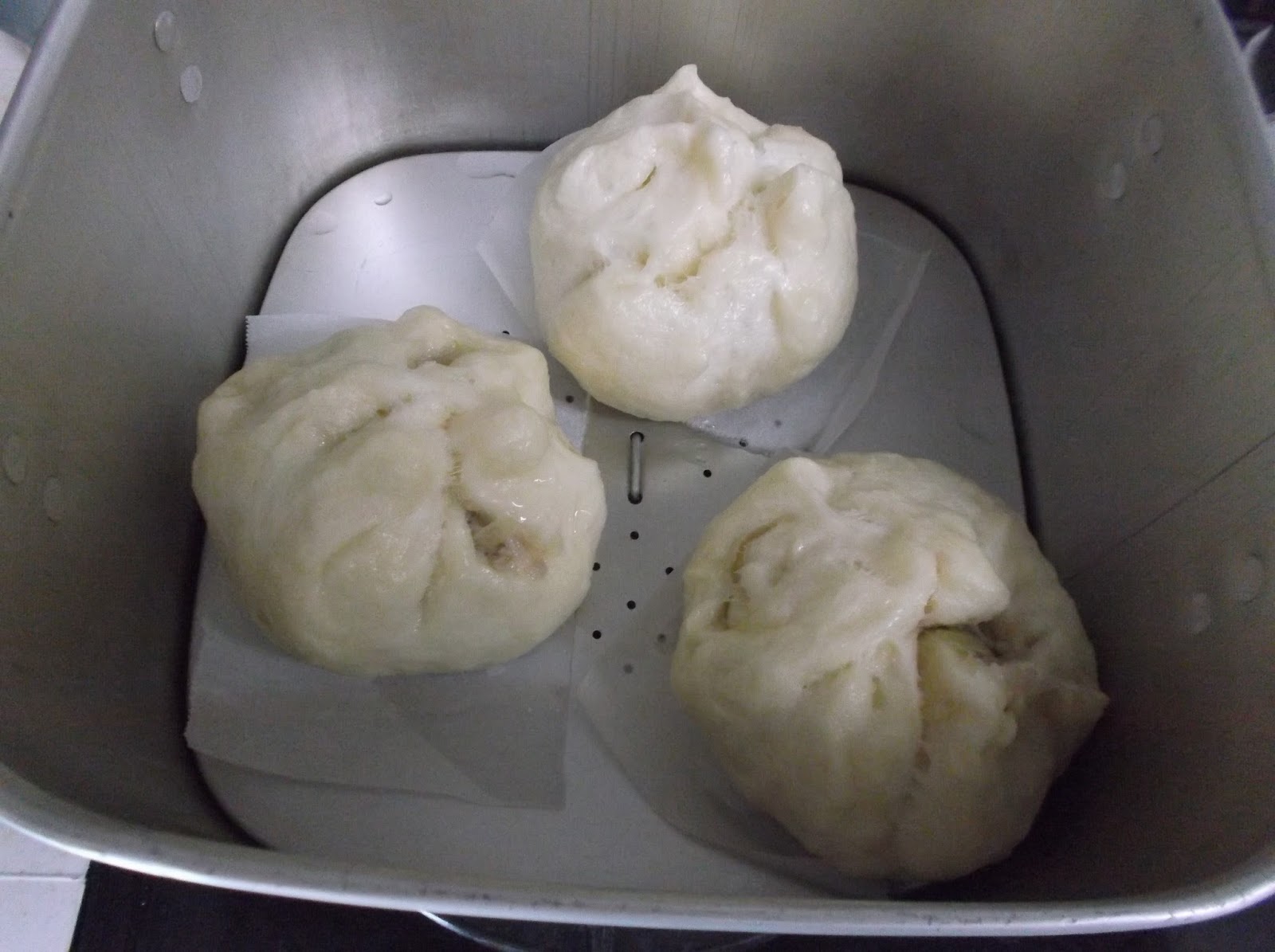
My steamer was not big enough to place six buns at a time, so I steamed the three buns at a time.
家の蒸し器は6個一度に入らないので、3個づつ蒸しました。
Sorry for the ugly shapes. I'm not very good at these things...
醜い形ですみません。こういうのはあまり得意ではないので...。 
 
I had one immediately. The filling was very lightly seasoned, so I poured some soy sauce. The dough tasted very good.
すぐに一個食べました。具は薄味だったので、しょう油を少しかけました。生地はとても美味しかったです。 

June 24, 2008

Chawanmushi/茶碗蒸し


It was a slow day today, so I decided to make chawanmushi for supper, and started making it aroud four o'clock.
I searched the fridge for appropriate ingredients, and decided to use fake crab meat, chicken breast, menma (seasoned bamboo shoots), and shiitake.
今日は暇な一日だったので、夕飯に茶碗蒸しを作ろうと思い、4時頃、作り始めました。
適当な食材はないかと冷蔵庫の中を探して、かにカマ、鶏の胸肉、メンマ、シイタケを使うことにしました。

The basic recipe is:
2 large eggs
400 ml dashi
1 tsp soy sauce
1 tsp mirin
Touch of salt
基本のレシピーは:
卵L2
出汁400 ml
しょう油小1
みりん小1
塩少々
This recipe will result in an egg-to-dashi ratio of 1:4, which is common for chawanmushi, but I adjusted the recipe for a ratio of 1:3 by using 3 eggs (180 ml when broken and beaten) and 540 ml of dashi. I had found a site on which the chef said that she preferred a 1:3 ratio, and I wanted to try it.
このレシピーでは、卵と出汁の割合は1:4になり、これは茶碗蒸しでは一般的です。しかし、私は卵3つ(割って溶くと180 ml)と出汁を540 mlを使って、割合を1:3にしました。1:3の割合のほうが好きというシェフのサイトを見つけ、それを試したかったからです。

Cut chicken breast into small chunks and season with soy sauce and sake.
鶏の胸肉は小さく切り、酒としょう油で味付けします。

Combine beaten eggs with dashi and seasonings, mix well, and strain before pouring into individual cups.
溶き卵と出汁と調味料を合わせて、よく混ぜ、漉してから、各茶碗に注ぎます。

First, set the stove to high. When the steamer comes to a boil, keep heating on high heat for 2 min. and then turn the stove to low. Keep heating for another 10-13 min.
最初に強火にします。沸騰したら、強火のまま2分間加熱します。それから弱火にします。さらに10~13分加熱します。

Top each cup with mitsuba.
各茶碗にミツバをのせます。