November 3, 2010

Mushroom Booth in Shiozawa Sangyo Matsuri (Industrial Fair)/しおざわ産業まつりでのキノコのブース

In Japan, November 3 is Culture Day, a national holiday. Every year*, on this particular day, Shiozawa Sangyo Matsuri (Shiozawa Industrial Fair) is held on the premises of Imaizumi Museum.
* It's sad to say that this fair, the 20th this year, will end this year.
日本では、11月3日は文化の日で、国民の祝日です。毎年*、この日に、しおざわ産業まつりが今泉博物館の敷地で行われます。
* 残念なことに、今年20回目のこのお祭りは今年で終了します。

Backyard of the Museum:
The upper part of the tower on the right reads, "You are in Uonuma", the middle right part reads, "Shiozawa", and the middle left part reads, "Koshihikari". The bottom part represents ears of rice.
You can also see Mt. Iiji (1,111.8 meters in height), also known as Ueda Fuji, on the left.
博物館の裏庭:
右側の塔の上部には「ここは魚沼」、中央の右側には「しおざわ」、中央の左側には「コシヒカリ」と書かれています。下の部分は稲穂を表しています。
飯士山(いいじさん)(標高1,111.8メートル)、別名「上田富士」(うえだふじ)も左側に見えます。


It was raining today, and I didn't particularly want to come to this fair, but I had an important mission: taking photos of the mushroom booth for my son, who couldn't make it to this fair because of a cold. As soon as I reached the site, I headed for the booth.
今日は雨が降っていて、私は特にこのお祭りに行きたくはなかったのですが、重要な任務がありました。風邪のためこのお祭りに来れない息子のためにキノコのブースの写真を撮る、ということです。会場に着くと、真っ先にそのブースに向かいました。


I took this test, answered all ten questions right, and got a prize (a pack of enoki).
このテストを受け、10問全て正解して、賞品(エノキ1パック)をもらいました。


Here are many of the photos of edible and poisonous mushrooms that I took.
私が撮った食用、毒キノコの写真です。

Kuri take in the middle:
中央にクリタケ:


Hiratake (oyster mushroom) in the middle bottom and tsukiyo take in the left bottom:
中央・下にヒラタケ、左下にツキヨタケ:

Tsukiyo take is the most common source of mushroom poisoning in Japan.
日本では、ツキヨタケがキノコによる中毒の最も多い原因です。

Muki take in the right bottom and shiitake in the middle bottom:
右下にムキタケ、中央・下にシイタケ:


Hon shimeji on the right side of the upper left tray:
左上のトレイの右側にホンシメジ:

One of my son's dreams is to gather hon shimeji, which is hard to find.
息子の夢の一つは、見つけにくいホンシメジを採ることです。

Nameko in the center of the photo:
写真の中央にナメコ:


Booth of an izakaya called Oodaiko (Big Drum):
大太鼓という居酒屋の売店:

Man and wife and their daughter:
夫婦とその娘さん:

Their daughter happens to be an acquaintance of mine. I bought four korokke (Japanese croquettes) for 100 yen each.
娘さんは私の知り合いです。コロッケを4つ(一つ100円)買いました。

Inside Imaizumi Museum, Ojiya-chijimi and Echigo-jofu were on display. In Japan, they are designated as important intangible cultural properties. They are also registered in UNESCO's list of Intangible Cultural Heritage.
今泉博物館内では、小千谷縮、越後上布が展示されていました。日本では、重要無形文化財に指定されています。また、ユネスコの無形文化遺産にも登録されています。
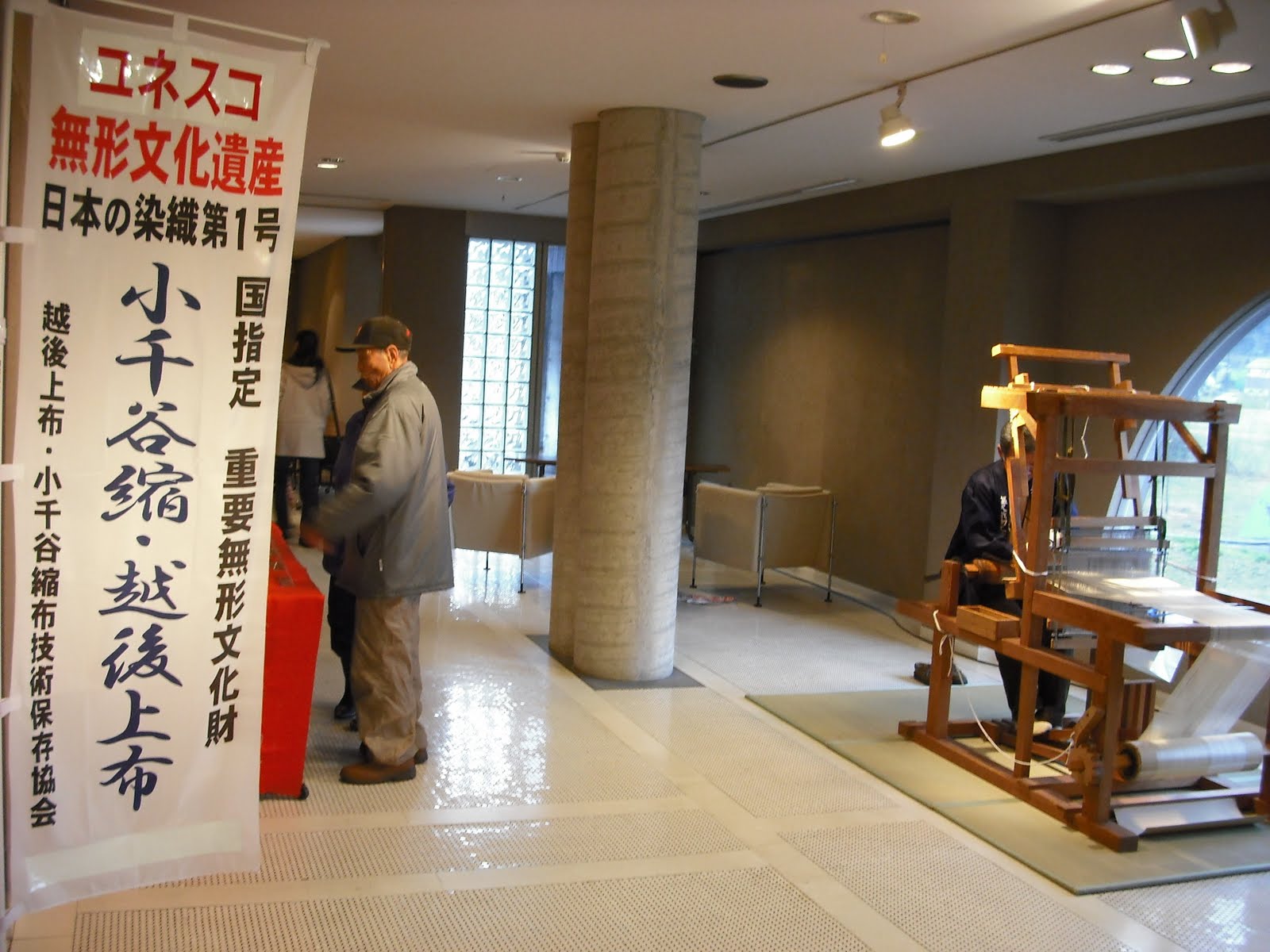

An example of Echigo-jofu:
越後上布の一例:

(Sorry, blurry.)
(ボケた写真ですみません)

Many events were held on the site, such as "Kome-lympic", where teams competed over who could move bales of rice from one location to another the fastest.
会場では多くのイベントが行われました。例えば、どのチームが米俵を一箇所から別の場所に一番速く動かせるかを競う「コメリンピック」などです。


Left: A pack of enoki that I got as a prize.
Right: Korokke (Japanese croquettes) that I bought at the izakaya booth shown above.
左: 賞としてもらったエノキ1パック。
右: 上述した居酒屋の売店で買ったコロッケ:


Mikan:
みかん:

This quantity of mikan for 500 yen. Quite reasonable.
これだけの数のみかんで500円。とてもお買い得です。

November 2, 2010

Mushroom Takikomi Gohan and Chicken Nabe (One-Pot Dish)/キノコの炊き込みご飯と鶏鍋

On October 31, after my son came home a little before 2 o'clock in the afternoon from the ekiden he had participated in as a member of his junior high school's track club, my son and I went mushroom gathering again, not because I wanted to but because he wanted to.
When we arrived at the parking area at the foot of Mt. Tairappyo at around 3:10, there was no car to be seen.
10月31日、息子が中学校の陸上部の一員として駅伝に参加して2時ちょっと前に帰って来てから、息子と一緒にまたキノコ狩りに行きました。私が行きたかったわけではなく、息子が行きたがったからです。
3:10頃、平標山のふもとの駐車場に着くと、車は一台もありませんでした。

It was raining a little.
雨が少し降っていました。

My son found these clusters of kuri take soon.
息子はすぐにこのクリタケの群生を見つけました。


We got some muki take from these two logs, from which we got some last year and the year before last. The main reason why my son wanted to go to this mountain was that he wanted to make sure if he could get muki take from these logs again this year.
この2つの木からムキタケを少し採りました。去年も一昨年もムキタケが採れた木です。息子がこの山に来たかった主な理由は、今年もこの木からムキタケが採れるかどうか確かめたかったからです。


It was raining rather hard.
かなり雨が降っていました。

My son was very pleased to find this mushroom:
息子はこのキノコを見つけてとても喜んでいました:

Shimofuri shimeji.
シモフリシメジです。

We finished mushroom gathering at 4:50, and headed home. It got dark before we got home. We cleaned all the mushrooms we got, and I boiled them all.
4:50にキノコ狩りを終え、帰宅しました。家に着く前に暗くなりました。採ったキノコを全部洗い、茹でました。

Kuritake:
クリタケ:

Mukitake:
ムキタケ:

Four shimofuri shimeji and one shironametsumu take:
シモフリシメジ4本とシロナメツムタケ1本:

I gave up using the mushrooms for supper that night. I was exhausted and I was hungry!
その日の夕飯にキノコを使うのは諦めました。疲れていたし、お腹もすいていたので。
***
On November 1, I made these two dishes for supper:
11月1日、夕飯にこの2つの料理を作りました:

Tori nabe (chicken one-pot dish):

This dish contains muki take and other mushrooms. Other ingredients include daikon, komatsuna, chicken thigh, and naga negi. The broth was:
1,200 ml water
2 tsp instant dashi
1 tsp salt
1 tbsp soy sauce
この料理にはムキタケなどのキノコが入っています。他の具材は大根、コマツナ、鶏の腿肉、長ネギです。スープは:
水 1,200 ml
出汁の素 小さじ2
塩 小さじ1
醤油 大さじ1

Mushroom (muki take) takikomi gohan:
キノコ(ムキタケ)の炊き込みご飯:

4 go rice
3 tbsp soy sauce
2 tbsp sake
1 tbsp mirin
1/2 carrot
1 abura age (fried bean curd)
Somehow, I hate to add instant dashi to takikomi gohan. I like to keep my takikomi gohan simple. I also hate to add many ingredients to takikomi gohan. Some carrot and abura age are enough for me.
お米4合
4 go rice
醤油 大さじ3
酒 大さじ2
みりん 大さじ1
ニンジン 1/2
油揚げ 1枚
なぜか、炊き込みご飯に出汁の素を入れるのが嫌いです。シンプルな炊き込みご飯が好きなので。多くの具材を入れるのも嫌いです。ニンジンと油揚げだけで私には十分です。

November 1, 2010

My Son's Bento Box/息子の弁当箱

Here is my son's bento box.
息子の弁当箱です。

My son bought it himself when my family went shopping together a few months ago.
数ヶ月前に家族で買い物に行った時に息子が自分で買ったものです。

He says he likes his bento box, but as for me, I'm not very satisfied with it. For one thing, the chopsticks are too short. For another, the top part, which houses the chopsticks, is complicated and hard to wash.
息子は気に入っていると言っていますが、私はあまり満足していません。箸は短すぎるし、箸を入れる上の部分が複雑で洗いにくいです。

What I cannot put in the bento box I have to put in other containers.
弁当箱に入らないものは別の容器に入れなければなりません。

October 29, 2010

Milling Your Rice/自分で精米するには

Can you tell what this is?
何だか分かりますか?

This brown paper bag contains 30 kg brown Koshihikari rice. The rice was given to me by a brother-in-law.
この茶色の紙袋にはコシヒカリの玄米が30キロ入っています。義理の兄からもらったお米です。

There are not many Japanese, including farmers, who have a rice milling machine in their houses, and I am no exception. How should I mill the rice, then? That's easy!
農家を含めて、家に精米機がある日本人は多くありません。私も例外ではないです。では、どうやって精米すればいいのでしょうか?答えは簡単です!

All I need to do is to take the bag to a rice milling station and mill the rice by myself.
精米所に袋を持って行って、自分で精米すればいいんです。

Such milling stations are everywhere in rural areas of Japan.
このような精米所は日本の田舎ではどこにもあります。

You first put your rice in the hopper. By the way, this particular milling machine is quite sophisticated; when I stood in front of it, a woman's voice was heard, asking to put the rice in.
まずホッパーにお米を入れます。ところで、この精米機はかなり高機能で、前に立つと、女の人の声が聞こえ、お米を入れるよう指示されます。

The sign says you must not put in white rice (naturally!), wet rice, worm-eaten rice, and so on.
この標識には、白米(当然!)、ぬれたお米、虫食い米などは入れないでと書かれています。

Then, you put 100 yen per 10 kg. Then, press one of the buttons: No-wash, super white, standard, and 70%-milled. I pressed the Standard button, as usual.
次に、10キロにつき100円入れます。次に、次のうちどれかボタンを押します: 無洗米(むせんまい)、上白(じょうはく)、標準(ひょうじゅん)、七ぶ(しちぶ)。私は、いつも通り、標準を押しました。

Your rice comes out, milled.
お米が精米されて出てきます。

It takes about 3 minutes to mill 30 kg of rice.
30キロのお米を精米するのに3分程度かかります。

This particular milling machine is really sophisticated. I have never seen a machine that can produce no-wash rice! I think I'll try the no-wash button the next time.
この精米機は本当に高機能です。無洗米ができる精米機は見たことがありません。次回は無洗米ボタンを試そうと思います。

Resultant white rice:
出来上がった白米:

When milled, brown rice will lose 10% of its weight. Thus, 30 kg of brown rice will result in 27 kg of white rice.
玄米を精米すると、重さが1割減ります。従って、30キロの玄米は27キロの白米になります。

October 28, 2010

Another Post on Niitaka Nashi (Pears)/新高梨について再度

This is another post on Niitaka nashi. I just want to remind you that not all Niitaka nashi are the same. Yesterday, I bought one at a supermarket for 158 yen (bargain price) and two others at another for 198 yen each (also a bargain price). Notice the difference in size!
When you happen to buy Niitaka nashi, be sure to check the size!
新高梨について再度投稿します。どの新高梨も同じではないことをお知らせしたいので。昨日、あるスーパーで158円(特価)で一個買い、また別のスーパーでも一個198円(こちらも特価)のを二個買いました。大きさの違いを見て下さい。
新高梨を買う時は、サイズに注意して下さい!

I must say I really like Niitaka nashi! Their mild sweetness and pleasant texture!
新高梨は大好きです!マイルドな甘さ、心地良い食感!

Previous post on Niitaka Nashi/新高梨に関する以前の投稿

October 25, 2010

Komatsuna Ohitashi, Komatsuna Goma Ae, and Ohsakina in Ramen/コマツナのおひたし、コマツナのゴマ和え、ラーメンに入れた大崎菜

As I said previously, real ohitashi* is leaf vegetable boiled and soused in dashi/soy sauce/mirin. I made real ohitashi for the very first time today.
One recipe calls for a dashi, soy sauce, and mirin ratio of 15:1:1, while another calls for 6:1:1. I decided to try a 12:1:1 ratio. So, I combined:
200 ml water
1/3 tsp instant dashi
17 ml soy sauce
17 ml mirin
Put them all in a pot, bring to a boil, and let cool.

Add previously boiled leaf vegetable and let stand for some time.

* Ohitashi derives from the verb hitasu (to souse, to soak, etc.). O is an honorific prefix (to be more precise, bikago (lit. beautifying word)). Ohitashi means something soused.
前に言ったように、本当の「おひたし」*は、葉野菜を茹でて、出汁、しょう油、みりんに漬けたものです。今日初めて、本当のおひたしを作りました。
あるレシピーでは、出汁としょう油とみりんの割合が15:1:1で、別のレシピーでは、6:1:1でした。私は12:1:1の割合を試すことにしました。そこで、次のものを合わせました:
水 200 ml
出汁の素 小さじ1/3
しょう油 17 ml
みりん 17 ml
全て鍋に入れて、沸騰させ、冷まします。

先に茹でておいた葉野菜を入れて、しばらく置いておきます。

*「おひたし」は「ひたす(浸す)」に由来します。「お」は敬語接頭辞(正確に言うと、美化語)です。「おひたし」とは「何か浸したもの」を意味します。

I personally didn't like it. I prefer having boiled leaf vegetable with ponzu and katsuobushi (dried bonito shavings). To my surprise, my children said they liked it. My wife also said it was good.
私自身は気に入りませんでした。茹でた葉野菜をポン酢と鰹節で食べるほうが好きです。驚いたことに、子供たちは好きだと言い、妻も美味しいと言いました。

Komatsuna goma ae tastes very good!
コマツナのゴマ和えはとても美味しいです。

Spinach goma ae tastes better, though.
ほうれん草のゴマ和えのほうが美味しいですが。

Last Saturday, I made ramen for lunch. I used boiled ohsakina as a topping. The ohsakina soaked in the ramen broth was very good!
先週の土曜日、昼食にラーメンを作り、茹でた大崎菜を載せました。ラーメンスープに漬かった大崎菜はとても美味しかったです!

The ramen broth for 4 servings was:
1,200 ml water
100 ml soy sauce
1 tsp instant dashi
(dashi to soy sauce ratio = 12:1)
1 chicken thigh
1 bunch upper green, inedible part of naga negi (Japanese scallion)
4人分のラーメンのスープは:
水 1,200 ml
しょう油 100 ml
出汁の素 小さじ1
(出汁としょう油の割合=12:1)
鶏の腿肉 1枚
長ネギの上の青い、食べられない部分 1把

Ramen noodles that I used:
使ったラーメンの麺:

Firm, aged noodles. They were good!
コシの強い熟成麺。美味しかったです!