August 19, 2014

Visiting My Parents' House/実家に行く

My family made a 4-day and 3-night trip to my parents' house. I don't have much to talk about the trip, so just some photos and brief explanations.
私の実家に家族で三泊四日(さんぱくよっか)しました。特に話すこともないので、写真を少しと簡単な説明だけです。

Day 1:
一日目:

Before going to my parents' house in Chiba (adjacent to Tokyo), we visited Odaiba.
千葉(東京の隣り)にある実家に行く前に、お台場に行って来ました。

Inside the Fuji TV Building:
フジテレビ本社ビル内部:
We had to go up a very long flight of stairs to the entrance.
入口までとても長い階段を上りました。

Just too many people to enjoy the stalls, exhibits, and so on.
人が多過ぎて、売店や展示物などを楽しめませんでした。
We were simply exhausted. Then, we went to AQUA CiTY ODAIBA,
ただ疲れただけでした。次にアクアシティお台場に行き、

where we had lunch.
昼食を食べました。

Mine:
私の:

My daughter's:
娘の:
My son's:
息子の:
My wife's:
妻の:
Pretty good, and the prices are reasonable.
とても美味しく、また値段もリーズナブルでした。
Note that my wife and I both ordered a set of mini salad and all-you-can-drink "drink bar".
(妻と私は、ミニサラダと飲み放題のドリンクバーのセットを頼みました。)

View from the terrace.
テラスからの眺め。
You can see the Rainbow Bridge.
レインボーブリッジが見えます。

Then, at the request of my daughter, we went to Lemson's.
それから、娘のリクエストで、レムソンズに行きました。

Mine:
私の:
544 yen! Very expensive!
544円!すごく高いです!

My wife's:
妻の:
My daughter's:
娘の:
My son's:
息子の:

Price: 280 yen per 100 g. OVERPRICED!
値段: 100 gあたり280円。高過ぎ!

We left Odaiba and headed for Tokyo Station.
お台場を離れ、東京駅に向かいました。

Day 2:
二日目:

For supper, my father made these nihachi soba for us.
夕飯には、父がこの二八そばを作ってくれました。 
Nihachi literally means two eight. Soba (buckwheat noodles) made from 20% wheat flour and 80% buckwheat flour is called nihachi soba.  Nihachi is a very common ratio for soba (buckwheat noodles). Juuwari (100%) soba is very difficult to make, because of the lack of wheat flour as a bonding agent.
What is spectacular about these buckwheat noodles is that the buckwheat was grown by my father himself. He also grinds it into flour himself, using an electric mill.
二八とはtwo eightと言う意味ですが、小麦粉2割、そば粉8割で作った蕎麦(そば)を二八蕎麦と言います。蕎麦では、二八はとても一般的な割合です。十割蕎麦は、小麦粉をつなぎとして使わないので、作るのがとても難しいです。
この蕎麦のすごいところは、蕎麦は父が自分で栽培したもの、という点です。また、父は自分で電動の臼を使って蕎麦を粉にしています。

On that day, I asked my father to show us the vineyard, among others, which had been severely damaged by the 27-cm deep snow last February.
その日は、去年の2月の27 cmの雪で大被害を受けたブドウ畑などを見せてもらいました。
The area was considerably reduced.
面積はかなり減っていました。

This is a device called Animal Earth, which is used to keep out animals such as monkeys and masked palm civets.
これは、アニマルアースという、猿やハクビシンなどの動物を寄せ付けないようにする装置です。
Then, we went to the field.
それから、畑に行きました。

Recently, one chestnut tree collapsed due to typhoon No. 11.
最近、台風11号のせいで栗の木が一本倒れました。
Two konnyaku plants:
こんにゃくの苗が二本:
Animal Earth is in operation here, too.
アニマルアースがここでも稼動してます。
Naganegi:
長ネギ:
Two varieties (oval and round) of eggplant:
茄子、二品種(長円形と丸形):
Tomatoes:
トマト:
Amanatsu (a type of citrus)
甘夏(かんきつ類の一種)
Myoga:
茗荷:
Reddish variety.
赤い品種。

Myoga, native variety:
在来種の茗荷:

My father grows lots of other vegetables, too. I can't describe them all.
父は他の野菜も色々と作っています。全部説明し切れません。

Day 3:
三日目:

My family and father went to a vineyard nearby to learn how they grow their grapes. No photos.
家族と父とで、近くのブドウ園に行って、どんな風にブドウを栽培しているか見て来ました。写真はありません。

Day 4:
四日目:

We took a 10:45 expressway bus bound for Tokyo. We spent some time near Tokyo Station before riding a Joetsu Shinkansen train.
10:45の東京行きの高速バスに乗りました。上越新幹線の電車に乗る前に東京駅の近くで過ごしました。

We had lunch at Hokkaido Cyubou.
北海道チューボーで昼食を食べました。


I had Shiretoko Dori no Zangi Don:
私は知床鶏のザンギ丼を食べました。
Shiretoko is the name of a place in Hokkaido.
Dori < tori is chicken.
The term zangi is widely used in Hokkaido, and is almost synonymous with karaage.
Don is short for donburi (large rice bowl).

My son had a bowl of shio (salt) ramen, with some additional toppings.
息子は塩ラーメンを一杯食べました(追加のトッピング入り)。
My daughter had korokke curry.
娘はコロッケカレーを食べました。
My wife had cold ramen.
妻は冷製ラーメンを食べました。
(Sorry, I forgot the exact name.)
(正確な名前は忘れました。)

I later had this lavender-and-vanilla mix soft-serve ice creme.
後で、ラベンダーとバニラのミックスソフトクリームを食べました。
This restaurant is conveniently located (1-minute walk from the Yaesu Chuo Guchi of JR Tokyo Station), yet offers Hokkaido-themed dishes at affordable prices.  The portions are rather small, though. Adjacent to the restaurant is Hokkaido Foodist, where you can find all sorts of products from Hokkaido.
このレストランは立地がいい(JR東京駅の八重洲中央口から徒歩1分)割には、北海道をテーマにした料理を手ごろな値段で出しています。量はちょっと少な目ですが。レストランの隣りは北海道フーディストという、北海道からの色々な食品を売っているお店です。

Then, we went to Tokyo Eki Ichiban Gai (First Avenue Tokyo Station), which houses Tokyo Character Street
それから東京駅一番街に行きました。ここには、東京キャラクターストリートや

and Tokyo Okashi Land, among others.
東京おかしランドなどがあります。

Floor Guide for First Avenue Tokyo Station (PDF file)/東京駅一番街のフロアガイド(PDFファイル)

Then, we took the Joetsu Shinkansen to return home.
それから、上越新幹線に乗り、帰宅しました。

August 10, 2014

Sour Grapes/酸っぱい葡萄(すっぱいぶどう)

I'm not talking about the Aesop's fable. Just wanted to post a photo of really sour grapes.
Today, I got two boxes of grapes from my father. One box contained Kyoho, while the other contained Delaware. The Delaware grapes were sweet, while the Kyoho grapes were not yet ripe and sour. (My father sells good Kyoho grapes to neighbors.)
イソップ物語のことを言っているわけではなく、ただ、本当に酸っぱい葡萄(ぶどう、ブドウ)の写真を載せたかっただけです。
今日、父から葡萄を二箱(ふたはこ)もらいました。一つは巨峰が入っていて、もう一つはデラウェアが入っていました。デラウェアは甘かったのですが、巨峰のほうは、まだ熟していなくて、酸っぱかったです(父はいい巨峰は近所の人たちに売っています)。

Kyoho:
巨峰:
Sour, yet very tasty in their own way.
酸っぱかったですが、それなりにとても美味しかったです。

As I said several times in my blog, Kyoho is called the king of grapes in Japan.
何回もこのブログで言っている通り、日本では巨峰は葡萄の王様と呼ばれています。

The Delaware is a very popular variety in Japan.
デラウェアは日本ではとても一般的な品種です。

August 5, 2014

Migaki Nishin/身欠きにしん

The other day, I got one pack of migaki nishin (fully dried) at a bargain price: 180 yen per 100 g. Fully dried migaki nishin usually costs around 300 yen per 100 g. Migaki nishin is dried herring (beheaded, gutted, and dried, but not salted). There are three types of migaki nishin: 
Hon boshi (fully dried), dried for one month or so
Hachibu (nanabu) boshi (semi-dried), dried for one week or so
Nama boshi, soft (half-dried), dried for one day or so
先日、身欠きにしん(本干し)を一パック、特価で買いました。100 gで180円です。本干しの身欠きにしんは通常、100 gで300円前後します。身欠きにしんとは、(頭を落として、内蔵を取って、干した(塩には漬けていない)にしんのことで、三種類の身欠きにしんがあります:
本干し(一か月程度完全に干したもの)
八分(七分)干し(一週間程度干したもの)
生干し, ソフト(一日程度干したもの)
The label says, "Hon gawaki" (fully dried). I guess this is synonymous with "hon boshi".
ラベルには「本乾」(ほんがわき)と書かれています。「本干」(ほんぼし)と同義だと思います。
Fully dried migaki nishin must be soaked in "kome no togi jiru" (milky water resulting from washing uncooked rice) overnight or longer. If you don't have kome no togi jiru available, use water plus some rice bran instead.
本干しの身欠きにしんは、米のとぎ汁に一晩以上漬ける必要があります。米のとぎ汁がない場合は、米ぬかを少し入れた水を使います。
Kome no togi jiru has some rice bran in it, and rice bran has the effect of removing lipid peroxides.
米のとぎ汁には、米ぬかが少し含まれており、米ぬかには過酸化脂質を除去する効果があります。

Migaki nishin, soaked overnight.
一晩漬けた身欠きにしん。

This morning, I checked the migaki nishin. I was a little worried that they might go bad due to the hot weather, and I was relieved to find that they seemed OK. I wanted to keep soaking them in the water until the evening, but because of the hot weather, I decided to put them in the fridge.
今朝、身欠きにしんをチェックしました。暑さのせいで腐らないかと心配しましたが、大丈夫そうで、安心しました。夕方まで漬けたままにしたかったのですが、暑さのため、冷蔵庫に入れることにしました。

Migaki nishin at around 4:00 p.m.
午後4時頃の身欠きにしん。
Some recipes say to simmer them in bancha (coarse tea) to remove aku (harshness) and odor. I found one recipe that says to simmer in the kome no togijiru used for soaking, and I decided to follow this step. This particular recipe says to simmer them for one hour, but I simply simmered for 30 minutes or so, while I was making potato salad and making preparations for nimono ingredients.
番茶で煮て、灰汁(あく)と臭みを取ると書いてあるレシピもありますが、漬けるのに使った米のとぎ汁で煮ると書かれているレシピを見つけたので、それに従うことにしました。このレシピでは1時間煮ると書かれていますが、私は単にポテトサラダを作ったり、煮物の材料を準備したりしている間、30分程度煮ました。
I drained the kome no togijiru, set aside the kigaki nishin, washed the pot, and added 2 cups (200 x 2 = 400 ml) water, 60 ml soy sauce, and 60 ml mirin, and added carrot, atsuage, kuruma fu (wheat gluten), konnyaku, and migaki nishin. I simmered for 15 minutes.
米のとぎ汁を捨て、身欠きにしんを置いておいて、鍋を洗い、水を2カップ(400 ml)、しょう油60 ml、みりん60 ml入れ、にんじん、厚揚げ、車麩、こんにゃく、身欠きにしんを入れました。15分煮ました。
My portion.
私の分。
This nimono is quite similar to the one I previously made:
この煮物は以前作ったのとよく似ています:

Migaki nishin is widely used in various parts of Japan, including Niigata, of course. In Kyoto, for instance, migaki soba is very popular.
身欠きにしんは、日本各地で広く使われています(もちろん新潟も含めて)。例えば、京都では、身欠きにしんがとても一般的です。

August 4, 2014

Grilling Edamame/枝豆を焼く

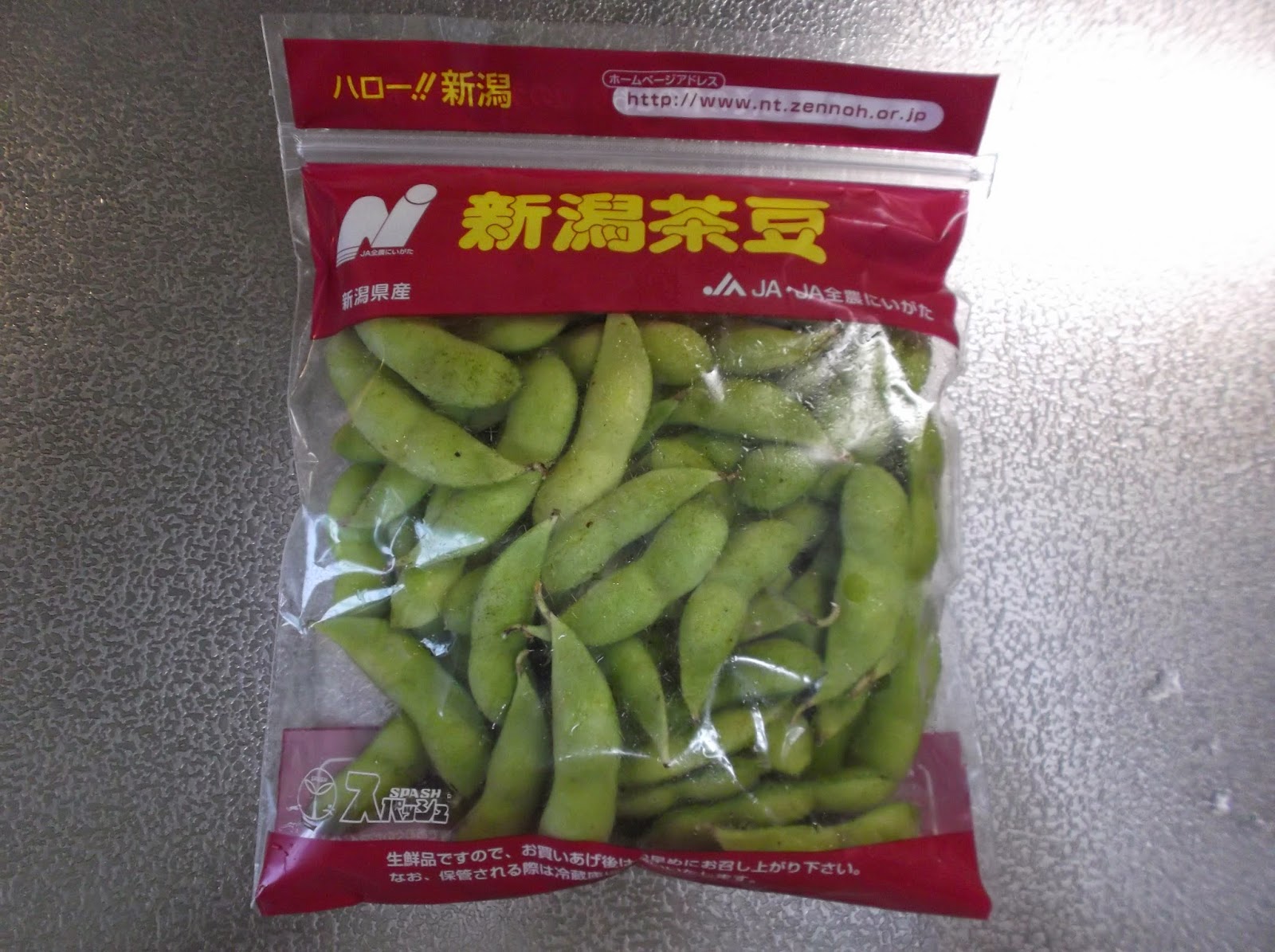
In Japan, edamame (young soybeans) are usually boiled before eating. The other day, I learned of a new way of cooking them: pan-frying. The webpage I found claimed that pan-frying would make edamame "super" tastier than boiling. I thought I must give it a try. Somehow, it had never occurred to me that edamame could be pan-fried. The pan-frying method was rather cumbersome, however, so I decided to grill edamame in the toaster oven.
日本では、枝豆は普通茹でてから食べます。先日、フライパンで焼くという新たな方法を知りました。私が見つけたサイトでは、フライパンで焼くと、茹でるより「超絶」(ちょうぜつ)おいしくなるそうです。試さなければ、と思いました。なぜか、枝豆がフライパンで焼けるとはそれまで思ったことがありませんでした。ただし、フライパンて焼く方法はちょっと面倒だったので、オーブントースターで焼くことにしました。

Bag of edamame:
枝豆一袋:
Chamame (lit. brown beans) are a specialty of Niigata. They are much tastier than common varieties.
茶豆は新潟の名産です。普通の品種よりずっと美味しいです。
Wash edamame in cold water. Drain, add some salt, and rub well. Let stand for a few minutes.
(I sprinkled 3% salt (2 tsp for about 250 g edamame).)
枝豆を水で洗い、水を切り、塩を振り、よくもみます。数分置いておきます。
(私は塩を3%(250 gの枝豆に小さじ2)振りました。)

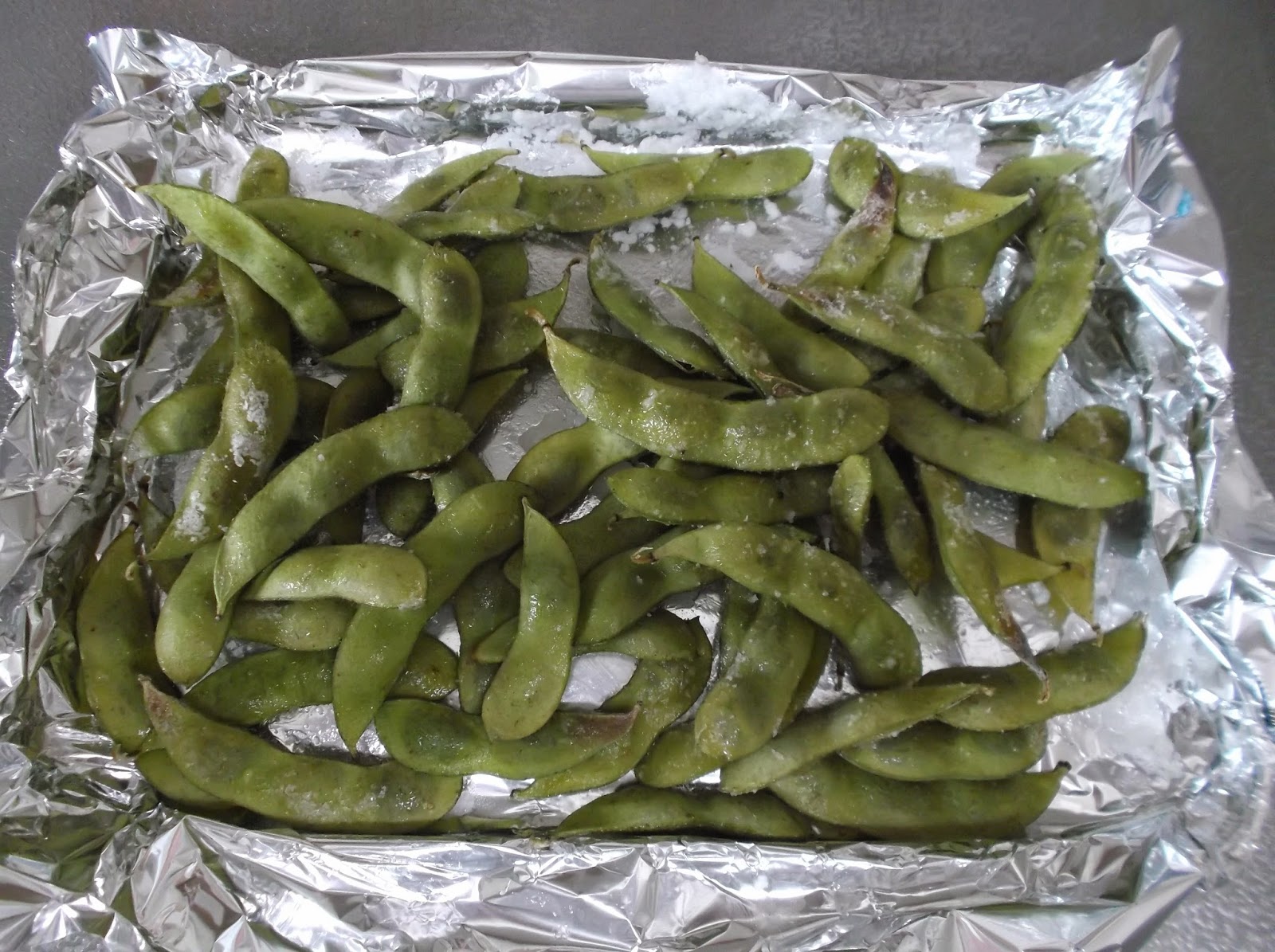
Transfer to tray and grill in the toaster oven for 10 minutes.
トレイに移し、オーブントースターで10分焼きます。
Done.
完成。
I tasted some, and found the beans inside were not salty at all. I didn't find them particularly tasty.
少し味見しましたが、中の豆は全然塩辛くなくて、特に美味しいと思いませんでした。

Several hours later, the edamame turned quite soggy due to the salt on the surface. The beans inside were now a little tastier.
数時間後、枝豆は表面の塩のせいでかなり水っぽくなりました。中の豆は少しは美味しくなっていました。
Do edamame taste better when grilled than boiled? I don't think so. Boiled edamame taste as good.
枝豆は茹でるより焼いたほうが美味しいか?そうは思いません。茹でた枝豆も同様に美味しいです。

Chamame (lit. brown beans) are so called because the membrane is slightly brown.
茶豆は、薄膜が少し茶色なので、そう呼ばれています。  

New Potatoes/新じゃが

New potatoes, that is, freshly harvested potatoes, are called shin jaga (short for shin jaga imo) in Japanese. New potatoes have thin skins, contain more moisture, and are much tastier than regular potatoes.
New potatoes、つまり新たに収穫されたじゃがいものことを日本語では新じゃが(新じゃがいもの略)と言います。新じゃがは皮が薄く、通常のじゃがいもより水分が多く、ずっと美味しいです。

This spring, I was given some potato seedlings from my father-in-law, which gave me an opportunity to grow potatoes for the very first time.
今年の春は、義理の父(義父)からじゃがいもの苗をもらったので、生まれて初めてじゃがいもを育てるチャンスができました。

My rented field on May 11
借りている畑、5/11
I had already made all preparations (digging the soil, adding lime, manure, and chemical fertilizer, and laying mulch).
準備は全てしてありました(土を掘り、石灰、堆肥、化学肥料を入れ、マルチを張る)。

And, I had already decided to grow the potatoes in one ridge, where the mulch was removed by strong wind.
それに、強風でマルチが剥がれたこの畝(うね)でじゃがいもを育てようと決めていました。
20+ (23?) potato seedlings, given to me by my father-in-law.
義理の父からもらったじゃがいもの苗20本以上(23本?)
I placed them about 50 cm apart.
約50 cm離して植えました。
Then, I covered them with 5-8 cm deep soil.
それから、土を5~8 cmかぶせました。
The single ridge was not enough to place all the seedlings, so I placed the remaining ones near the west end of the field.
この畝だけでは、苗を全部植え切れなかったので、残りは畑の西側近くに植えました。
I later learned that I should not have covered them with soil because they were seedlings (pieces of potato that had already sprouted). Luckily, they survived and grew well, except some.
後で、苗(芽が出たじゃがいも)なので、土をかぶせてはいけないと知りましたが、運よく、生き延びてくれて、よく成長しました(例外を除いて)。

June 15
6/15
August 3
この日に全部収穫しようと決めていました。
8/3
I had decided to harvest them all on this day.

Before:
ビフォー:
After:
アフター:

These are all the potatoes that I harvested from the 1+1/2 ridges.
畝1本半から収穫したじゃがいもはこれだけです。
Shown on the lower right corner are bocchan kabocha. I planted two seedlings of bocchan kabocha. These were harvested from one of them. Little too early to harvest them. The truth is that I accidentally pulled the root of one seedling, so I had to harvest them!
右下にあるのは、坊ちゃんかぼちゃです。 坊ちゃんかぼちゃの苗を二本植えたのですが、一つの苗から採れたものです。収穫するにはちょっと早いのですが、実を言うと、一つの苗の根を間違って抜いてしまい、収穫せざるを得なかったんです!
I have recently found this great gadget from a 100-yen shop.
最近、100円ショップでこのすごい装置を見つけました。
A very clever gadget that turns your normal glasses into sunglasses in an instant!
通常のメガネを一瞬でサングラスにする、賢い装置です。
I have wanted to have such a gadget for a very long time.
こんな装置をずっと前から欲しいと思っていました。

I boiled small ones and the ones I had accidentally damaged with the hoe while harvesting.
小さいのと、収穫時に鍬(くわ)で傷つけてしまったのを茹でました。  
Naturally, they tasted just great!
もちろん、すごく美味しかったです。

August 2, 2014

eGullet/eGullet(イーガレット、イガレ)

It was only yesterday that I learned from this thread on eGullet that Steven Shaw, a founder of eGullet, died on April 8 at the age of 44.

May he rest in peace.

I was active on eGullet from 2004 to 2010. I've learned a great deal from this online culinary discussion forum about cornmeal (and cornbread), Shigefusa knives, coffee, American authentic hamburgers, and warabi mochi, just to name a few.

Edited to add: The link above does not work somehow.
Try this one:
Link

昨日、eGulletの創始者の一人、Steven Shawさんが4月8日、44歳で亡くなったことをこのスレッドで知りました。

ご冥福をお祈りします。

私はeGulletで2004年から2010年まで活動していました。この食に関するオンラインのフォラムからは、コーンミール(それとコーンブレッドも)、重房の包丁、コーヒー、アメリカの正真正銘のハンバーグ、わらびもちなど、たくさんのことを学びました。