January 18, 2016

Nagaoka on Jan. 17/長岡、1/17

On Day 2 (Jan. 17) of the Center Test, I took the 7:30 train bound for Nagaoka to see my son a little after 8:30. I waited for him to get ready to leave the hotel in the hotel lounge, where I had a cup of complimentary instant coffee.
センター試験の二日目(1/17)は、長岡行きの7:30の電車に乗り、8:30ちょっと過ぎに息子に会いました。息子がホテルから出る準備をしている間、ホテルのラウンジで待ちました。無料のインスタントコーヒーを飲みました。
Impressive pictures on the walls.
壁には印象的な絵が。

I saw him off at the bus stop at around 9:20, and then I headed for the Nagaoka War Damage Exhibit Hall.
You can find some info about the Hall on this page of tripadvisor.
9:20頃、バス停まで息子を見送ってから、長岡戦災資料館に行きました。
Then, I went to the East exit of Nagaoka Sation, and strolled aimlessly toward a coffee house.
それから、長岡駅の東口に行き、或る喫茶店に向かって、あてもなく歩きました。


Destination: Coffee shop called Komeda Kissaten.
Official website of this coffee shop chain.
目的地: コメダ珈琲店
この喫茶店チェーンの公式サイト。

I decided not to visit this place this time, and headed back to Nagaoka Station. I absolutely wanted to have this soft-serve ice cream at the YASUDA YOGURT SHOP in the station building.
今回は、ここには行かないことにして、長岡駅に戻りました。駅ビルにあるヤスダヨーグルトショップのソフトクリームは絶対に食べたいと思って。
280 yen. Best soft-serve ice cream I've ever had.
280円。今まで食べた中で一番美味しいソフトクリームです。

I bought four cups of "Yogurt Rare Cheese" for souvenir for my family. I got one complimentary fig-flavored Yasuda Yogurt because the total amount of purchase exceeds 1,000 yen.
Note that "rare" in Japanese means unbaked.
家族のお土産に「ヨーグルトレアチーズ」を4つ買いました。購入総額が1000円を超えたので、無料の無花果(いちじく、イチジク)味のヤスダヨーグルトをもらえました。
日本語の「レア」とは「焼いていない」という意味です。

My son came home at 8 o'clock that night. He had been given just a lot of sweets for praying for passing entrance exams by relatives, teachers, and others. Shown below are just some examples of such sweets.
息子はその日の8時頃帰って来ました。親戚、先生などから色々な合格祈願のお菓子をもらっていました。写真にあるのは、そのほんの一部です。


長岡、川西屋本店の酒饅頭/Saka Manju at Kawanishi Ya Honten, Nagaoka

According to this page of the website of Kawanishi Ya Honten, these saka manju (shio azuki or salted azuki) take three hours to hand-make, one by one, in the traditionally way, by fermenting koji.
川西屋本店のサイトのこのページによれば、この酒まんじゅう(塩小豆)は、麹を発酵させ、一つづつ、昔ながらの方法で手作りしているそうです。

This particular brand of saka manju, which is special in that the azuki filling is not sweetened, was a favorite of Yamamoto Isoroku, who was native to this city.

According to this page of the website of Kawanishi Ya Honten, Yamamoto had the saka manju in the following special way:

Pour water in a donburi (large rice bowl) until it's 70% full, float blocks of snow (ice?) to cool the water, float a manju there. Leave it for a while, and the manju, which soaked up the cold water, becomes swollen and large to fill the donburi. Sprinkle sugar, and eat it by scooping with a large spoon.
小豆のあんこが甘くない、この酒まんじゅうは、この市出身の山本五十六の好物でした。

山本はこのまんじゅうを特別な方法で食べるのが好きでした。川西屋本店のサイトのこのページによると、山本はこの酒まんじゅうを次のような特別な方法で食べていました。

どんぶりに水を七分目ぐらいいれ、雪のかたまりを浮かべ水を冷たくし、そこにまんじゅうを浮かべます。しばらく放置すると、冷たい水を吸ったまんじゅうが、どんぶりいっぱいにふやけて大きくなります。彼は、その上から砂糖をかけ、大きなスプーンでザクッとまんじゅうをすくって食べていました。
In this YouTube video, you can see how Yamamoto had the manju. View the video at 0:50 and 1:36. This video is part of the movie produced in 2011.
このYouTubeビデオで、山本がどのようにまんじゅうを食べたか分かります。0:50と1:36を見て下さい。このビデオは2011年に制作された映画の一部です。

Edited to add:
Yamamoto Isoroku called the saka manju eaten in this way "mizu manju" (mizu = water). Usually, mizu manju means manju made from kuzu ko (arrowroot powder) and an (bean jam).
追記:
山本五十六は、このように食べる酒まんじゅうを「水まんじゅう」と呼んでいました。通常、水まんじゅうとは、くず粉と餡で作るまんじゅうのことです。

Despite the fact described above, I had the manju in a usual way.
上記のような事実があるものの、私は、このまんじゅうを普通に食べました。


January 16, 2016

Nagaoka on Jan. 16/長岡、1/16

Today, I took the first train to Nagaoka on an important mission: taking with me the o-bento my wife made for my son, who went to Nagaoka last night to stay at the hotel in the station building for two nights to take the Center Test.
今日は、重要な任務のため、始発の電車で長岡に行きました。任務とは、センター試験を受けるため、昨晩、長岡に行き、駅ビルのホテルに二晩泊まる息子のために妻が作ったお弁当を持って行くことです。

View from Nagaoka Station
長岡駅からの眺め
 
After I handed him the o-bento and saw him off at the bus stop at around 8 o'clock, I headed for the coffee house on Suzuran Street.
息子にお弁当を手渡し、8時頃バス停まで見送った後、すずらん通りにある喫茶店に向かいました。

COFFEE HOME Charlent/Charlin (sp?)
COFFEE HOMEシャルラン

This particular coffee house started business in 1957, and with its 21 tables and 90 seats, it's the biggest coffee house in Nagaoka. The nostalgic "Showa Retro" interior will remind any Japanese, particularly those in their 50s or over, like me, of the good old days in the Showa period.
この喫茶店は、昭和32年創業で、テーブルが21、座席が90もある、長岡では一番大きな喫茶店です。ノスタルジックな「昭和レトロ」な内装は、どんな日本人(特に私のような50代以上の人間)でも、古き良き昭和の時代を思い出させてくれます。

I'm not a good photographer, so here are links to sites that contains some nice photos of the coffee house:
Link 1
Link 2
Here is a link to a YouTube video.

I ordered a breakfast special (called "morning service" in Japanese), although I had already breakfast at home at around 6:00. The thick slice of toast was so tempting!
モーニングサービスを頼みました。朝食は6:00頃、家で食べたのですが、厚切りのトーストには、食欲をそそられるので!
530 yen.
530円。

Mouth-watering, right?
よだれがでそうでしょ?
EDITED TO ADD THIS PHOTO:
この写真を追加:
(Copied from one of the sites linked to above.)
According to this board, the coffee shop is called CHARIN in English (but I really don't think it's the correct spelling for シャルラン in Japanese).
(上記のサイトからコピーしました。)
このボードによれば、この喫茶店の英語名はCHARINです(と言っても、日本語のシャルランの正しい綴りとは思えませんが)。
EDITED TO ADD ON JAN. 22
According to this sign, the English name is CHARLIN.
1/22追記:
この看板によると、英語名はCHARLINです。
Photo copied from here
写真はここからコピーしました。

I dropped by the city hall plaza, Aore Nagaoka.
シティホールプラザ、アオーレ長岡に寄りました。


I also went to Kawanishi Ya Honten, which I previously talked about here in my blog, to get some "saka manju".
また、以前このブログのここで述べた川西屋本店にも行き、酒饅頭を買いました。


I'll talk about the saka manju in a separate post.
酒饅頭については別に書きます。

January 4, 2016

Roasting Three Batches of Coffee/コーヒーを3回焙煎

Today, I have roasted three batches of coffee, 600 g per batch, to different roast levels, 15%, 16%, and 17% weight reductions. My plan is to "blend" these three different roasts at different ratios to give to different people.
今日は、コーヒーを3回(一回当たり600 g)、色々な焙煎度(重量減15%、16%、17%)に焙煎しました。私の計画は、この3種類の豆を色々な割合で「ブレンド」して、色々な人にあげることです。
 

Edited to add on Jan. 5:
1/5追記:

So, how do I achieve the desired roast level for every batch? Here's how I do it:
1. Put 600 g of coffee beans in the roasting pot.
2. Measure the total weight of the coffee beans, pot, wooden container (placed on top of the kitchen scale), and aluminum foil (used as a lid), which is 1034 g.
3. Check when first crack occurs, which is usually 9-11 minutes after the start of roasting.
4. 2 minutes after first crack, start measuring the total weight, which should be 944, 938, and 932 g for the roast levels of 15, 16, and 17%, respectively, MINUS 7-8 g.
5. Transfer the coffee beans to a sieve, and cool.
6. Measure the weight of the coffee beans.

These particular roasts were 513, 507, and 501 g, respectively, which are 3 g more than they should be (510, 504, and 498 g). Anyway, not bad results.
どうやって、各回毎に希望する焙煎度にするかと言うと、
1. 焙煎鍋にコーヒー豆を600 g入れる。
2. コーヒー豆、鍋、木製の容器(はかりの上に置く)、アルミ箔(蓋として使用)の全部の重さを測る( 1034 g).
3. いつ1ハゼが起きたか調べる(通常、焙煎開始から9~11分)。
4. 1ハゼから2分後、全部の重さを測り始める。焙煎度15、16、17%それぞれ、944、938、932 gから7~8 g引いた重さになるようにする。
5. コーヒー豆をザルに移し、冷やす。
6. コーヒー豆の重さを測る。

上記の場合は、それぞれ、豆の重さは513、507、501 gで、希望する重さ(510、 504、498 g)より3 gだけ重かったです。ともかく、悪い結果ではありません。

January 1, 2016

Humble Osechi 2016/2016年の質素な御節(おせち)

On New Year's Day, my family had rather a late breakfast together at around eight thirty. (I usually get up at 5:30 and have breakfast alone at around 6:00.)
Well, actually, I had had one bun earlier because I was so hungry.
元旦は、家族みんなで、8時30分ごろ、遅い朝食を取りました(私は普段は5:30に起き、6:00頃には一人で朝食を食べます)。
実は、お腹がすいていたので、先に菓子パンを一つ食べていました。

My o-zoni (soup with mochi in it) on the left and nimono (simmered dish) on the right:
左側にお雑煮、右側に煮物:
My wife made the o-zoni yesterday and the nimono the day before yesterday. It's customary refraining from cooking on the first three days of New Year. Naturally, such a custom is dying out.
妻は、お雑煮を昨日作り、煮物は一昨日作りました。正月(しょうがつ)の三が日(さんがにち)は、料理をするのを控える習慣がありますが、もちろん、そんな習慣はなくなりつつあります。

My family's humble osechi:
我が家の質素な御節:
All items, except the chestnut-less "kinton" (mashed sweet potato mash), are store-bought.
栗なしの「きんとん」以外は、すべて市販のものです。

Seasoned octopus and kohaku (red-and-white) namasu (vinegared dish of carrot and daikon):
味付け蛸(たこ、タコ)と紅白なます:
Store-bought ham:
市販のハム:
My wife forgot to include it in the juubako (multitiered box), shown above, and put it on a plate.
妻はハムを、重箱に入れるのを忘れたので、お皿に起きました。
(A juubako is a multitiered box, so the word is a misnomer for my family's juubako because it has only one tier!)
(重箱とは、複数の段がある箱のことで、我が家の重箱は一段しかないので、重箱と呼ぶのは間違いですが。)

New Year's Holidays in Japan are like Christmas time in other countries.
正月は、外国のクリスマスのようなものです。


I have not failed/失敗したわけではない

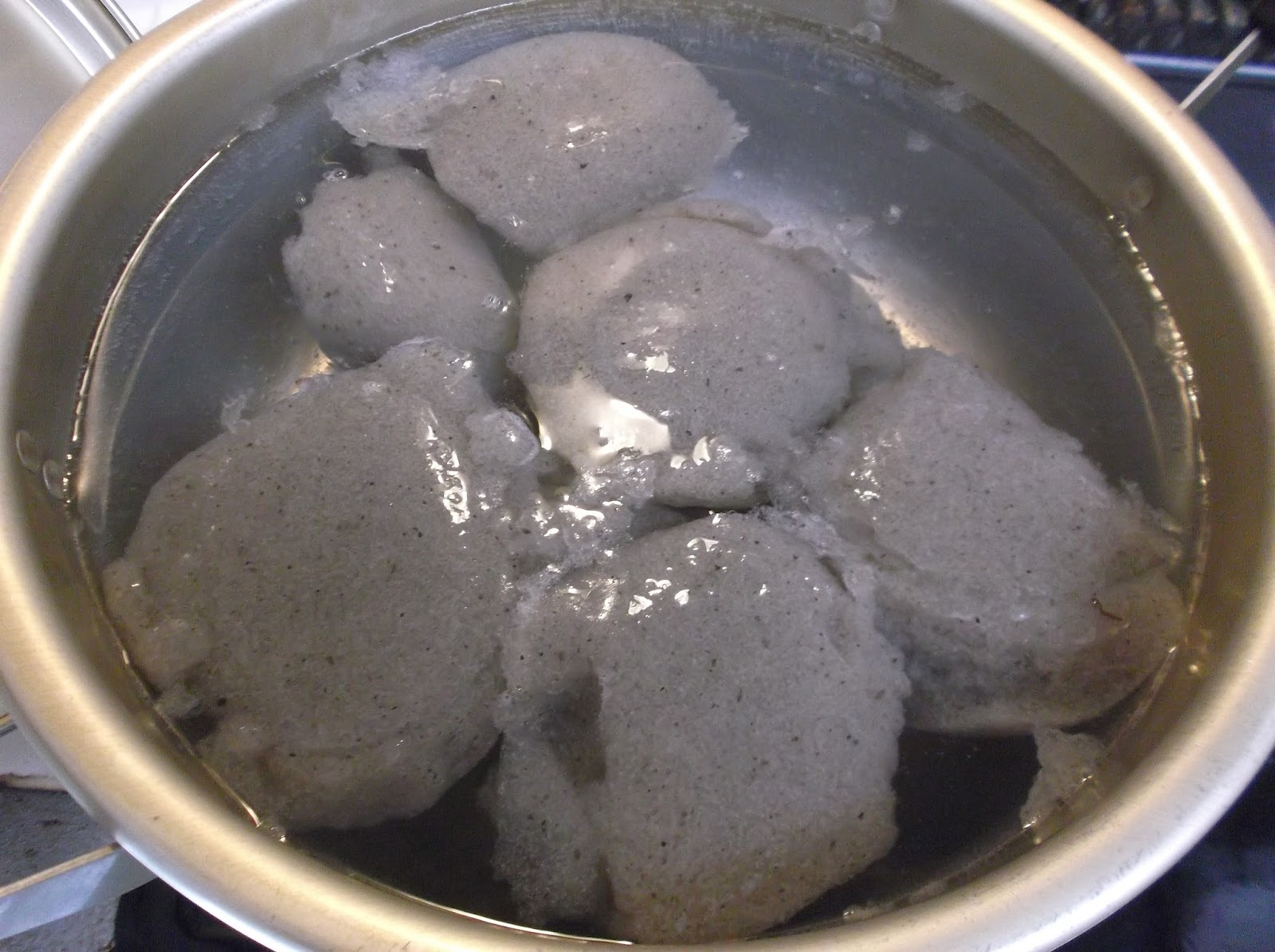
My very first attempt to make konnyaku ended in what you might call "failure". Personally, I don't like to use such a negative word. Like Edison said, "I have not failed...," I'd say that I have just found one way that won't work for me.
私の初のこんにゃく作りは、「失敗」とも言うようなものでした。でも私自身はそんなネガティブな言葉を使いたくなく、エジソンが「失敗したわけではない(失敗したことがない)」と言ったように、私も、ただ自分にはうまく行かなかったやり方を一つ見つけただけだと言いたいです。

The recipe I used was exactly the same as that I previously described, except that I didn't peel the konnyaku potato and I added 1% of sodium carbonate, not 2%. The konnyaku paste wouldn't become firm after I simmered it for 30 minutes.

By not peeling the konnyaku potato, you can make black konnyaku. Note that store-bought black konnyaku is made by adding hijiki and other seaweed to konnyaku powder.
使ったレシピは、先に説明したのとまったく同じですが、違う点は、こんにゃく芋の皮を剥かなかったことと、炭酸ナトリウムを2%ではなく1%使ったことです。こんにゃくのペーストは、30分煮た後も、硬くなりませんでした。

こんにゃく芋の皮を剥かないと、黒こんにゃくができます。市販の黒こんにゃくは、こんにゃく粉にひじきなどの海藻を入れて作っています。


Compare them the the ones below, made with 2% sodium carbonate, skin peeled.
これを、皮を剥いて、2%の炭酸ナトリウムで作ったのと比較して下さい。
I think I can say that I now know one way to make konnyaku properly.
今では、こんにゃくをちゃんと作る一つの方法を知っていると言えると思います。