January 15, 2018

Harvesting Amanatsu/甘夏の収穫

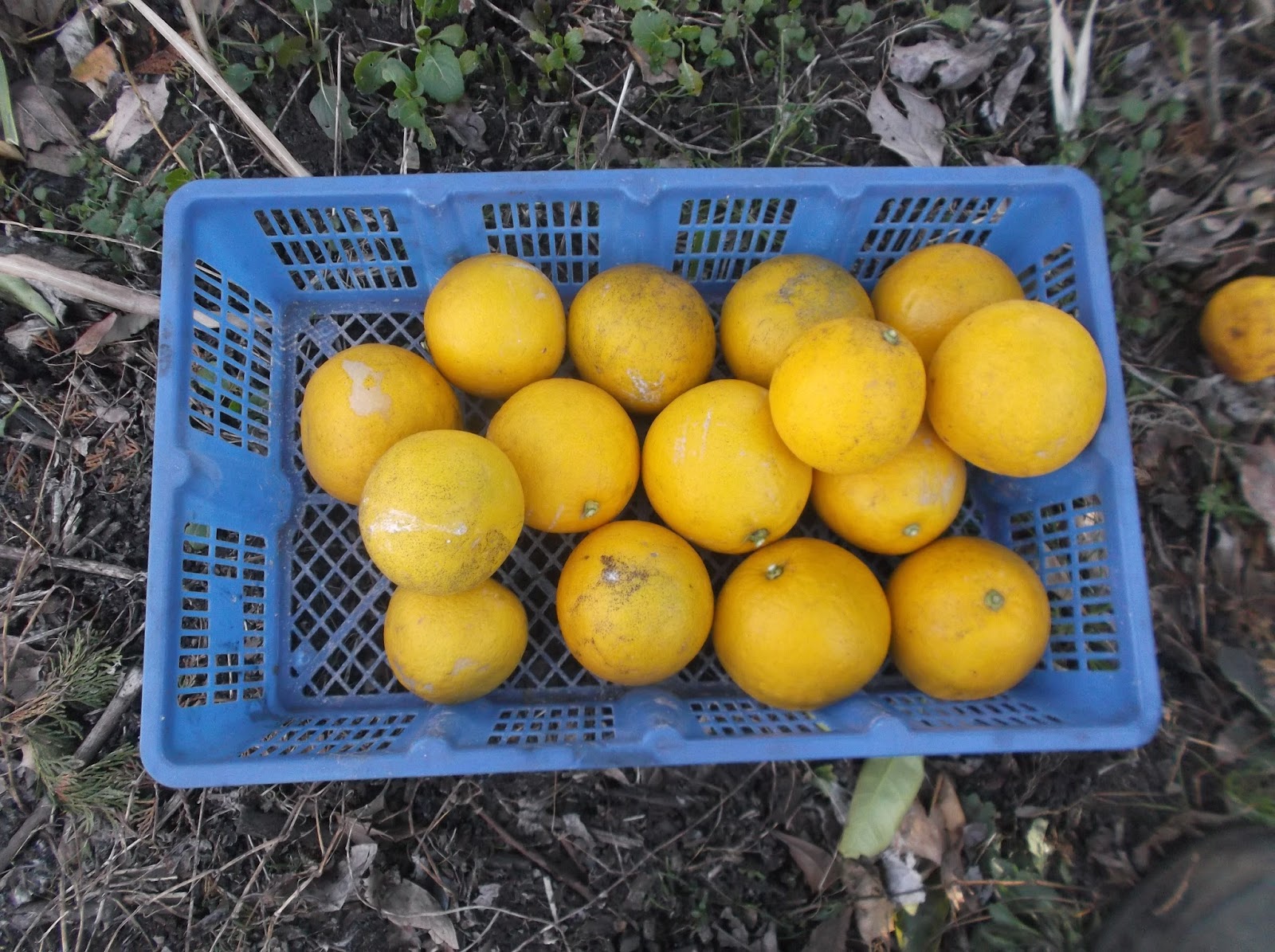
On January 14, I harvested some of the fruits from the two amanatsu trees, as requested by my father.
1月14日、父に頼まれて、2本の甘夏の木から一部、収穫しました。
 
To harvest the fruits on branches too high to reach,
高くて届かない枝になっているのを収穫するには、 
I used a "taka eda kiri basami" (high branch pruning scissors) 
高枝切りばさみを使いました。 
rather than a stepladder.
脚立ではなく。
 
I harvested the bigger ones, and left the smaller ones on the trees.
大きいのを収穫して、小さいのは木に残しました。 
Kaki (persimmon) tree:
柿の木:
Ume tree:
梅の木: 
As you can see, there are lots of buds on the branches.
見て分かる通り、枝には蕾(つぼみ)がいっぱい付いています。
 
I also harvested some grapefruits.
グレープフルーツも少し収穫しました。
 
Hana yuzu tree:
花柚子(はなゆず)の木: 
The fruits can be put in a bathtub (to take a "yuzu buro") and can also be used in cooking.
果実は風呂にも入れられます(柚子風呂に入るため)し、料理にも使えます。
 
While I was harvesting the amanatsu and other fruits, my father worked in the other areas of his field. He reported that the door of the greenhouse for strawberries had been blown off by strong wind, so that birds could enter the greenhouse, leaving only this amount of strawberries for us.
私が甘夏などの果物を収穫している間、父は、畑の他の場所で作業していました。イチゴ用の温室のドアが強風で吹き飛ばされて、鳥が温室に入ってきて、イチゴがこれだけしか残っていませんでした。  
He also collected one head of cabbage, one head of broccoli, and some nazuna (a type of greens).
父は、キャベツ1個、ブロッコリ1本、なずなも採りました。
And, some overgrown komatsuna leaves.
大きくなり過ぎた小松菜(こまつな)も少し。 
I boiled the nazuna, komatsuna, and broccoli.
なずな、小松菜、ブロッコリは茹でました。 
I used this home-made ponzu (1:1:1 mixture of yuzu juice, soy sauce, and water, plus some instant dashi and katsuobushi) to eat the nazuna and komatsuna. I used mayonnaise to eat the broccoli.
この自家製ポン酢(柚子果汁、しょう油、水を1:1:1で混ぜ、出汁の素と鰹節を足したもの)で、なずなと小松菜を食べ、ブロッコリにはマヨネーズを使いました。 
We sent the amanatsu to four relatives, including my wife.
夏みかんは、親戚4軒(私の妻を含む)に送りました。

January 3, 2018

New Year's Party/新年会

On January 2, I joined the new year's party (shin nen kai in Japanese) on behalf of my father.
1月2日、父の代わりに新年会に参加しました。
 
Here are photos of the meals served there.
そこで出された食事の写真です。
 
 
Nabemono (one-pot dish):
鍋物: 
 
Sunomono (vinegared dish):
酢の物:
Sashimi:
刺身:
Tempura:
天ぷら: 
Later, we were served a plate of sushi.
後で、寿司が出されました。 
And, hand-made soba, as well.
それから、手打ちそばも。 
Lastly, we were served a cake.
最後に、ケーキが出されました。 
The meal cost 3,000 yen per person, excluding beverages. Very reasonable price!
食事は一人3,000円(飲み物を除く)で、とてもリーズナブルでした。

December 8, 2017

Cooking White Rice, Brown Rice, and Rolled Barley in a Rice Cooker/白米、玄米、押し麦を炊飯器で炊く

White rice is tasty but low in nutrition, brown rice is high in nutrition but not very tasty, and rolled barley is rich in dietary fiber but not very tasty. You can mix them all at a ratio of 1:1:1 and cook them in a rice cooker to have tasty, nutritious, and fiber-rich gohan (cooked rice).
白米は美味しいけど、栄養価が低い、玄米は栄養価は高いが、あまり美味しくない、押し麦は食物繊維は豊富だが、あまり美味しくない。これらを全部1:1:1の割合で混ぜ、炊飯器で炊けば、美味しく、栄養価の高い、食物繊維豊富なご飯を食べることができます。
 
1 go of white rice, 1 go of brown rice, and 1 go of rolled barley
白米1合、玄米1合、押し麦1合
 
Just rinse gently three times. Don't "polish" violently.
Add water for 3 go of white rice. You need not add additional water for brown rice or rolled barley.
軽く3回洗います。激しく研がないで下さい。
白米3合用の水を入れます。玄米や押し麦用に水を足す必要はありません。 
Cook in the rice cooker.
炊飯器で炊きます。
Voila!
できました! 
Good for both health and beauty!
健康にも美容にもいいです。

November 29, 2017

Two Shigefusa Kitaeji Gyuto, 210 mm and 240 mm/重房鍛地牛刀2丁、210 mmと240 mm

Comment from another happy owner of Shigefusa knives.
"Today I finally received the knives. It took really long but I am very happy. I especially like the 240mm as it is much lighter than I anticipated."
重房の包丁のオーナーからのコメントです。
 
「今日、包丁をやっと受け取りました。本当に長かったですが、とても幸せです。特に240mmのが予想より軽くて気に入りました。」
Note: The owner has had to wait for two years to get these knives.
注: このオーナーは、この包丁を得るのに2年も待ちました。 

November 8, 2017

Shigefusa Knives/重房の包丁

I recently received these photos, together with a comment, from a happy owner of two Shigefusa knives, a 180 mm kitaeji petty and a 240 mm kasumi gyuto. He or she has given me permission to show the photos here in my blog, so here they are.
最近、重房の包丁2丁(180 mm鍛地ペティと240 mm霞牛刀)の持ち主から、次の写真とコメントを頂きました。このブログに写真を載せる許可を頂いたので、載せます。
 
"Im so happy with the knives. The fit and finish is of top notch, as most of the shigefusa knives are. Can't wait to put them in action."
「この包丁にとても満足しています。大半の重房の包丁同様、フィット具合、仕上がりはピカイチです。実際に使うのが待ち遠しい。」

 
240 mm kasumi with a saya:
240 mm霞と鞘:
Petty and gyuto:
ペティと牛刀:


August 24, 2017

Uni in a Milk Bottle/牛乳瓶入りのウニ

Uni is a Japanese word for sea urchin or sea urchin gonad.
ウニとは、sea urchinやsea urchinの性腺、生殖腺のことです。

I learned about uni in a milk bottle from Yamako Katagiri Sengyo Ten, a fishmonger located in Kamaishi city, Iwate prefecture, back in 2009, as I described here. My family had the uni as toppings for nigiri sushi like this. At that time, I vaguely assumed that selling uni in such a unique style was the fishmonger's idea.
牛乳瓶入りのウニについては、ここに書いたように、2009年に岩手県釜石市にある鮮魚店、「ヤマコー片桐鮮魚店」さんから知りました。そのウニはここに書いたように、家族でに握り寿司のネタとして食べました。その頃は、このユニークなウニの売り方はこの鮮魚店のアイディアなのかなあと漠然と思っていました。

The August 10, 2017 edition of the famous TV show, Himitsu no Kenmin Show, which featured uni in a milk bottle, has clarified everything about this product. You can still watch this edition of the show by clicking dailymotion video, although it has no subtitles in English.
2017年8月10日のテレビ番組「秘密のケンミンSHOW!」は、牛乳瓶入りのウニを取り上げており、これで、このウニに関してすべて明らかになりました。dailymotion videoをクリックすれば、その番組を見ることができます(英語の字幕はありませんが)。

Here are some bits of information that I have learned from the edition:
その番組で知ったことをいくつか紹介します。

It is said that putting fresh uni in a milk bottle started in Yamada machi (town), Iwate prefecture about 50 years ago. Before then, uni were sold in bags to customers nearby. To deliver them to distant customers, a more sturdy container was necessary. One day, a certain uni shop put uni in an empty milk bottle that happened to be there. Uni in a milk bottle has become popular throughout Iwate prefecture ever since because the milk bottle can be tightly sealed, keeps the uni from disintegrating during transport, and is transparent, making the uni look beautiful.
生ウニを牛乳瓶に入れるのは、岩手県の山田町で約50年前に始まったと言われています。それまでは、ウニは袋入りで近場で売られていたが、遠くに出荷するにはもっとしっかりした容器が必要でした。ある時、とあるウニ屋が、たまたまあった牛乳の空き瓶にウニを入れ、その後、岩手県各地に広まったそうです。牛乳瓶は、密閉できる、運搬中に身が崩れるのを防げる、透明でウニがきれいに見えるそうです。

Uni in a milk bottle are additive free. To have uni in a milk bottle, you need not use soy sauce for seasoning, because the bottle contains sterile seawater, which makes the uni taste sweeter to the taste buds. (Before having the uni, I drained them. I should have done that!)
牛乳瓶入りのウニは無添加です。牛乳瓶入りのウニを食べるのに、しょう油は要りません。瓶には殺菌した海水が入っていて、それでウニがより甘く感じられます。(私は食べる前に海水を切ってしまいました!)

Uni arranged neatly in a wooden container are called ita uni. Usually, alum is used to keep such uni from disintegrating.
木製の容器にきれいに並んだウニは板ウニと呼ばれ、通常、身が崩れるのを防ぐためミョウバンが使われています。
Images of ita uni/板ウニのイメージ

One milk bottle can contain about 30 large pieces (gonads) or 50 small ones. Kita murasaki uni (Northern sea urchin) is a popular variety in Iwate prefecture.
牛乳瓶一本に、大きいウニなら30粒(生殖腺)、小さいウニなら50粒入るそうです。岩手県では、キタムラサキウニが一般的だそうです。

In Iwate prefecture, uni is called kaze.
岩手県では、ウニは「かぜ」と呼ばれているそうです。

***
My father's birthday is in late August, when uni are not in season. I was thinking about presenting him some cheap uni imported from Chile, available from a local supermarket, just when I received an email from Yamako Katagiri Sengyo Ten, saying that they would get uni after a long interval. I immediately placed an order for two bottles. They have arrived today.
父の誕生日は8月下旬で、ウニは旬ではありません。父には、地元のスーパーで買えるチリ産の安いウニを贈ろうかと思っていたのですが、ちょうどその時、ヤマコー片桐鮮魚店さんから、ウニが久しぶりに入荷するというメールを頂きました。すぐにウニを二瓶(ふたびん)注文しました。今日届きました。


Great present for my father's 89th birthday!
父の89歳の誕生日へのすごいプレゼントです!

Edited to add some photos on Aug. 27:
8/27、写真を追加:

On the morning of August 25, my father had half the uni in one bottle for breakfast, with vinegared rice. Here is a photo of the remaining half.
8/25の朝、父は朝食に一瓶の半分のウニを酢飯と一緒に食べました。残りの半分の写真です。
He had the remaining half for lunch the same day.
残りの半分は同じ日の昼食に食べました。

The expiration date of the uni was August 27. Here is a photo of the uni in the other milk bottle on the morning of August 27.
ウニの賞味期限は8/27でした。8/27の朝の、もう一つの牛乳瓶入りのウニの写真です。
 
Just like he did with the first bottle, my father had the half of it for breakfast with vinegared rice.
最初の瓶と同様、父は半分を朝食に酢飯と一緒に食べました。

August 4, 2017

Making Blueberry Jam, Using Ume/梅を使って、ブルーベリージャムを作る

On August 2, my father got more than 2 kg of frozen blueberries from a neighbor.
8/2、父は近所の方から冷凍ブルーベリーを2キロ以上もらいました。
 
I was given the assignment of turning them into jam. I first thought it was an easy task.
これをジャムにする仕事を与えられました。最初は簡単な仕事だと思いました。
I first put the 2 kg of blueberries in two Tupperware containers, microwaved each container with 300 g of sugar in a 600-W microwave oven for a total of 4 x 3 = 12 minutes.
まず2キロのブルーベリーを2つのタッパー容器に入れ、各容器に砂糖を300 g入れて600Wの電子レンジで合計4 x 3 = 12分加熱しました。
Very watery. I left them overnight to see how the texture would change.
とても水っぽくなりました。一晩おいて、どう変わるか見てみました。
 
On the early morning of August 3, I checked them and found they were still watery. My father tasted some, and didn't like it. I decided to simmer them in an enameled pot for 20-30 minutes.
8/3の早朝、チェックすると、まだ水ぽっかたです。父が味見しましたが、気に入らないので、ホーロー鍋で20~30分煮ることにしました。 

I added 400 g of sugar to the pot to make the blueberry to sugar ratio 2 to 1. I simmered them for 30 minutes. Still quite watery.
鍋に砂糖を400 g入れて、ブルーベリーと砂糖の割合を2:1にし、30分煮ました。まだかなり水っぽいです。
I decided to add two of the eight ripe ume that had been sitting in the freezer to add pectin.
ペクチンを足すため、冷凍庫にあった8個の熟した梅のうち2つを入れることにしました。


After simmering for several minutes, I checked to see if the added ume had changed the flavor of the contents of the pot. I found that the ume had enhanced the flavor. The texture was still watery, however.
数分煮てから、加えた梅のせいで鍋の中身の味が変わったかどうか調べましたが、梅のおかげで味が良くなったと思いました。でもまだ水っぽいままです。

I later added two more.
後で、さらに2個足しました。
Still watery. I decided to add all the remaining four ume.
まだ水っぽいので、残りの梅4個を全部入れることにしました。
I also added 200 g of sugar so that the jam would contain 60% sugar.
また、ジャム砂糖含有量が6割になるよう、砂糖を200 g足しました。

Still not quite jam-like texture. I decided to leave it overnight.
まだジャムのような食感になりません。一晩おくことにしました。

This early morning, I checked the texture to find it was slightly thicker than last night.
今朝、チェックすると、昨晩よりは少しとろみがついていました。

This time, I got an OK from my father. I rinsed four empty blueberry jam glass bottles with running water, and microwaved them, two at a time, in a 600-W microwave oven for one and a half minutes in an attempt to sterilize them.
今度は、父から承諾をもらえました。ブルーベリーの空きガラス瓶を4個、流水で洗い、2個づつ、
600Wの電子レンジで1分半加熱し、殺菌しました。
My father consumes a considerable amount of store-bought blueberry jam with yogurt every morning. Luckily, I have saved some of the empty bottles.
父は、毎朝、かなりの量の市販のブルーベリージャムをヨーグルトと一緒に食べます。運よく、空き瓶をいくつかとっておきました。
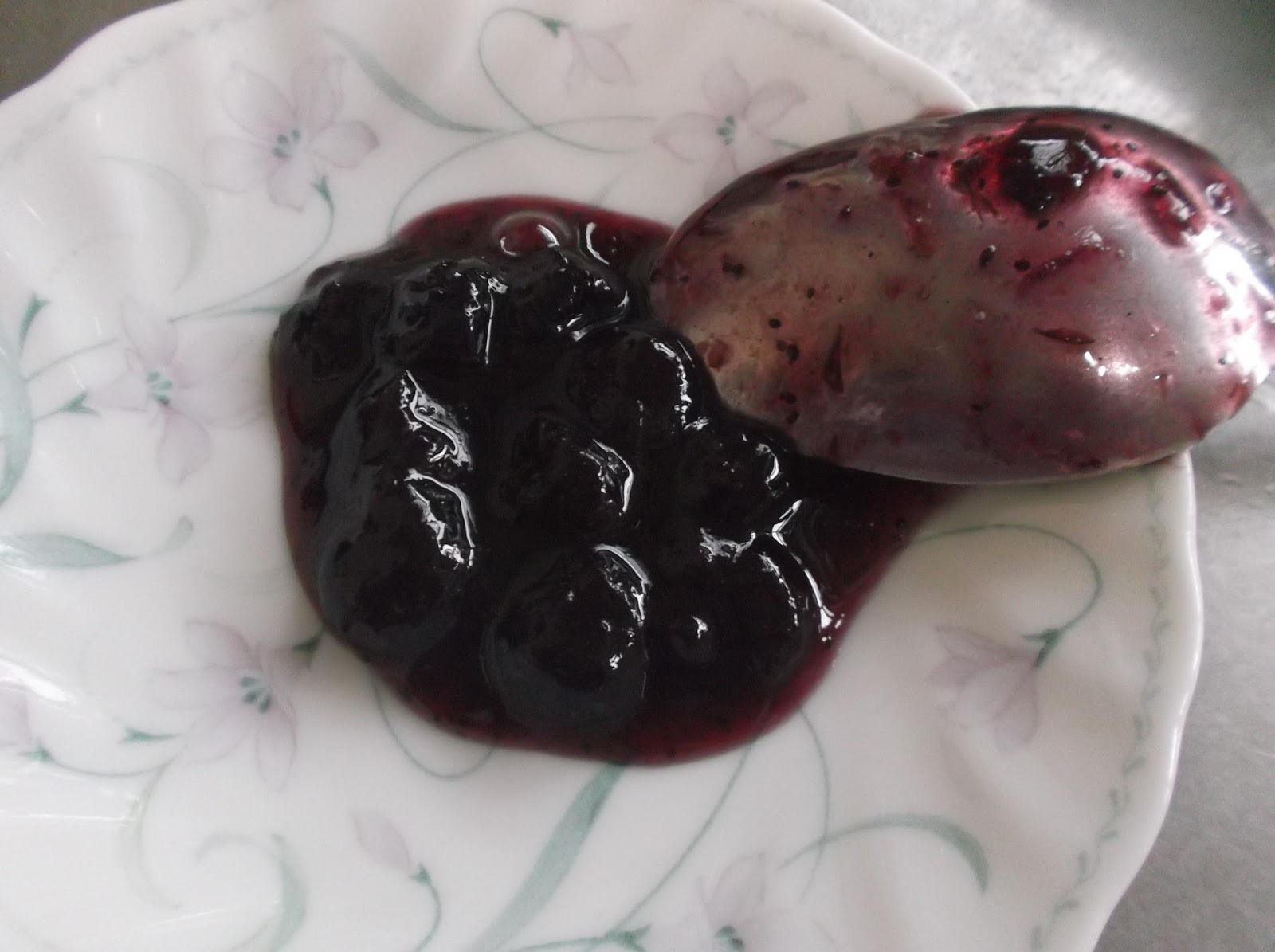
The jam made from 2 kg of blueberries and 1.2 kg of sugar filled the four glass bottles.
ブルーベリー2キロ、砂糖1.2キロで作ったジャムでガラス瓶4個がいっぱいになりました。


I told my father that these four bottles contained eight ume seeds and that he should be careful when consuming the jam.
この4個の瓶には梅の種が8つ入っているので、食べる時は注意する必要があることを、父に伝えました。

Why did I add ume, you might ask. Lemon juice is usually added as a source of pectin, but I didn't want to drive just to get some lemon juice. Ume contain a considerable amount of pectin, and besides, I know from the home-made grape jelly that ume have a potential to enhance the flavor of another type of fruit.
なぜ梅を足したかと言うと、ペクチン源としてレモン果汁を入れるのが普通ですが、わざわざ車を運転してまでレモン果汁を買いに行きたくなかったし、梅にはかなりのペクチンが含まれていて、その上、この自家製ぶどうゼリーから梅には、他の種類の果物の味を良くする可能性があると分かっているからです。