October 24, 2010

Garden Matsuri (Festival)/ガーデンまつり

Sorry, not a food-related post. Today, I went to the Garden Matsuri (Festival) with my wife and daughter and a friend of my daughter's, where pots of pansy, viola, and other plants, more than 124 types in total, were sold at 80 yen each. All types of pansy and viola were very beautiful, and it was very hard for us to choose which ones to buy. You could spend a whole day watching them all.
すみませんが、食に関する投稿ではありません。今日、妻と娘、そして娘のお友達とガーデンまつりに行きました。パンジー、ビオラなどの植物の苗(全部で124種類以上)が一つ80円で売られています。どのパンジーもビオラもとてもきれいで、どれを買おうか、選ぶのがとても大変でした。一日中見て回ってもいいくらいです。


Finally, my family bought these five:
最終的に、私たち家族は、この5つを買いました:

Koshihikari Rice Made by Fifth Graders/五年生が作ったコシヒカリ

This is no ordinary rice.
これはただの普通のお米ではありません。

It's Koshihikari rice made by the fifth graders of my daughter's elementary school. Every year, the fifth graders are assigned the work of cultivating rice as part of their school curriculum. And, at the cultural festival held in autumn, the fifth graders sell their rice. This year, the price was 400 yen a bag (which contains 5 go (or 5 x 140 = 700 g) of rice).
娘が通う小学校の五年生が作ったコシヒカリです。毎年、五年生が学校のカリキュラムの一部として米作りをするという作業を担当します。そして、秋に行われる文化祭で、五年生は自分たちのお米を売ります。今年は価格は一袋(5合、つまり5 x 140 = 700 g)400円。

Just cooked rice:
炊き立てのご飯:

If you happen to be a Japanese, you will drool over this photo:
日本人だとしたら、この写真を見て、よだれをたらすでしょう。

A bit of a lecture on Japanese words related to rice:
Rice as a plant is ine;
rice as a grain (uncooked) is okome or kome; and
rice as a meal (cooked) is gohan.
The term gohan is often used to mean shokuji (meal), reflecting the importance of rice in a meal in Japanese cuisine.
riceに関する日本語についてちょっと講釈:
植物としてのriceは稲(いね)、
穀物としての(料理していない)riceはお米(おこめ)または米(こめ)、
食事としての(調理した)riceはご飯(ごはん)。
日本食でのお米の重要性を反映し、ご飯という言葉はよく「食事」を意味するのに使われます。

October 22, 2010

Komatsuna and Ohsakina Ohitashi/小松菜(コマツナ)と大崎菜のお浸し(おひたし)

On September 21, I planted three types of leaf vegetable seed, komatsuna, ohsakina, and spinach, in my rented farmland. On October 22, about one month later, they looked like this:
9月21日に借りている農地に3種類の葉野菜(コマツナ、大崎菜、ほうれん草)を植えました。約一ヵ月後、10月22日はこんな感じになりました。

Unfortunately, I wasn't very successful with the spinach (bottom one ridge).
残念ながら、ほうれん草(一番下の畝)はあまりうまく行きませんでした。

Ohsakina in two rows in one ridge:
一つの畝に2列に植えた大崎菜:

Komatsuna in two rows each in two ridges:
2つの畝にそれぞれ2列に植えたコマツナ:

As someone who was born and bred in Tokyo, I'm very familiar with komatsuna, and I like it. One of its great features is that it grows fast.
Ohsakina is a type of komatsuna that is very popular here in Niigata. Its cultivation dates back to 300 years ago, in the district called Ohsaki in the present Minami Uonuma city. Hence the name ohsakina. The same is true of komatsuna, whose cultivation is said to have started near Komatsugawa, Tokyo, in the early Edo period.
東京で生まれ育った私にとっては、コマツナはとても馴染み深く、また好きです。その大きな特徴の一つが成長が早いということです。
大崎菜はコマツナの一種で、新潟ではとても人気があります。その栽培は300年前、現在の南魚沼市の大崎という地区にまで遡ります。という訳で大崎菜と言います。コマツナ(小松菜)も同じく、江戸時代の初期に東京の小松川の近くで栽培が始まったと言われています。

For me and many other Japanese, ohitashi is simply boiled leaf vegetable eaten with soy sauce (or ponzu) and katsuobushi (dried bonito shavings). Strictly speaking, however, ohitashi is leaf vegetable boiled and then soused in dashi/mirin/soy sauce.
私を始め多くの日本人にとっては、「おひたし」とは単に、茹でた葉野菜をしょう油(またはポン酢)と鰹節で食べるものですが、厳密に言うと、おひたしとは、茹でてから出し、味醂、しょう油に漬けたものです。

Right: Boiled ohsakina
Left: Boiled komatsuna
右:茹でた大崎菜
左:茹でたコマツナ

October 17, 2010

Another Kinoko (Mushroom) Day/またキノコ日

Today, October 17, was our third kinoko day in this season.
今日、10月17日は今シーズン3回目のキノコの日でした。


We found several interesting mushrooms, including:
次のような面白いキノコを幾つか見つけました:
Shiratamatake (lit. white ball mushroom), Kobayashia nipponica:
シラタマタケ:


Stinkhorn:
スッポンタケ:


Hanabira nikawatake (Tremella foliacea):
ハナビラニカワタケ:

Yamadoritake modoki (Boletus aestivalis (=B. reticulatus)):
ヤマドリタケモドキ:


Yamadoritake modoki is closely related to yamadoritake (porcino or cep). My son found a total of three yamadoritake modoki, but discarded one of them because it was too old to eat.
ヤマドリタケモドキはヤマドリタケ(ポルチーニ、セップ)の近縁種です。息子はヤマドリタケモドキを全部で3つ見つけましたが、一つは老菌で食べられないので捨てました。

Using the yamadoritake modoki, I made very simple soup.
ヤマドリタケモドキを使って、とてもシンプルなスープを作りました。

It contains onion, carrot, potato, chicken thigh, and milk. I seasoned it with salt only. Unfortunately, the yamadoritake modoki was not as flavorful as I had imagined it would be.
玉ねぎ、ジャガイモ、鶏の腿肉、牛乳が入っています。塩だけで味付けしました。残念ながら、ヤマドリタケモドキは想像していた程は美味しくはなかったです。

I made another soup, using other edible mushrooms, such as hanabira nikawatake.
ハナビラニカワタケなど、他の食べられるキノコを使って、別のスープを作りました。


Edited to add:
1. Shiratametake is not poisonous but inedible.
2. A stinkhorn in its young stage is not stinky at all. The gleba is not good to eat (although some say that they can eat it), so we removed it and put only the central white part (white, crescent-like object on the left in the last photo) in the soup.
3. Hanabira nikawatake has an interesting texture, and tastes good.
追記:
1. シラタマタケは毒キノコではないですが、食べられません。
2. 幼菌のスッポンタケはまったく臭くありません。グレバは食べられない(食べれるという人もいますが)、除去して、中央の白い部分(最後の写真の左側の三日月形の物体)だけをスープに入れました。
3. ハナビラニカワタケは食感が面白く、また美味しいです。

October 11, 2010

Kinoko (Mushroom) Day for My Family/我が家族にとってはキノコの日

Today, October 11, my son and I went for mushroom gathering in two mountains, Mt. Kinjo, near Untoan, and another local mountain in Shiozawa, called Mt. Akiba (not the one in Yuzawa, an adjacent town).
We were lucky to find this log, full of honey mushrooms!
今日、10月11日は、息子と2つの山にキノコ狩りに行きました。雲洞庵(うんとうあん)の近くの金城山と、塩沢にあるもう一つの地元の山、秋葉山(隣町、湯沢にあるのではなく)。
運良く、ナラタケがいっぱい生えたこの木を見つけました!

Aren't they beautiful?
きれいでしょ?

Honey mushrooms are called naratake in Japanese, but the local people here in the Uonuma region of Niigata prefecture call them amandare. Honey mushrooms are very popular in Japan, and have other various local names throughout Japan, such as kuzure and boribori.
英語でhoney mushroomと呼ばれるナラタケですが、新潟県の魚沼地域の人たちはアマンダレと呼びます。ナラタケは日本ではとてもポピュラーで、他にもクズレやボリボリなど様々な地方名があります。

We also found this jumbo mushroom, parasol mushroom, more than 30 cm in height and 18 cm in cap diameter.
この大きなキノコも見つけました。カラカサタケです。高さ30センチ以上、かさの直径は18センチです。


Views from Mt. Akiba:
秋葉山からの景色:


All rice paddies have been cultivated.
田んぼはすべて収穫が終わっています。

One of the sad things about mushroom gathering in Japan for the past few years is that sugihiratake (called kataha in the Uonuma region of Niigata prefecture), Angel Wing in English, is now regarded as poisonous.
ここ数年、日本でのキノコ狩りに関して悲しいことの一つが、スギヒラタケ(新潟県の魚沼地方では「カタハ」と呼ぶ。英語ではAngel Wing)が現在では毒キノコと見なされていることです。


We washed the honey mushrooms three times to make sure they were clean.
ナラタケはきれいになるまで3回も洗いました。

I boiled them for about two minutes.
2分程度茹でました。

I threaded the hokoritake (puffballs) onto skewers for grilling.
ホコリタケは焼くため串に刺しました。

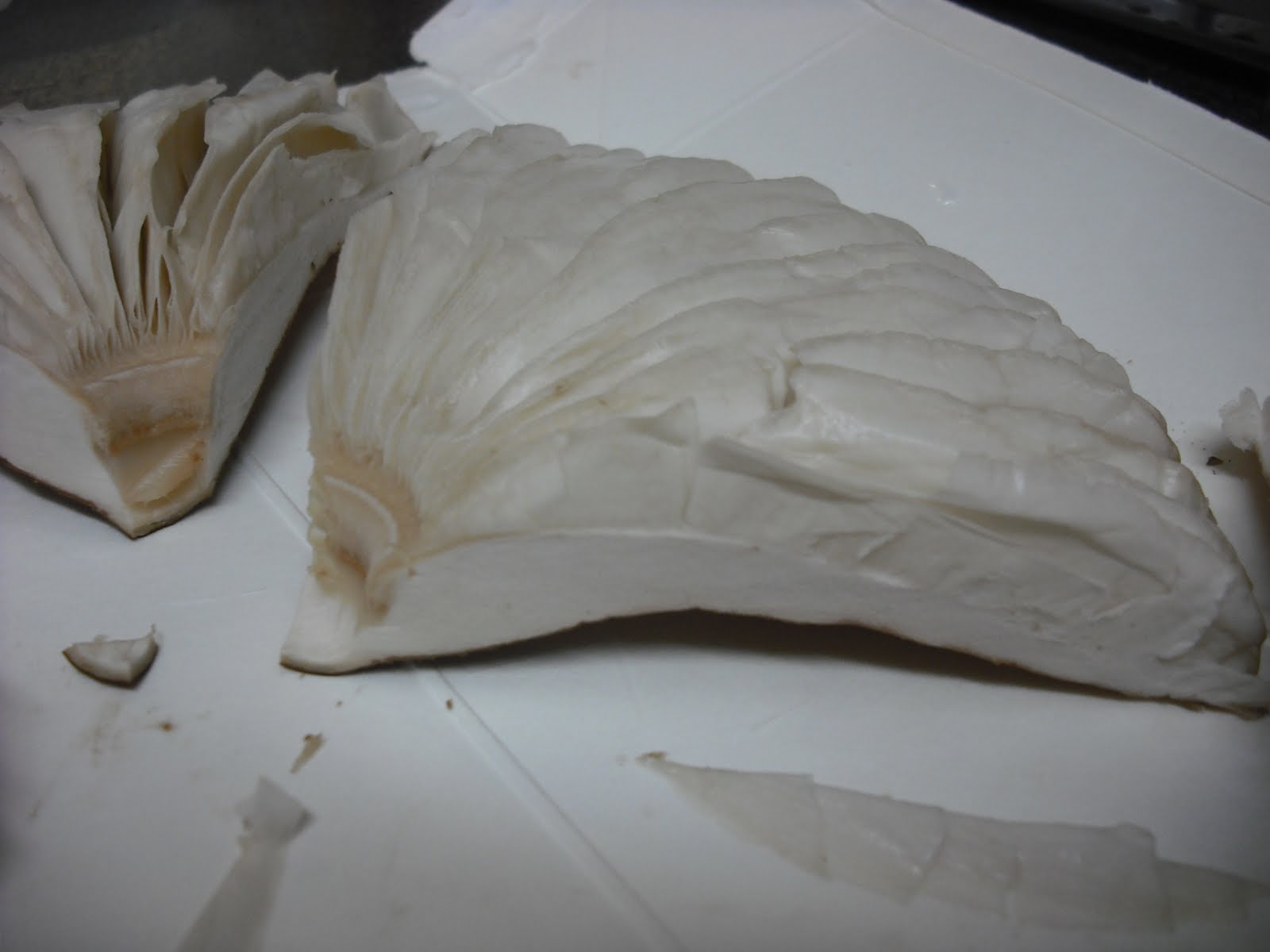
I cut the cap of the parasol mushroom into eight equal sectors.
カラカサタケのかさは扇形に8等分しました。

My daughter did the breading (dusting with flour, coating with beaten egg, and then coating with panko (Japanese breadcrumbs)).
娘が衣をつけてくれました(小麦粉をまぶし、溶き卵をつけ、パン粉をつける)。

The mushroom itself tasted of nothing, but we enjoyed the fluffy texture while having it with tonkatsu sauce.
キノコ自体は何の味もしませんでしたが、豚カツソースで食べながら、ふわふわした食感を楽しみました。

I pan-fried hoteishimeji (Clitocybe clavipes (Pers. : Fr.) Kummer), other edible mushrooms, and the stems of the parasol mushroom with some oil, and seasoned with salt and soy sauce. I refrained from having this dish because I know hoteishimeji will poison you if you have it with alcohol (and I was drinking). My son said the stems of the parasol mushroom were stringy and almost inedible.
ホテイシメジと他の食べられるキノコとカラカサタケの軸は油で炒め、塩としょう油で味付けしました。私はこの料理は食べませんでした。ホテイシメジをお酒と一緒に食べると中毒を起こす(そして私はお酒を飲んでいた)からです。息子はカラカサタケの軸は筋っぽくて、食べれないと言ってました。

I made kinoko soup, using some boiled honey mushroom.
茹でたナラタケを使って、キノコ汁を作りました。

Puffballs grilled in the toaster oven:
オーブントースターで焼いたホコリタケ:


I almost forgot to mention that I made tonkatsu (breaded pork cutlets) as well, because I thought that the mushroom fries would not be enough to fill our stomachs. (Of course, my daughter did the breading.)
言い忘れるところでしたが、豚カツも作りました。キノコのフライだけでは食欲を満たせないと思ったからです(もちろん、衣は娘がつけてくれました)。

October 3, 2010

Two Events in Shiozawa on the Same Day/同じ日に塩沢で2つのイベントが

Today, October 3, two events were held in the Shiozawa area of Minami Uonuma city: Shinmai no Jin and the Third Light-Truck Market.
今日、10月3日は、南魚沼市の塩沢地域で2つのイベントが開かれました。新米の陣と第三回軽トラ市です。

First Light-Truck Market/初めての軽トラ市
Shinmai no Jin held last year/去年開かれた新米の陣

Shimai no Jin:
新米の陣:

Light-Truck Market:
軽トラ市:


In Shinmai no Jin, I got just cooked Koshihikari rice and mushroom soup, free of charge.
新米の陣では、炊き立てのコシヒカリとキノコ汁をタダでもらいました。

If you ever look for the very best short-grain rice, then look no further. Shiozawa is the place where premium Koshihikari rice is cultivated.
最高の短粒米を探しているとしたら、もう探す必要はないです。塩沢こそ、最高のコシヒカリが採れる所です。

September 23, 2010

Macaroni au Gratin with Dried Buna Shimeji/ブナシメジのマカロニグラタン

Obviously, shiitake and enoki are not the only types of mushroom suitable for drying. I dried some buna shimeji months ago, and put it in the freezer, and this evening, I finally made gratin with it. The intense flavor of the dried buna shimeji was wonderful!
言うまでもなく、シイタケやエノキだけが干しキノコに向いているわけではありません。数ヶ月前にブナシメジを少し干して、冷凍庫に入れておきました。そして今夜、やっとそれでグラタンを作りました。干しブナシメジの強い風味が素晴らしかったです。