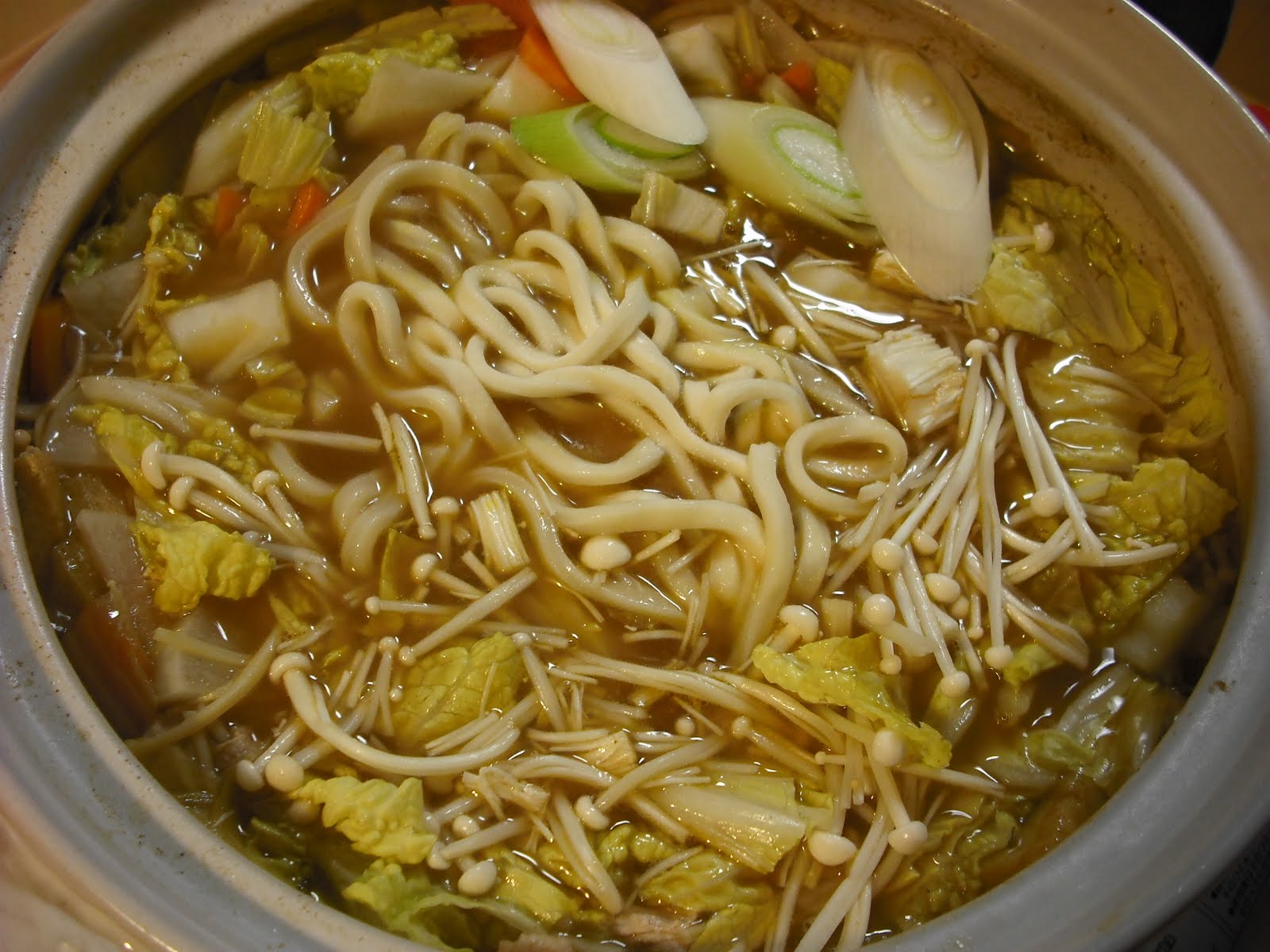
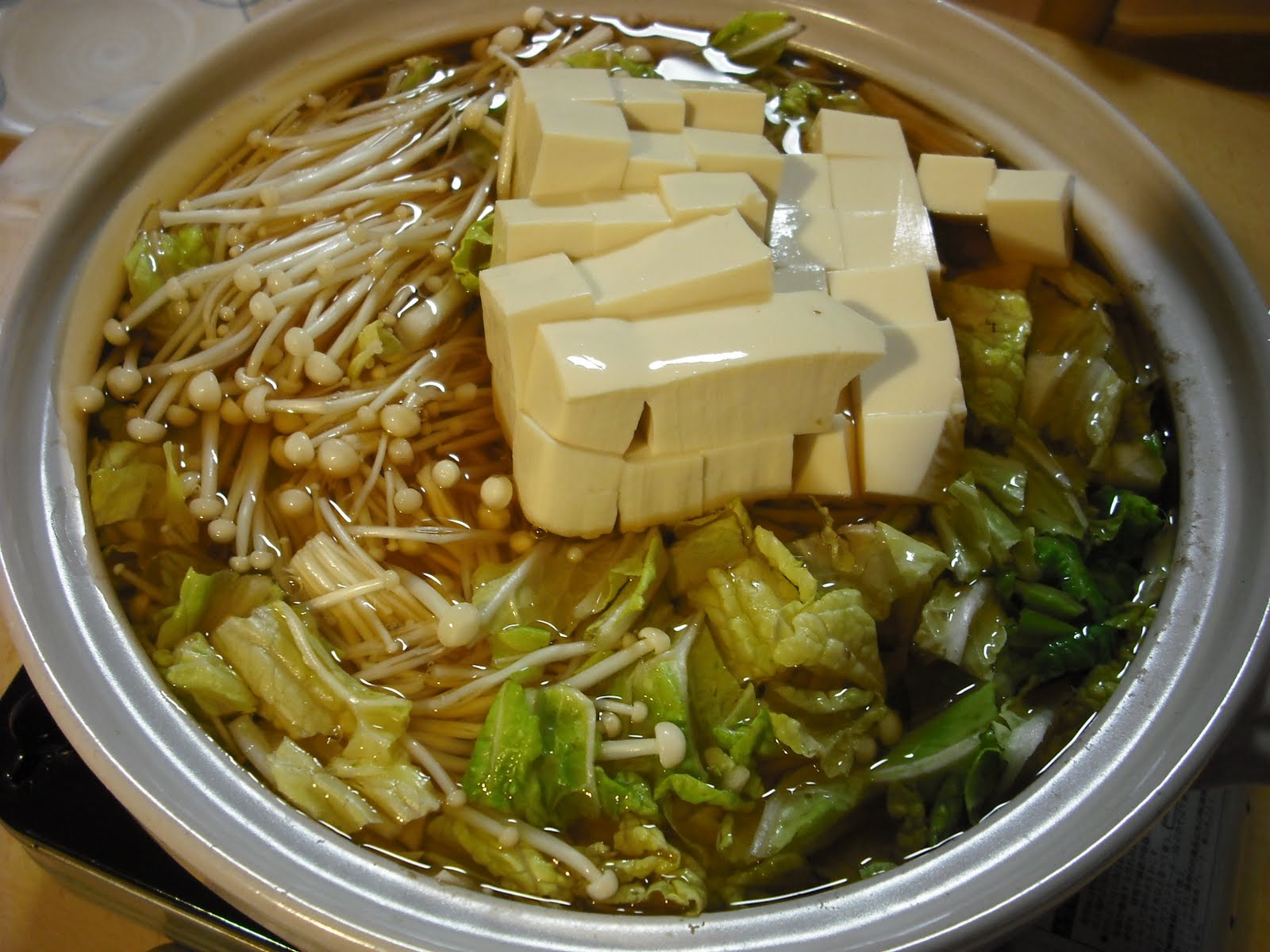
January 27, 2011

Kinoko Nabe (Mushroom One-Pot Dish)/きのこ鍋

I made kinoko nabe for supper tonight. Kinoko means mushroom. I used seven types of mushroom:
Wild honey mushrooms (previously boiled and frozen), enoki,
oyster mushrooms, nameko,
maitake, bunapi (white beech),
夕飯には、きのこ鍋を作りました。きのことはmushroomの意味です。7種類のきのこを使いました:
野生のヒラタケ(茹でて冷凍したもの)、えのき
ひらたけ、なめこ
まいたけ、ブナピー、

and dried shiitake.
そして干ししいたけ。

I made tori tsukune (ground chicken balls), as usual.
いつも通り、鶏のつくねを作りました。

You can always replace it with any other meat. As for me, I like tori tsukune very much!
いつでも他の肉に代えてください。私自身は鶏のつくねが大好きです!

The broth was:
1,600 ml water
2 tsp instant dashi
1 tsp salt
1 tbsp soy sauce

I first simmered daikon, carrot, and thick portions of Chinese cabbage for 5 min.

汁は:
水 1,600 ml
出汁の素 小さじ2
塩 小さじ1
しょう油 大さじ1

まずは大根、にんじん、白菜の厚い部分を5分間煮ました。

Then, my children added tori tsukune one spoonful at a time, and added some of the seven mushrooms. I added thin portions of Chinese cabbage.
次に、子供たちが鶏のつくねを一さじずつ入れ、また7種類のきのこを少し入れました。私は白菜の薄い部分を入れました。

My daugher asked me to take a photo of her serving bowl, so here it is.
娘が自分の取り皿の写真を撮ってくれと頼むので、撮りました。

My wife and I used these condiments: Yuzu wasabi, yuzu kosho, and kanzuri.
妻と私は、次の調味料を使いました: 柚子わさび、柚子こしょう、かんずり。

I liked the yuzu kosho the best.
柚子こしょうが一番良かったです。

We later added frozen sanuki udon.
冷凍讃岐うどんも後で入れました。

January 23, 2011

Curry Nabe/カレー鍋

Tonight's supper was some marvelous marbled buri (adult yellowtail) sashimi plus curry nabe made by my wife.
今夜の夕食は、素晴らしいブリ(トロ)の刺身と、妻が作ったカレー鍋でした。

Buri caught in winter are called kan buri, and are very fatty.
(Note that one slice of sashimi in the lower right corner had been eaten before this photo was taken.)
冬に獲れるブリを寒ブリと呼びます。とても油がのっています。
(この写真を撮る前に、右下隅の刺身は食べてしまいました。)


The broth was:
1,600 ml water
2 tsp instant dashi
1 tbsp soy sauce
2 store-bought curry roux blocks

汁は:
水 1,600 ml
出汁の素 小さじ2
しょう油 大さじ1
市販のカレールー 2ブロック

I should have said curry udon nabe.
カレーうどん鍋と言うべきでした。

We later added frozen sanuki udon to the nabe.
後で、冷凍讃岐うどんを鍋に入れました。

January 22, 2011

Tomato Nabe/トマト鍋

I made tomato nabe for supper tonight.

Ingredients:

1,200 ml water
2 tsp instant dashi
50 ml soy sauce
50 ml mirin
Dashi, soy sauce, and mirin ratio = 24:1:1
1 can (400 g) whole tomatoes

2 potatoes
1 large onion
1/2 carrot
1 bunch mizuna
4 leaves Chinese cabbage
1 bag enoki

For tsukune (ground meat balls):
300 g ground chicken
1 egg
1/2 tsp salt
1 knob grated ginger
Add some katakuriko (potato starch) to adjust the softness, if required.

Directions:

1. Put water, instant dashi, soy sauce, mirin, and canned tomatoes in a donabe.
2. Add carrot, potatoes, onion, and thick portions of Chinese cabbage to the donabe.
3. Bring to a boil, simmer for 5 min.
4. Add enoki, thin portions of Chinese cabbage, and mizuna.
5. Add tsukune one spoonful at a time.

今日の夕飯にはトマト鍋を作りました。

材料:

水 1,200 ml
出汁の素 小さじ2
しょう油 50 ml
みりん 50 ml
出汁、しょう油、みりんの割合=24:1:1
ホールトマト 1缶(400 g)

じゃがいも 2個
玉ねぎ 大1個
ニンジン 1/2本
水菜 1束
白菜 4枚
えのき 1袋

つくねには:
鶏挽き肉 300 g
卵 1個
塩 小さじ1/2
すったショウガ 1カケ
必要に応じて、片栗粉を少し入れて、柔らかさを調整する。

作り方:

1. 土鍋に、水、出汁の素、しょう油、みりん、缶詰のトマトを入れる。
2. ニンジン、じゃがいも、玉ねぎ、白菜の厚い部分を入れる。
3. 沸騰させ、5分煮る。
4. えのき、白菜の薄い部分、水菜を加える。
5. つくねを一さじづつ入れる。


The broth was very flavorful. I later added 1 can (400 g) diced tomatoes, plus 400 ml water, 25 ml soy sauce, and 25 ml mirin. The broth become even more flavorful!
汁はとても美味しかったです。後で、さいの目のトマト缶(400 g)、水400 ml、しょう油25 ml、みりん25 mlを足しました。汁はもっと美味しくなりました!

January 16, 2011

Gyudon in the Nabe Style/鍋風の牛丼

The other day, I bought some cheap imported beef because I wanted to make gyudon (beef bowl), but today, I changed my mind and made gyudon in the nabe style.

Broth:
1,400 ml water
2 tsp instant dashi
120 ml soy sauce
120 ml mirin
120 ml sake
(Dashi, soy sauce, and mirin ratio = approx. 12:1:1)
1 knob grated ginger

Ingredients:
400 g thinly sliced beef
1 pack kinu (silken) tofu
1 pack enoki
6 leaves Chinese cabbage
1 1/2 onions

先日、牛丼を作ろうと思って、安い輸入の牛肉を買いましたが、今日になって気が変わって、鍋風の牛丼を作りました。

汁:
水 1,400 ml
出汁の素 小さじ2
しょう油 120 ml
みりん 120 ml
酒 120 ml
(出汁:しょう油:みりん=約12:1:1)
すったショウガ 1カケ

材料:
薄切り牛肉 400 g
絹豆腐 1パック
エノキ 1パック
白菜 6枚
玉ねぎ 1 1/2個

I first put sliced onions and thick portions of Chinese cabbage in the donabe, added the broth, and brought to a boil, simmered for a few minutes, and turned off the heat.
まず、スライスした玉ねぎと白菜の厚い部分を土鍋に入れ、汁を入れ、沸騰させ、数分煮てから、火を止めました。

It was only about 5:30 in the evening. I let the donabe stand until my wife and daughter came home.
まだ夕方の5:30頃だったので、妻と娘が帰るまで土鍋をそのままにしておきました。

When they got home, I brought the donabe to a boil again (on the portable burner this time), and added the thin portions of Chinese cabbage, enoki, and tofu.
帰って来てから、(今度は、カセットコンロで)土鍋を再び沸騰させ、白菜の薄い部分とエノキと豆腐を入れました:


I added beef in the shabu-shabu style.
牛肉はしゃぶしゃぶ風に入れました。


My family discussed what was the best nabe of the six we had had recently (tori tsukune nabe, oden, sukiyaki, udon suki, kimuchi nabe, and today's gyudon in the nabe style), and we concluded that tsukune nabe and udon suki were the best.
家族で、最近食べた6種類の鍋(鶏つくね鍋、おでん、すき焼き、うどんすき、キムチ鍋、今日の鍋風の牛丼)の中でどれが一番美味しかったか話し合いました。そして、つくね鍋とうどんすきが一番美味しかったという結論になりました。

Nel Drip Coffee/ネルドリップコーヒー

I had run out of paper filters for coffee, and I had kept forgetting to buy new ones, so I decided to try the nel filter that I got more than five years ago. "Nel" stands for flannel.
コーヒー用の紙フィルターがなくなり、新しいのを買い忘れてばかりなので、5年以上も前にもらったネルフィルターを試してみることにしました。「ネル」とはフランネルという意味です。

One side of the fabric is raised.
布の片面が起毛しています。

You can use the filter with either side out.
どちらを外側にしても使えます。

Before the first use, you must boil the nel filter in water with some coffee grounds for 10 minutes or so.
ネルフィルターは初めて使う前に、コーヒーの出がらしを入れたお湯で煮沸する必要があります。

I didn't have any coffee grounds, so I used some ground coffee beans instead.
コーヒーの出がらしはなかったので、挽いたコーヒー豆を使いました。

I have an elegant coffee pot, but only its spout is shown below.
素晴らしいコーヒーポットも持っているのですが、注ぎ口だけお見せします。

The mirror surface of the pot would reveal almost everything in the kitchen!
ポットの鏡面でキッチンの殆ど全てが見えてしまうので。

Three cups of coffee brewed in the server:
サーバーにできた3杯分のコーヒー:

A nel filter makes mild coffee!
ネルフィルターではマイルドなコーヒーができます!


Caution: Once starting to use it, you must keep the nel filter in a container with cold water in it, and store it in the fridge. You must not dry it.
注意: ネルフィルターは、使い始めたら、水の入った容器に入れ、冷蔵庫に保管する必要があります。乾燥させてはいけません。

January 15, 2011

Kimuchi Nabe/キムチ鍋

I made kimuchi (kimchi) nabe for supper tonight.

Ingredients for 4 servings

For the broth:
1,500 ml water
2 tsp instant dashi
2 tbsp miso

400 g kimchi
300 g pork, thinly sliced
1/4 daikon
1/2 carrot
1 bag moyashi (bean sprouts)
1 bunch Chinese chives
1 pack buna shimeji
1 pack enoki
4 leaves Chinese cabbage
1 pack momen tofu

3 servings ramen noodles
Kanzuri (optional)

Directions:

1. Stir-fry kimchi and pork in a pan.
2. Put all other ingredients in a donabe.
3. When the donabe comes to a boil, put stir-fried kimchi and pork.
4. Later, rinse ramen noodles in hot water to remove flour and add to the donabe.

今日の夕飯にはキムチ鍋を作りました。

4人分の材料

汁には:
水 1,500 ml
出汁の素 小さじ2
味噌 大さじ2

キムチ 400 g
豚肉薄切り 300 g
大根 1/4本
ニンジン 1/2本
もやし 1袋
ニラ 1束
ブナシメジ 1袋
白菜 4枚
木綿豆腐 1パック

ラーメンの麺 3人分
かんずり(好みで)

作り方:

1. キムチと豚肉をフライパンで炒める。
2. 他の具材は全て土鍋に入れる。
3. 土鍋が沸騰したら、炒めたキムチと豚肉を入れる。
4. 後で、ラーメンの麺を熱いお湯で洗って小麦粉を落とし、土鍋に入れる。

Stir-fried kimchi and pork:
炒めたキムチと豚肉:

In most Japanese recipes, this step is omitted. That is, kimchi and pork are simply added to the donabe.
日本の大半のレシピーでは、この工程は省かれます。つまり、キムチと豚肉を単に土鍋に入れるだけです。

I always have a bad habit of preparing more ingredients than the donabe can hold...
私は、土鍋に入り切らないほど具材を用意してしまう悪い癖があります...。

because I want to make sure that all diners can have as much ingredients as they want.
食べる人がみんな食べたいだけ具を食べれるように、です。

For me, the star of tonight's nabe is these ramen noodles.
私にとっては今晩の鍋の主役はこのラーメンの麺です。


Stir-fried kimuchi and pork added to the donabe:
炒めたキムチと豚肉を土鍋に入れたところ:


Later, I added 2 servings ramen noodles (and 1 serving later).
その後、ラーメンの麺を2人分(後で1人分)入れました。


I sometimes added some kanzuri to my serving dish.
時々、自分のお皿にかんずりを入れました。


As I previously mentioned somewhere in my blog, kanzuri is made by fermenting red peppers, yuzu, and rice malt with salt for more than three years. The combination of the broth and kanzuri was surprisingly good!
このブログのどこかで前に述べたように、かんずりとは、赤唐辛子、柚子、麹を塩と一緒に3年以上発酵させて作ったものです。汁とかんずりの組み合わせは驚くほど良かったです!

January 12, 2011

Kagami Biraki/鏡開き

A short note to remind you that kagami biraki fell on yesterday, January 11.
No photos of our kagami mochi this year because it was very cheap (less than 100 yen) and embarrassing to show to anyone.

I posted about kagami biraki here in my blog two years ago.

鏡開きは昨日、1月11日でした。
我が家の鏡餅は安く(100円以下)で、見せられるものではないので、写真は止めます。

2年前に、このブログのここで鏡開きのことを載せました。

My family had the kagami mochi as part of supper last night.
我が家族では、昨日、夕飯の一部として鏡餅を食べました。