May 18, 2013

International Festival of IUJ 2013, Part II/IUJインターナショナル・フェスティバル2013、パート2

There were twelve food booths outdoors that were run by IUJ students: Central Asia, Mongolia, Laos, Thailand, Nepal, Sri Lanka, Japan, Indonesia, Myanmar, the Philippines, Afghanistan, and China. Most dishes were only 100 yen each, and some were as low as 50 yen each! Food booths run by outsiders were more expensive.
屋外の料理ブースのうち、IUJの学生がやっているのは12ありました: 中央アジア、モンゴル、ラオス、タイ、ネパール、スリランカ、日本、インドネシア、ミャンマー、フィリピン、アフガン、中国です。大半の料理はそれぞれたった100円で、中には50円のもありました。外部の人たちの料理ブースはもっとずっと高かったです。
 
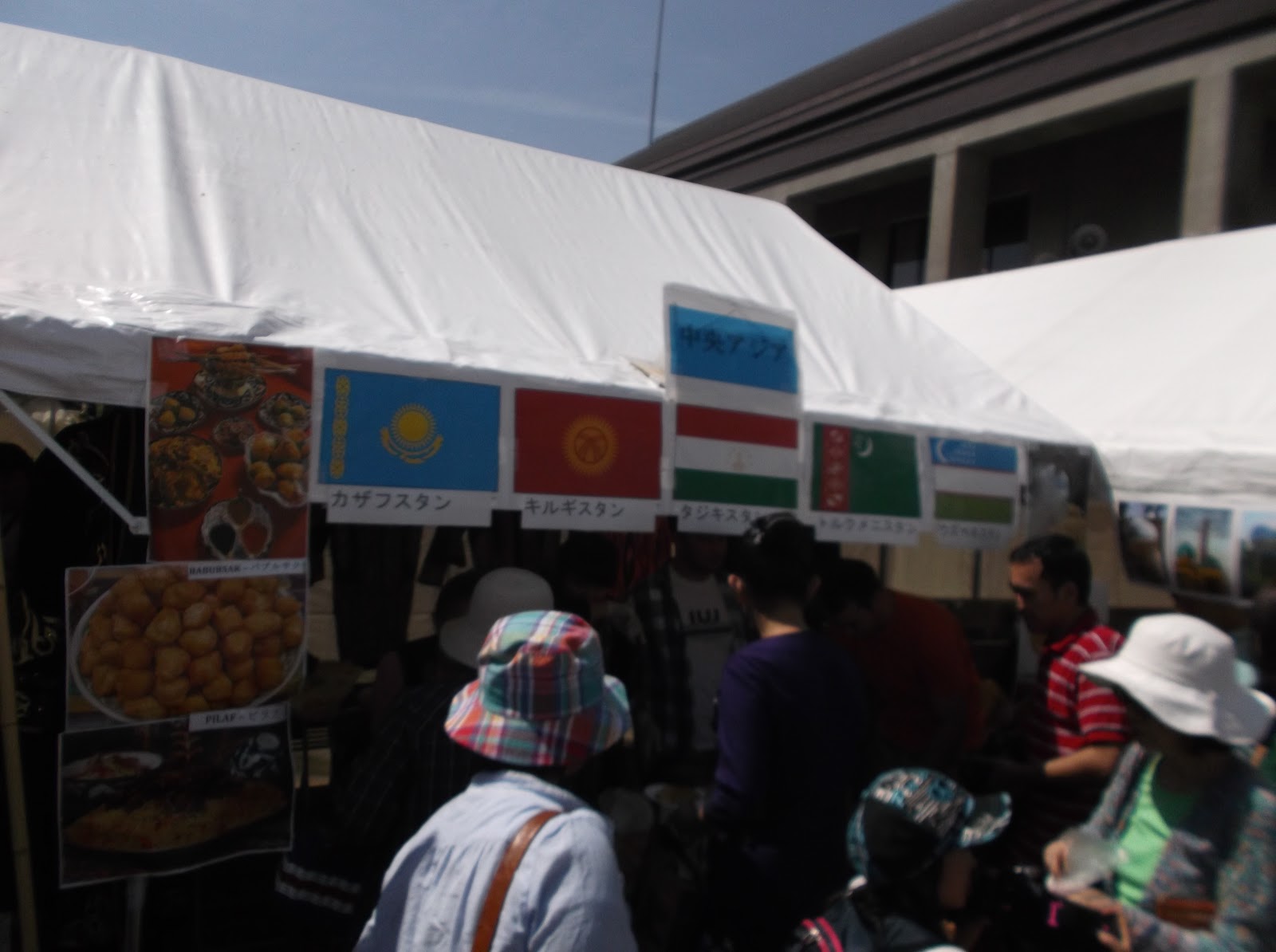
Central Asia:
中央アジア:
 
Mongolia:
モンゴル:
 
 
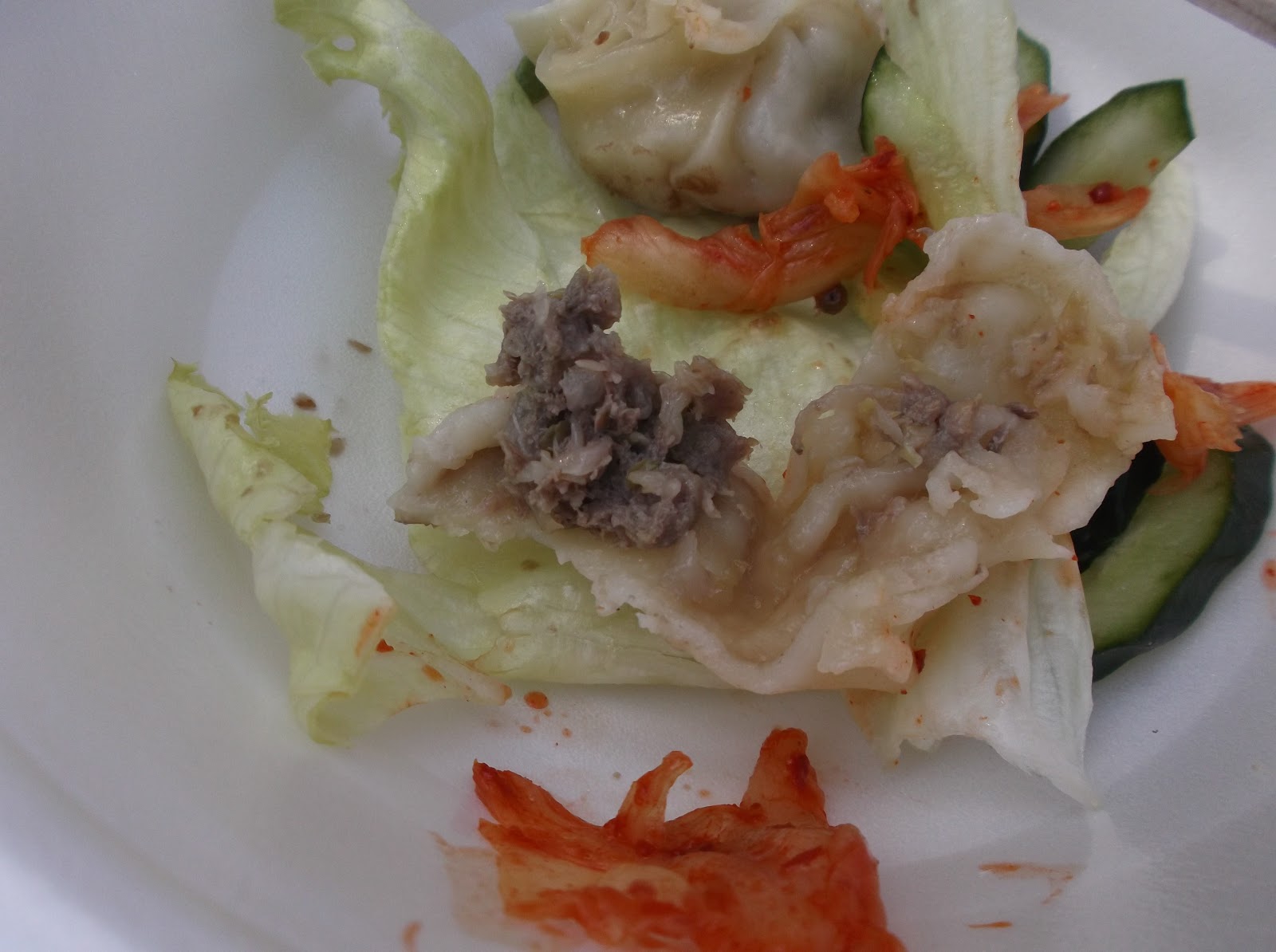
I asked them what was inside, and they replied, "beef". Kimchi was offered for free of charge. I asked, "Do Mongolian eat kimchi?" They said no. Kimchi was offered for the Japanese. 
中に何が入っているか聞くと、「ビーフ」との答えでした。キムチが無料であったので、「モンゴル人はキムチを食べるんですか?」と聞くと、答えはノーで、キムチは日本人のために出されているそうです。
There was beef inside.
中には牛肉がありました。 
Laos:
ラオス:
I was intrigued by the mysterious words, "Lucky food". I asked, "What does lucky food mean?" They replied that lamb was lucky food (if I remember correctly).
奇妙な「ラッキーフード」という言葉が興味深かったので、「ラッキーフードって何のことですか?」と聞くと、(記憶が確かなら)子羊の肉がラッキーフードだそうです。 
 
Wrapped in plastic wrap is rice (Japanese rice?).
ラップに包まれているのは、ごはんです(日本のお米?)。 
Thailand:
タイ:
I had no idea what the dishes were...
どんな料理がさっぱり分かりません...。 
I asked these Thai beauties.
このタイ美人に聞くと、  
The right one contains chichen, and the left one is made with peanuts.
右のには鶏肉が入っていて、左のはピーナッツでできているそうです。
 
The white rectangular ingredient tasted like tofu.
白い長方形の具は豆腐のようでした。 
Then I had the peanut snack. Yummy!
それからピーナッツのお菓子を食べました。美味しかったです。 
Nepal:
ネパール:
 
 
 Sri Lanka:
スリランカ:
Some kind of curry, if I remember correctly.
確か、カレーの一種だったと思います。 
Japan:
日本:
I looked at the sake brand. Hakkaisan! Of course, I had one glass.
酒の銘柄を見ると、八海山でした!もちろん、一杯飲みました。  
Amazake was offered for free. I knew this particular product (called Amasake, not amazake). It's real amazake, made from koji (rice malt) and rice.
甘酒(あまざけ)が無料でした。この商品(あまざけではなく、「あまさけ」)は知っていました。麹と米で作った、本当の甘酒です。 
 I asked these Japanese beauties, "Is this really free???"
日本美人に聞きました、「本当にタダなんですか???」 
It was free of charge. Of course, I asked for one glass.
ホントに無料でした。もちろん、一杯もらいました。
Jonnobi no Kai:
じょんのびの会:
A group of non-IUJ people, I suppose, but they offered fried chicken and other foods for 100 yen.
IUJの人たちではないと思いますが、フライドチキンなどを100円で売っていました。
 
To be continued.
続く。

International Festival of IUJ 2013/IUJインターナショナル・フェスティバル2013

Today, I visited the International University of Japan, located in Minami Uonuma city, to enjoy the International Festival.
I got off at JR Urasa Station.
今日は、南魚沼市にある国際大学に行って、インターナショナル・フェスティバルを楽しみました。
JR浦佐駅で降りました。
My blog is no place to talk about politics, but let me just tell you that a statue of TANAKA Kakuei is located in front of Urasa Station.
私のブログは政治を語る場所ではないですが、田中角栄の像が浦佐駅の前にあるとだけ言っておきます。   
A free shuttle bus service is offered on this special day, which takes you to IUJ in 10 minutes.
この特別な日には無料送迎バスが出ていて、10分でIUJに着きます。 
 
Inside:
内部: 
I arrived at around 13:50. The food booths were to start at 2 o'clock, and they were already crowded with people. 
13:50頃着きました。売店は2時に始まる予定でしたが、もうすでに混んでいました。 
Flyer of the Festival:
フェスティバルのチラシ:
Performance Schedule:
上演スケジュール: 
Layout of the outdoor food booths:
屋外出店配置図: 
To be continued.
続く:

May 17, 2013

Okara Yaki/おから焼き

This morning, I made soy milk with 200 g domestic soybeans and 1,000 ml water, but didn't separate the soy milk from soy pulp. Reason? Because I wanted to try this recipe:
今朝は、国産の大豆200 gと水1,000 mlで豆乳を作りましたが、豆乳とおからを分けませんでした。何故かって?このレシピを試したかったので:
 
This recipe calls for:
100 g soy pulp
70 g rice flour (komeko in Japanese)
2 tsp olive oil
25 g grated cheese
Small amount of salt
80 cc milk
 
Combine all ingredients, separate into 10 pieces, make them into balls, and bake in an oven at 180-190oC for 20-25 min.
このレシピの材料は:
おから 100 g
米粉 70 g
オリーブ油 小さじ2
粉チーズ 25
塩 少々
牛乳 80 cc
 
材料をすべて混ぜ、10個に分け、丸め、180~190度のオーブンで20~25分焼く。
 
My plan was to replace the soy pulp and the milk with the soy "mash" (soy milk not separated from pulp) and leave out the grated cheese.
私の計画は、おからと牛乳の代わりに、おからと分けてないドロドロの豆乳を使い、粉チーズは省くというものです。
 
Soy mash:
ドロドロの豆乳:
I used this rice flour, made from Koshihikari rice produced here in Minami Uonuma.
南魚沼産のコシヒカリでできた、この米粉を使いました。 
The recipe says that the dough should have a texture like that of nukamiso (= nukadoko = rice bran bed for pickling), which may mean nothing to those who are not familiar with nukamiso. Roughly, a texture similar to that of miso.
レシピでは、生地は糠味噌(=糠床)くらいの固さと書いてありますが、糠味噌のことを知らない人には何のことか分からないと思います。大まかに言って、味噌に似た固さです。 
I separated the dough into 12 pieces, and placed on the tray,
私は生地を12個に分けて、トレイに載せ、  
put the tray in my toaster oven! Five minutes later, I placed a sheet of aluminum foil to prevent them from scorching.
トレイをオーブントースターに入れました!5分後、焦げないようアルミホイルをかぶせました。 
 I baked them for a total of 5 + 8 + 10 = 23 min.
合計5 + 8 + 10 = 23分焼きました。
 
Still very moist.
まだ水分が多かったです。
I microwaved them for 1 min.
電子レンジで1分加熱しました。
Despite the appearance, they tasted very good! I will definitely make another attempt soon!
見た目は悪いですが、とても美味しかったです!また早く試そうと思います!

Edited to add the following photos and descriptions:
下記の写真と説明を追加:

These okara yaki balls were so tasty that I finished them off before noon all by myself. This afternoon, I made another batch, doubling the amount of each ingredient. This time, I added some shredded cheese for lack of grated cheese.
おから焼きはとても美味しかったので、昼前に一人で全部食べてしまいました。午後、もう一回作りました。今回は材料をそれぞれ二倍にして、また粉チーズがないので、ピザ用のチーズを入れました。
I fried half the dough in a frying pan, using a sheet of parchment paper.
生地の半分は、フライパンで、クッキングシートを使って焼きました。
I baked the other half in the toaster oven for 20 min. This time, I didn't use a sheet of aluminum foil. The dough was so moist I thought it wouldn't need aluminum foil to prevent it from scorching.
残りの半分はオーブントースターで20分焼きました。今回はアルミホイルは使いませんでした。生地は水分が多いので、焦げるのを防ぐためにアルミホイルは要らないだろうと思ったので。
 Closeup of one that was baked in the toaster oven:
オーブントースターで焼いた方(ほう)のクローズアップ:
Very crunchy on the outside and still moist on the inside.
外側はとてもパリパリで、内側はまだ水分が多かったです。
Anyway, my son, who came home much earlier than usual because of the midterm exams, tasted them and said they were very good!
とにかく、中間試験のせいでいつもよりずっと早く帰宅した息子は、味見して、とても美味しいと言ってました。 

May 11, 2013

Boiling Spaghetti without Salt/スパゲティを塩なしで茹でる

I have learned great news today. This site (Japanese only) says that it's not necessary to add salt when boiling spaghetti. This is a finding of NAGAO Keiko, Prefessor of the Graduate School of Home Economics of Tokyo Kasei University.

The reason for adding salt to water when boiling spaghetti is said to make the spaghetti firm. A common way to boil spaghetti is to boil ten times as much water as spaghetti in weight and add salt 0.5 to 1% of the water to boil the spaghetti.

Adding such a low percentage of salt to water does NOT change the elasticity of the spaghetti, keep the protein in the spaghetti, or raise the boiling point of the water.

今日はすごいニュースを聞きました。このサイトによると、スパゲティを茹でる時に塩を入れなくてもいいそうです。東京家政大学大学院家政学研究科教授の長尾慶子さんが発見したことです。

スパゲティを茹でる時に塩を入れるのは腰を強くするためと言われています。一般的な茹で方はスパゲティの重量の10倍の水を沸騰させ、そのお湯の0.5~1%の塩を加えて茹でるというものです。

水にこんな低い割合の塩を加えても、スパゲティの弾力性は変わらず、スパゲティ内のたんぱく質を内部にとどめることもできず、お湯の沸点を上げることもできないそうです。


May 8, 2013

Three Major Poisonous Plants in Japan/日本三大有毒植物

The three major poisonous plants in Japan are torikabuto, doku zeri, and doku utsugi.
日本の三大有毒植物はトリカブト、ドクゼリ、ドクウツギです。

1. トリカブト, 鳥兜, torikabuto = Aconitum, aconite
The leaves resemble those of nirinsou (Anemone flaccida). Nirinsou is a favorite sansai. The two plants can be found in the same place.
葉はニリンソウ(二輪草)に似ています。ニリンソウは山菜です。両者は同じ場所に生えていることがあります。
Images of torikabuto/トリカブトの画像
Images of nirinsou/ニリンソウの画像

2. ドクゼリ, 毒芹, doku zeri = Cicuta virosa, water hemlock
The leaves resemble those of seri (water dropwort), one of the haru no nana kusa (seven herbs of spring). The two plants can be found in the same place.
歯はセリに似ています。セリは春の七草のひとつです。両者は同じ場所に生えていることがあります。
Images of doku zeri/ドクゼリの画像
Images of seri/セリの画像

3. ドクウツギ, 毒空木, doku utsugi = Coriaria
Images of doku utsugi/ドクウツギの画像

May 5, 2013

Cooking Maitake/マイタケを調理する

I am very particular about how to cook maitake. The two most important things to remember are NOT to rinse maitake (and other mushrooms as well) and NOT to overcook it.
私はマイタケの調理の仕方にはきわめてこだわりがあります。大切な二点は、まいたけを洗わないこと(ほかのきのこもそうです)と火を通しすぎないことです。
 
NOTE: I'm talking about cultured maitake and other mushrooms. I do wash wild mushrooms to remove dirt and any tiny worms that may be hiding in them.
注:ここで述べているのは、栽培したまいたけなどのきのこのことです。天然のきのこは、汚れや隠れている小さな虫を取るために洗っています。
  
I decided to use half the 500 g maitake in miso soup and stir-fry the other half with butter, as usual (I can't think of better ways to cook this mushroom...).
いつも通り、500 gのマイタケの半分を味噌汁に入れ、残りの半分はバター炒めにすることにしました(このきのこを調理する、より良い方法が考え付かないので...)。
 
I tore the maitake with my hands, not with a knife.
マイタケを包丁ではなく、手で割きました。
I put some water in a pot, added maitake and some instant dashi, and brought to a boil.
鍋に水を入れ、マイタケと出汁の素を入れ、沸騰させました。
I stopped the heat immediately, and added some miso. Finished. The maitake will cook as long as it's hot.
火をすぐに止め、味噌を入れました。終わりです。マイタケは余熱で火が通ります。 
I put the other half in a frying pan, sprinkled 1/2 tsp salt, turned on the heat, and "simmered" with a lid on.
残りの半分をフライパンに入れ、塩を小さじ1/2入れ、火をつけ、ふたをして蒸しました。 
I added some butter, and repeated the steps of "simmering" and stir-frying several time. Finally, I added some soy sauce and additional butter, and turned off the heat.
バターを入れて、「蒸す」と炒めるを数回繰り返しました。最後にしょう油を少し入れ、バターも足して、火を止めました。  
Again, I refrained from overcooking the maitake.
ここでも、マイタケに火を通しすぎるのは避けました。