June 16, 2013

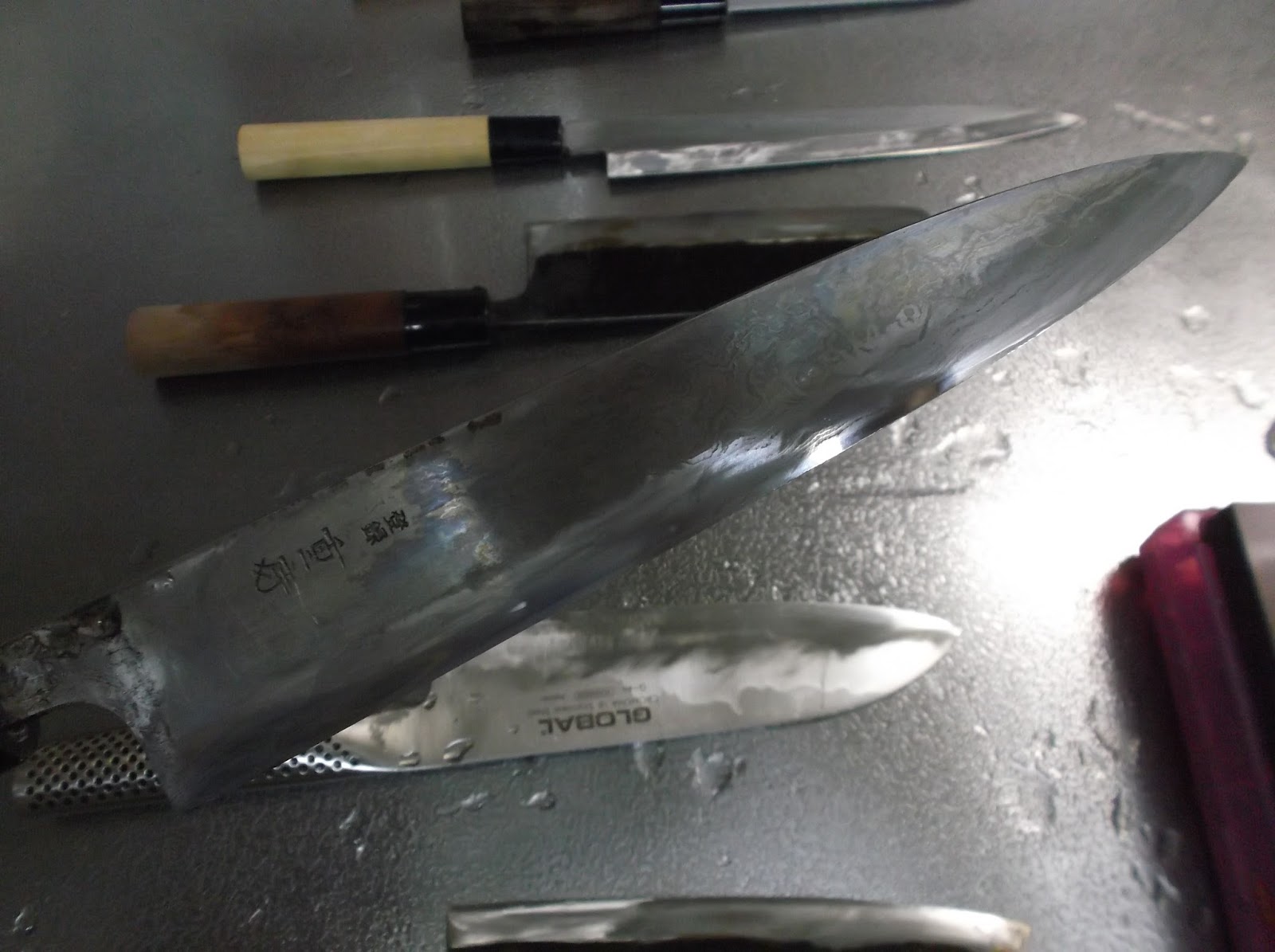
Custom-Made Shigefusa Kitaeji 200-mm Santoku with a Saya/特注の重房鍛地200 mm三徳,鞘付き

Recently, someone living overseas got this knive from Yoshizawa Riko through me. The guy kindly provided me with these photos to post in my blog.
最近、海外に住む誰かが吉沢利工さんから私を通してこの包丁を買いました。その人が私のブログに載せれるよう写真を送ってくれました。


Thanks for the photos. I'm sure a lot of people will appreciate your photos.
写真をどうも。多くの人が有難いと思っていると思います。

June 15, 2013

Sake Kasu Cake/酒粕ケーキ

While searching for good ways to use up the sake kasu that I had in the fridge, I found one that sounded good: super easy rich cheesecake with sake kasu and hot cake mix. Despite the title, the recipes does not call for cheese. It says that when baked, sake kasu tastes like cheese. I didn't think that was true, but I decided to give it a try.
冷蔵庫にある酒粕を使い切るいい方法を探していると、よさそうなのが見つかりました:酒粕とホットケーキミックスで超簡単濃厚チーズケーキ。このレシピにはチーズは入ってません。酒粕は焼くとチーズの味になるそうです。本当とは思いませんでしたが、試してみることにしました。
 
Ingredients for 8 servings:
300 ml milk
100 g sake kasu
100 hot cake mix
60 sugar
2 eggs
3 tbsp salad oil
3 tbsp lemon juice
 
材 料(8人分)
牛乳 300ml
酒粕(板粕) 100g
ホットケーキミックス 100g
砂糖 60g
卵 2個
サラダ油 大さじ3
レモン汁 大さじ3

Directions:
1. Microwave sake kasu to soften. Microwave milk. Dissolve sake kasu in milk.
2. Preheat oven to 180oC. Brush mold with oil or place parchment paper.
3. Combine all ingredients and pour into mold. Or, use a blender or a food processor.
4. Bake in oven for 45-55 min.
作り方:
1. 酒粕を電子レンジで柔らかくする。牛乳も電子レンジで加熱する。酒粕を牛乳に溶かす。
2. オーブンを180oCに予熱する。型に油を塗るか、クッキングシートを敷く。
3. 材料をすべて混ぜて、型に流し込む。またはミキサーかフードプロセッサーを使う。
4. オーブンで45~55分焼く。

I reduced the amount of sugar by half, and I used two frying pans instead of an oven. It turned into a total failure, as you can see below.
私は砂糖の量を半分にし、オーブンの代わりにフライパンを2つ使いました。ご覧の通り、完全な失敗作となりました。

Cake in one pan:
一方のフライパンのケーキ:
 
Cake in the other. I had to use the toaster oven to bake both for some more time.
もう一方のフライパンのケーキ。ともにオーブントースターでもう少し焼きました。
For images of better-looking sake kasu cake, click here.
もっと美味しそうな酒粕ケーキの画像を見たければ、ここをクリックしてください。
 

June 14, 2013

#5000 Whetstone/#5000の砥石

Just a quick note to tell you that I am an owner of a #5000 whetstone.
#5000の砥石のオーナーになったことをちょっとお知らせします。
 
This particular whetstone requires 10-min. pre-soaking.
この砥石は10分間水に漬ける必要があります。
I enjoyed sharpening these seven knives with this stone.
この7本の包丁をこの砥石で研ぐのを楽しみました。
Watanabe Blade stainless steel petty knife
渡辺刃物のペティナイフ 
My wife uses it every day.
妻が毎日使っています。 
Global santoku
Globalの三徳 
It's also used by my wife every day.
これも妻が毎日使っています。 
Watanabe Blade sashimi knife
渡辺刃物の刺身包丁
Watanabe Blade mukimono knife
渡辺刃物のむきもの包丁 
Watanabe Blade santoku
渡辺刃物の三徳 
 
Shigefusa nakiri
重房の菜切り 
 
Shigefusa kitaeji petty knife
重房鍛地ペティナイフ 
 
I later cut tomatoes with these knives to check how well they cut. All the knifes cut very well, especially the Shigefusa kitaeji petty knife. I found this one almost scary.
後でこれらの包丁でトマトを切って、どれくらい切れるか確かめました。どの包丁もよく切れましたが、特に重房の鍛地ペティナイフは恐ろしいほど切れるようになりました。

June 10, 2013

Iwashi no Ume Ni (Sardines Simmered with Umeboshi/いわしの梅煮

As part of supper tonight, my wife made iwashi no ume ni (sardines simmered with umeboshi).
I asked her how she made it. She replied she used soy sauce, mirin, a small amount of instant dashi (optional), umeboshi, and ginger (and water, I suppose) to simmer four sardines, previously beheaded and gutted by me.
今日の夕飯には、妻がいわしの梅煮を作りました。どうやって作ったかと尋ねると、しょう油、みりん、出汁の素を少し(省略可)、梅干し、しょうが(それとたぶん、水)でいわしを四尾煮たそうです。いわしは私がすでに頭とはらわたを取ったものです。
 
For those of you who want to make this dish, here is a list of ingredients from one recipe (Japanese only):
4 sardines
2 umeboshi (low-salt)
1/2 knob ginger
1 tbsp soy sauce
1 tbsp mirin
Soy sauce to mirin ratio = 1:1
1 cup (= 200 ml) water
この料理を作りたい人のために、このレシピの材料をリストアップします。
いわし 4尾
梅干し 2個(低塩)
しょうが 1/2片
しょう油 大さじ1
みりん 大さじ1
(しょう油とみりんの割合 = 1:1)
水 1カップ(= 200 ml)
My wife's portion:
妻の分:
Bent because previously beheaded and gutted by me and stored in a bag in the partial freezing compartment of the fridge.
私が頭とはらわたを落とし、冷蔵庫のパーシャル冷凍庫に袋に入れてしまっていたので、少し曲がっています。 
 
My daughter's:
娘の分:
Best-looking of the four.
四尾の中で一番見栄えがいいです。
 
As the summer approaches, we crave for sour and refreshing dishes like this.
夏が近づき、こんな酸っぱくてさっぱりしたものが欲しくなります。

Sakekasu (Sake Lees)/酒粕

Just wanted to share some photos of sakekasu.
ちょっと酒粕の写真を見せたいと思いまして...。
 
I bought a bag of 1 kg sakekasu for 420 yen weeks ago, and kept it in the fridge. I initially planned to use it immediately to make sakadane for making bread.
The sakekasu is from Aoki Shuzo, the local sake brewery here in the Shiozawa area of Minami Uonuma city that is famous for their Kakurei and other brands.
数週間前、酒粕を一袋(1 kg、420円)を買い、冷蔵庫にしまいました。当初はパンを作るための酒種を作るためにすぐ使おうと思っていました。
この酒粕は青木酒造のものです。南魚沼市の塩沢地域にある、鶴齢などの銘柄で有名な酒蔵です。 
Yesterday, I decided to cut it into smaller pieces and store most of them in the freezer for later use (until I feel up for the challenge).
昨日、小さく切って、後で使えるよう(また挑戦する気になるまで)大半は冷凍庫にしまうことにしました。 
Cross section:
断面: 
I cut it into squares each measuring 30-50 g in weight.
重さ30~50 gの四角に切りました。
 
The problem is when I will feel up for the challenge.
問題はいつ挑戦する気になるかです。

June 9, 2013

Nikuman/肉まん

Today, I made nikuman after lunch.
nikuman = niku + man
niku = meat
man < manju
Nikuman is one type of chuka (Chinese-style) man. Anman is another. Other types, such as pizza man and curry man, have gained popularity.
The term nikuman is used in Kanto (Eastern Japan), while the term butaman (buta = pig) is used in Kansai (Western Japan). This reflects the fact that meat is pork by default in Kanto, while it is beef by default in Kansai.
    
今日は昼ごはんの後に肉まんを作りました。
肉まんとは、中華まんの一種です。あんまんもそうです。ピザまんやカレーまんなど他の種類も人気があります。
関東では「肉まん」と言い、関西では豚まんと言います。これは、関東で肉と言えば豚肉、関西では牛肉を指すからです。
 
Ingredients for 6 nikuman
 
Dough:
300 g cake flour
2 tbsp sugar
3 1/2 tsp baking powder
150 ml lukewarm water
 
Filling:
50 g ground pork
(I used 200 g!)
2 dried shiitake
(Sadly, I had none in the storage space!)
10 cm naga negi
2 tsp sesame oil
1 tsp potato starch
1 tsp sake
Pinch of sugar
Small amount of salt
 
Directions:
(The original recipe is more complicated. I have a bad habit of simplifying recipes.)
1. In a mixing bowl, combine flour, sugar, baking powder, and water. Knead and make into dough.
2. In a mixing bowl, combine ground pork, reconstituted shiitake, finely chopped naga negi, sesame seed, potato starch, sake, sugar and salt. Make into six balls.
3. Divide dough into six equal balls. Make each ball into a disc 8 cm in diameter, with the center thicker than the circumference.
4. Fill each disc with a pork filling ball. Close the disc.
5. Place each bun on a sheet of parchment paper, and steam in a steamer on high heat for 15 min.
肉まん6個分の材料

生地:
薄力粉 300 g
砂糖 大さじ2
ベーキングパウダー 小さじ3 1/3
ぬるま湯 150 cc
 
具:
豚ひき肉 50 g
(私は200 g使いました!)
干しシイタケ 2枚
(悲しいことに、収納スペースにありませんでした!)
長ネギ 10 cm
ごま油 小さじ2
片栗粉 小さじ1
酒 小さじ1
砂糖 一つまみ
塩 少々
 
作り方:
(元のレシピはもっと複雑です。私はレシピを簡素化してしまう悪い癖があります。
1. ボールに薄力粉、砂糖、ベーキングパウダー、水を入れ、こねて、生地にします。
2. 別のボールに豚ひき肉、戻したシイタケ、刻んだ長ネギ、ごま油、片栗粉、酒、砂糖、塩を入れ、6個のボールを作ります。
3. 生地を6等分し、ボールにします。それぞれ、周囲より中央が厚い直径8 cmの円形にします。
4. 円形それぞれで具のボールを包み、円形を閉じます。
5. クッキングシートに載せ、蒸し器で強火で15分蒸します。
 
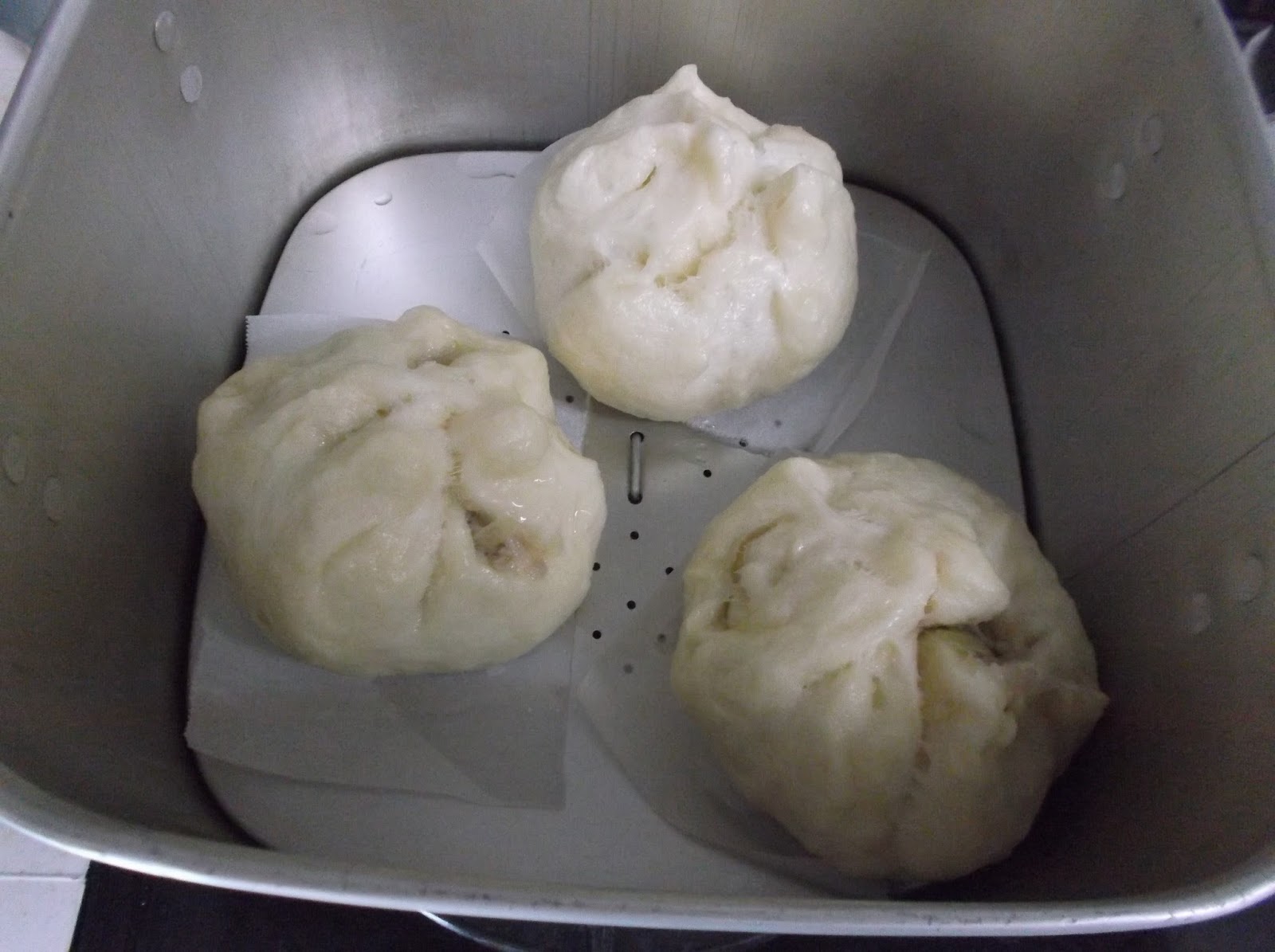
My steamer was not big enough to place six buns at a time, so I steamed the three buns at a time.
家の蒸し器は6個一度に入らないので、3個づつ蒸しました。
Sorry for the ugly shapes. I'm not very good at these things...
醜い形ですみません。こういうのはあまり得意ではないので...。 
 
I had one immediately. The filling was very lightly seasoned, so I poured some soy sauce. The dough tasted very good.
すぐに一個食べました。具は薄味だったので、しょう油を少しかけました。生地はとても美味しかったです。 

Ume Jam 2013/梅ジャム、2013年

The other day, I got a box (approx. 7.8 kg) of ao (lit. blue, i.e., unripe) ume from my father, who lives in Chiba. I used 2.0 kg of them to make ume jam, basically following this recipe. This time, I soaked the ume in cold water for five or six hours, with several changes of water, to remove some of the bitterness. I wanted to see if the stones were responsible for the bitterness of the ume jam that I made last year.
先日、千葉に住む父から青梅(あおうめ)を一箱(約7.8 kg)もらいました。そのうち2.0 kgを使って梅ジャムを作りました。基本的にこのレシピを使いました。今回は、梅を冷水に5、6時間、水を数回替えながら漬けて、苦みを少し取りました。去年作った梅ジャムの苦みは種のせいなのかを調べたいと思いました。
 
I brought 2 kg ume to a boil, turned off the heat soon, and let them cool with a lid on. Then, I drained. 
梅を2 kg沸騰させ、すぐに火を止めて、ふたをして冷ましてから、水を切りました。
I first used my bare hands to separating the stones from flesh, but I soon became tired of the job. I put the ume in a pot, added sugar, and started to simmer. While so doing, I separated the stones using the bamboo spatula and a small spoon with a long handle.
I added about 600 g sugar to this pot.
最初は素手(すで)で種と実を分けていたのですが、すぐに飽きてしまったので、梅を鍋に入れ、砂糖を入れ、煮始めました。その間、竹べらと柄の長い小さなスプーンを使って、種を分けました。
この鍋には砂糖を約600 g入れました。
I added about 300 g sugar to this pot.
この鍋には砂糖を約300 g入れました。 
Left: Stone-less ume jam
Right: Ume jam with stones
左: 種なしの梅ジャム
右: 種ありの梅ジャム  
Both were equally bitter, but were not so bitter as that that I made last year. I think I made it this year!
どちらも同じくらい苦かったですが、去年作ったのと比べると苦みは少ないです。今年は成功したみたいです!
 
I also made ume syrup. It will take about a week.
梅シロップも作りました。一週間くらいかかります。