September 6, 2016

Kuri Kuri Bozu vs. Kuri Cutter/栗くり坊主と栗カッター

I keep receiving boxes of grapes from my generous father, who lives in Chiba prefecture.
千葉に住む父から、ブドウをもらい続けています。 
Shown above is a variety called Kyoho (called the King of Grapes in Japan).
これは、巨峰(日本ではブドウの王様と呼ばれる)という品種です。


I have also received boxes of chestnuts from him.
また、栗ももらっています。


I simmered small and medium sized ones in a pot for 30 minutes.
小さいのと中くらいのは鍋で30分煮ました。 
Only the large sized ones should be mixed with mochi rice to make "kuri okowa" (mochi rice cooked with chestnuts)!
大きいのだけ、もち米と混ぜて、栗おこわを作ります! 
I guess I should refrain from talking about my kuri okowa, because I have talked about it so many times before.
私が作る栗おこわについては、これまで何回も話しているので、控えようと思います。


Instead, let me talk about the "Kuri Cutter", which I bought last year from the "recycle shop" (secondhand store).
代わりに、去年リサイクルショップで買った「栗カッター」について話します。


Right: Kuri Cutter
Left: Kuri Kuri Bozu
右:栗カッター
左:栗くり坊主
As you can easily imagine, kuri means chestnut.  Kuri Cutter is a product of Kai Corporation, while Kuri Kuri Bozu is a product of SUWADA, located in Sanjo City, Niigata, which is very famous for their nippers-type nail clippers.
ご想像通り、クリとはchestnutのことです。栗カッターは貝印(かいじるし)の製品、栗くり坊主は、新潟県三条市にある諏訪田製作所の製品です。諏訪田はニッパータイプの爪切りでとても有名です。


The "reference price" for the DH-2234 is 1,620 yen. There are other models, DG-2002 and DH-7248, whose reference prices are also 1,620 yen, according to Amazon. I'm not 100% sure, but the DH-7248 is probably the newest model.
DH-2234の「参考価格」は1,620円です。他のモデルもあり(DG-2002、DH-7248)、アマゾンによれば、それらの参考価格も1,620円です。100%確かではないですが、たぶんDH-7248が最新モデルです。


I got mine (DH-2234) for 480 yen at the "recycle shop".
私は「リサイクルショップ」で480円で買いました(DH-2234)。 
 
I found my new Kuri Cutter very easy to use, because it was light (68 g) and the blade was very sharp.
私の新しい栗カッターは、軽くて(68 g)、刃は鋭いので、とても使いやすいと思いました。
 
 
Even so, it took me more than 30 minutes to peel the 31 large chestnuts.
それでも、大きく栗の皮をむくのに30分以上かかりました。

On the other hand, Kuri Kuri Bozu is available in three models:
1. Kuri Kuri Bozu (shown in the fourth photo above)
Weight: Approx. 130 g
Reference price: 2,700 yen (probably)
Blade: Top-class cutlery steel
Replacement blade attached.
2. Shin-Gata (New Type) Kuri Kuri Kuri Bozu
Weight: Approx. 140 g
Renferece price: 2,700 yen
Blade: Top-class cutlery steel
Replacement blade attached.
3. Kuri Kuri Bozu II
Weight: Approx. 60 g
Reference price: 2,700 yen
Blade: Stainless cultry steel

You can view a photo of each model from here.

一方、栗くり坊主には3タイプあります。
1. 栗くり坊主(上の4番目の写真)
重さ: 約130 g
参考価格: 2,700円(多分)。
刃: 最高級刃物鋼
替え刃付き。
2. 新型栗くり坊主、約140 g、参考価格2,700円。
重さ: 約140 g
参考価格: 2,700円
刃: 最高級刃物鋼
替え刃付き。
3. 栗くり坊主II
重さ: 約60 g
参考価格: 2,700円
刃: ステンレス刃物鋼
ここからそれぞれのタイプの写真が見れます。

Edited to add some photos:
Left: 2.5 go mochi rice
Right: 1 go regular rice (uruchi mai in Japanese)
写真を追加:
左: もち米2.5合
右: 粳米(うるちまい)1合
1 go is equivalent to 180 ml.
1合は180 mlです。

I personally don't like the texture of mochi-rice-only kuri okowa, so I add some regular rice. I have found that the 2.5:1 ratio is just right for me.
もち米だけの栗おこわの食感は個人的に好きではないので、粳米を少し足します。2.5:1の割合が私にはちょうどいいです。

Add water up to the level for 3.5 go of rice.
水を3.5合のレベルまで足します。 
Add 1 tbsp sake and 1 tsp salt.
お酒を大さじ1、塩を小さじ1足します。

Finally, add 31 peeled chestnuts.
最後に皮をむいた栗を31個入れます。 
An IH rice cooker is capable of making perfect kuri okowa.
IH炊飯器は、完璧な栗おこわを作ってくれます。 
In days of old, a steamer was commonly used.
昔は、蒸し器が一般的に使われていました。

August 31, 2016

Nagaoka's Italian Made in a Simple Way/簡単な方法で作った長岡のイタリアン

In Nagaoka city, Niigata prefecture, there is a thing called "Italian". It's essentially yakisoba (fried noodles) with meat source poured over it.
新潟県の長岡市には、「イタリアン」というものがあります。基本的には、焼きそばにミートソースをかけたものです。

I have posted a photo of a fast food version of it here (fourth photo).
I have also posted photos of a home-made version, made from a store-bought pack here.
ファーストフード店のイタリアンの写真をここに載せました(4番目の写真)。
また、市販のパックで作った手作りのイタリアンの写真をここに載せました。

For lunch today, I have made my first attempt to make it at home, using spaghetti.
First, I needed to turn spaghetti into ramen noodles, using my recipe.
今日の昼ご飯には、スパゲティを使って家で作ることに初めて挑戦しました。
まず、私のこのレシピでスパゲティをラーメンの麺に変えました。
 
I was a bit worried because the liquid was not very yellowish.
液があまり黄色ぽっくないのでちょっと心配しました。
I transferred the contents (spaghetti and water) of the container to a frying pan. I thought that I could turn the spaghetti into ramen noodles simply by heating.
容器の中身(スパゲティと水)をフライパンに移しました。単に加熱すれば、スパゲティをラーメンの麺に変えられると思いました。 
I was wrong. Within one minutes after the start of heating, the liquid turned gluey.
間違っていました。1分もたたぬうちに液は糊状になってしまいました。 
I had add some hot water from the thermos to boil the spaghetti.
魔法瓶にお湯を少し足して、スパゲティを茹でました。 
I then rinsed it and drained.
水洗いして、水を切りました。 
I was planning to use chuunou sauce (a type of Worcestershire sauce), but luckily, I found leftover yakisoba sauce in the fridge.
中濃ソースを使おうと思っていたのですが、運よく、冷蔵庫に焼きそばソースの残りがありました。 
I sprinkled it over the noodles,
麺に振りかけて、  
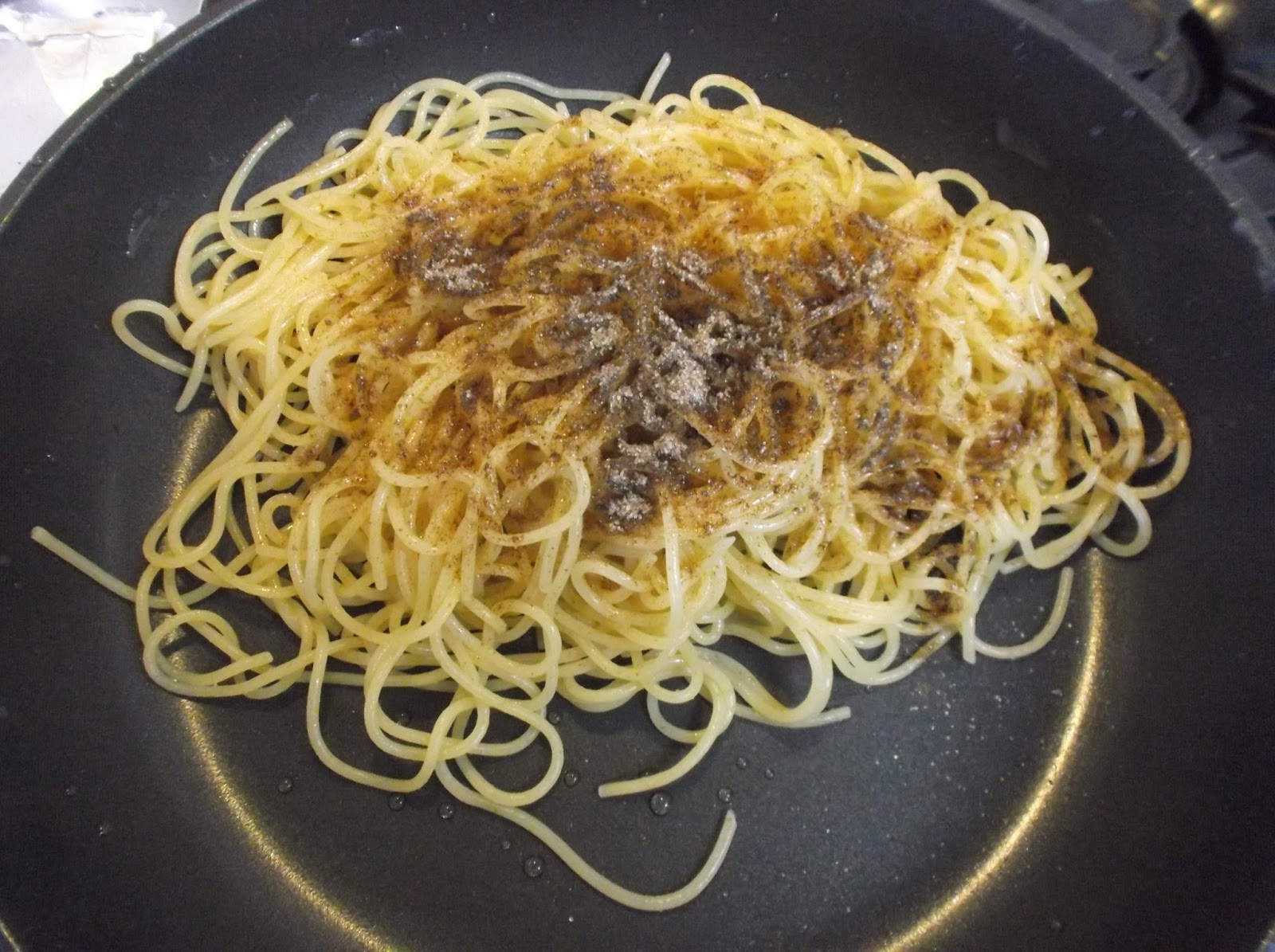
mixed, and heated for some time.
まぜて、しばらく加熱しました。
The noodles were already very tasty, even without meat sauce.
麺は、ミートソースなしでも、すでに美味しかったです。

I transferred the noodles to a plate,
麺をお皿に移し、
poured some store-bought meat sauce.
市販のミートソースをかけました。 
Because the meat sauce was fridge-cold and the noodles needed some additional heating, I wrapped the plat with plastic wrap and microwaved it for 1 minute.
ミートソースは冷蔵庫に入れてあったし、麺ももう少し加熱が必要だったので、ラップをして、電子レンジで1分加熱しました。 
Voila!
できました! 

Very tasty indeed!
本当に美味しかったです!

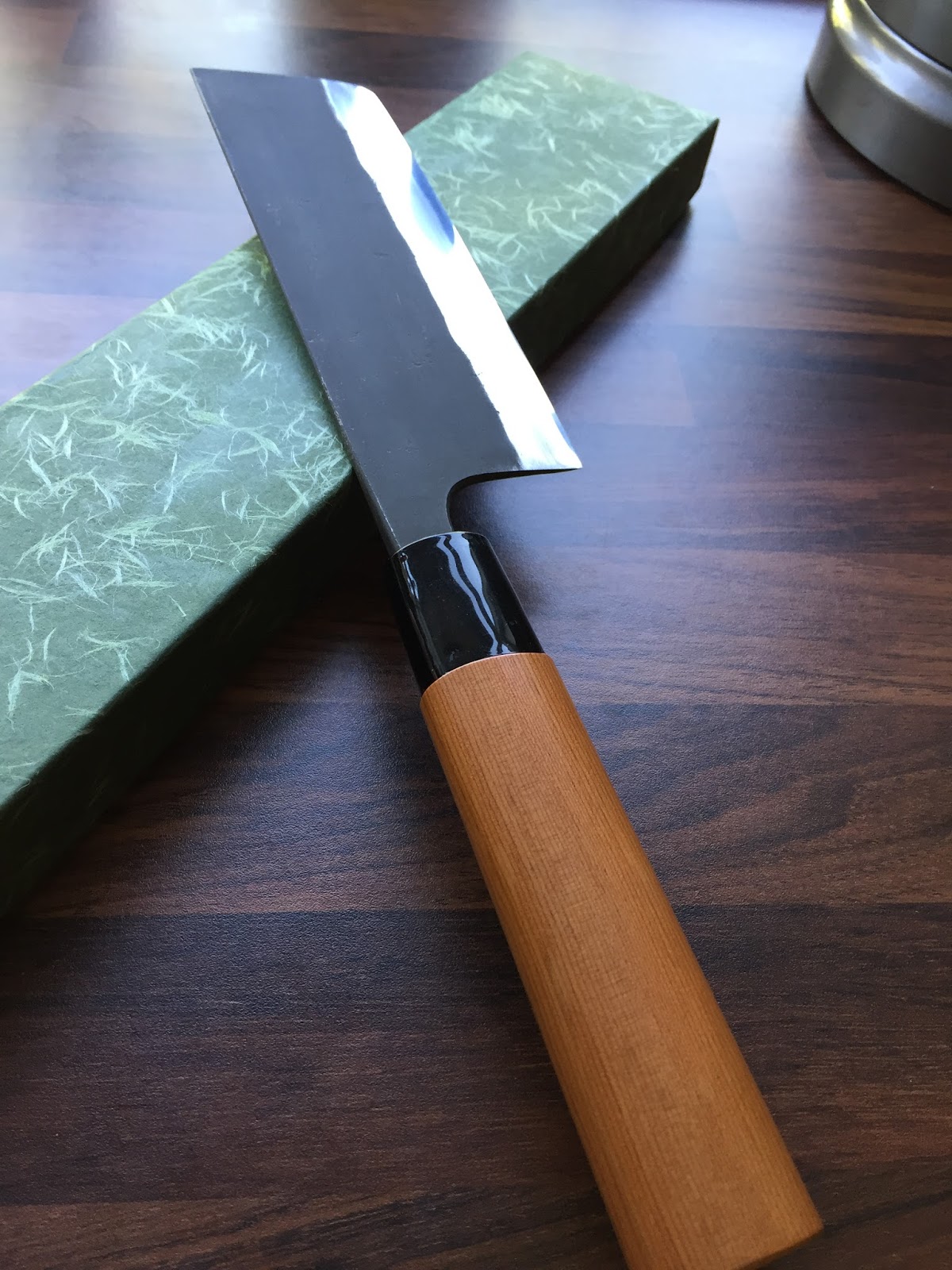
Shigefusa Kuro-Uchi (Black-Finish) Nakiri, 150 mm/重房黒打菜切り、150 mm

I have received these photos from the owner of a Shigefusa kuro-uchi nakiri with a blade length of 150 mm, who recently bought it from Yoshizawa Riko through me.
重房黒打菜切り(刃渡り150mm)の所有者から、次の写真を頂きました。最近、吉沢利工から私を介して購入したものです。

Owner's comment: The knife has a great balance in hand, it's more blade heavy and the balance point is about 4.5cm from the top of the ferrule.
所有者のコメント:手にしたバランスがいい。刃のほうが重く、平衡点は、口金の上部から4.5cmあたりのところ。


Owner's comment: I love the thickness of the tang and how quickly it tapers off towards the tip of the knife. I have not seen this type of distal taper on any other knife.
所有者のコメント: 中子(なかご)の厚みがいい。また、切っ先に向かって急速に細くなっているのもいい。このようなテーパリングは他の包丁では見たことがない。


Owner's comment: even though it is a Kurouchi finish, the edge of the blade is mirror polished.
所有者のコメント:黒打ち仕上げだが、刃先は鏡面研磨されている。

Owner comment: All in all, it's wonderfully brilliant
所有者のコメント:驚くほどに素晴らしい。


The owner is honest enough to point out "one not so positive point" about the knife.
所有者は正直に、この包丁の「あまり良くない点」を指摘してくれました。

Owner's comment: The knife has a tiny chip on the ferrule...
所有者のコメント: 口金に小さな傷がある

And, another point:
またもう一点:
Owner's comment: the ferrule and the handle are not 'flush' together,
所有者のコメント: 口金と柄が同一平面でない

Finally,
最後に、

Owner’s comment: Obviously the positives by far outweight everything else,
所有者のコメント:いうまでもなく、いい点のほうが他の点を上回る。

August 22, 2016

Making Temaki Zushi from Leftover Rice/残りご飯で手巻き寿司を作る

Today, I decided to make temaki zushi (hand-rolled sushi) for supper tonight, partly because I had a considerable amount of leftover rice in the freezer and partly because I could get a large number of aojizo (green perilla) leaves from the vegetable garden around the house.
今日は夕飯に手巻き寿司を作ることにしました。冷蔵庫に残りご飯がかなりあったのと、家の周りの菜園から多くの青じそが採れるからです。

Leftovers in the rice cooker:
炊飯器の中の残り:
 Leftovers in the freezer:
冷凍庫の中の残り:
I first microwaved the leftover rice until very hot.
まずは残りご飯をとても熱くなるまで電子レンジで加熱しました。
 
Then, in a container, I combined sugar, salt, and
次に、容器に砂糖と塩と
vinegar.
お酢を合わせました。 
I added the mixture to the hot rice.
合わせたものを熱いご飯に混ぜました。 

I mixed well in such a way to separate the rice into individual grains.
ご飯が一粒づつに分かれるようよく混ぜました。 
Then, I used a fan to cool the rice to hitohada (human skin temperature).
次に団扇(うちわ)を使って、人肌まで冷ましました。 
 
I got these great tomatoes from a friend!
お友達からこんなにすごいトマトをもらいました! 
My son has come home from his apartment in Tokyo, and he loves tomatoes. A great treat for my son!
息子は東京のアパートから帰っていて、トマトが大好きです。息子にはすごいご馳走になりました。

I had bought these three types of alcohol (two local Japanese sake and one shochu) for my son, who turned twenty this April. He now likes alcohol very much.
私は、息子のためにお酒を三種類買っておきました(地酒を二種類と焼酎を一種類)。息子は今年の4月で二十歳になり、今ではお酒が大好きです。 
I made atsuyaki tamago (thick rolled omelet) from five large eggs.
Lの卵5個で厚焼き玉子を作りました。 
 

I can get these beautiful aojiso from the vegetable garden.
菜園からこんなきれいな青じそが採れます。 
I microwaved the nori (laver) for a total of 10 + 10 + 10 = 30 seconds until crisp.
海苔はパリッとするまで電子レンジで全部で10 + 10 10 = 30秒加熱しました。
Wasabi tube, store-bought ika geso (squid tentacle) salad, and canned tuna
チューブ入りのわさび、市販のイカゲソサラダ、ツナ缶  
My absolute favorite:
私が一番好きなヤツ: 
Canned tuna.
ツナ缶。

Atsuyaki tamago:
厚焼き玉子: 
Ika geso
イカゲソ
 Aojiso + fake crabmeat + umeboshi
青じそ+カニカマ+梅干し
This combination is heavenly!
この組み合わせは最高です。

Such simple sushi can sometimes be much, much better than expensive sushi.
こんなシンプルな寿司が、高価な寿司よりずっと美味しい時があります。

Forgot to mention that the soup was maitake miso soup (no photo).
言い忘れましたが、汁はマイタケの味噌汁です(写真なし)。