December 23, 2016

Nozawana Turnip Oyaki/野沢菜の蕪のおやき

As part of supper tonight, we had nozawana turnip oyaki made by my father.
今日の夕飯には、父が作った野沢菜の蕪のおやきを食べました。

My father completed the filling well before 10 o'clock in the morning.
午前10時よりずっと前に父は、中に入れる餡を完成させました。
Nozawana turnip simmered with miso and sugar.
味噌と砂糖と一緒に似た野沢菜の蕪です。

And, he completed the oyaki around 3 o'clock in the afternoon.
そして、午後3時ごろにはおやきを完成させました。

My father said they turned out messy...
父は、めちゃくちゃになっちゃたと言ってました。
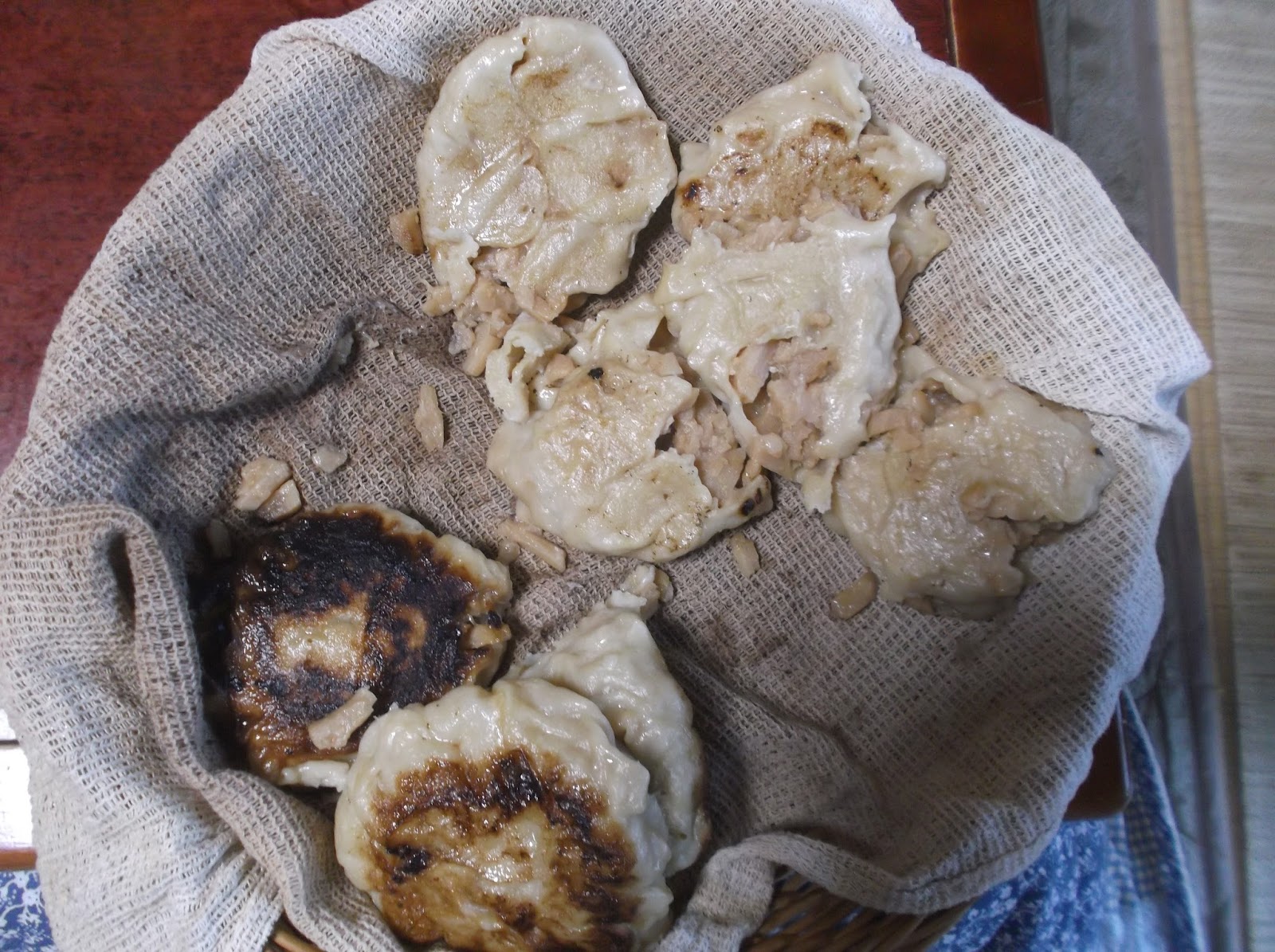
Here are some passable ones.
まあまあ良くできたのもあります。
They may look gross, but actually taste quite good.
気持ち悪いかも知れませんが、とても美味しいです。
He used to be able to make much better looking ones when he was younger.
若い頃は、もっと見栄えのいいのを作れました。

Note: The term oyaki has become quite popular these days, but the locals including my father tend to use the term yakimochi instead. The former sounds politer than the latter.
注: おやきという言葉がこの頃は一般的になりましたが、父を含め、地元の人たちは、やきもちという言葉を使う傾向があります。前者のほうが後者より丁寧に聞こえます。

Nozawana Kabu (Turnip)/野沢菜の蕪(かぶ)

Nozawana is usually considered a leaf vegetable, but its kabu (lit. turnip) is edible as well.
野沢菜は通常、葉野菜と考えられていますが、その蕪(かぶ)も食べられます。
 
Here is a photo of small nozawana kabu. My father had already cut bigger ones when I had the chance to take this photo.
小さな野沢菜の蕪の写真です。この写真を撮る時には、父が大きい蕪はすでに切ってしまいました。
The turnips can be pickled, but my father likes to make oyaki with them.
蕪は漬けることもできますが、父はこれで「おやき」を作るのが好きです。
I hope to be able to have the oyaki made by my father for supper today.
今日の夕飯に、父が作ったおやきを食べられるといいのですが。

December 21, 2016

Winter Solstice This Year/今年の冬至

The winter solstice falls on today, 21st December, this year. As requested by my father, I collected some yuzu from the tree in the yard around the house.
今年は、冬至は今日、12/21です。父に頼まれて、家の周りにある木から柚子をいくつか採りました。
 

Watch out for the thorns!
とげには注意しないと!
 I got more than 30 in no time.
すぐに30個以上取れました。

Store-bought kabocha:
市販のかぼちゃ
It's not that my father hasn't grown kabocha this year but that he is so generous that he has given all of his kabocha to relatives (including my family), leaving none for himself.
今年はかぼちゃを育てなかったわけではなく、太っ腹なので、かぼちゃを全部親戚(我が家を含む)にあげてしまって、一つも残っていないのです。  
Put them in a pot, and add water enough to barely cover them.
鍋に入れて、ひたひたになるよう水を入れます。
Bring to a boil, and add some sugar (1 tsp in the photo).
沸騰させ、砂糖を少し(写真では大さじ1)。
Place an otoshi buta (drop lid) or something similar (two paper towels in the photo).
落としぶたなど(写真ではキッチンペーパー2枚)をします。
By the way, I've been struggling with these and other knives, none of them are sharp enough! Well, that's another story.
ところで、このような包丁と格闘しています。どれも鋭さが足りません。それはまた別の話ですが。
Simmer for 5 minutes, and add some soy sauce.
5分煮て、しょう油を入れます。
Simmer for another 2 minutes or so.
さらに2分程煮ます。
We are going to have simmered kabocha as part of supper tonight, and put four or five of the yuzu shown above in the bathtub to take a "yuzu yu" (yuzu bath)!
今日の夕食にはかぼちゃの煮物を食べ、柚子を4,5個浴槽に入れて、柚子湯に入ります!

December 20, 2016

Shoyu (Soy Sauce), Miso, and Shio (Salt) Ramen/しょう油、みそ、塩ラーメン

Just wanted to share some photos of the ramen we had for supper yesterday.
昨日の夕飯に食べたラーメンの写真です。
 
Box containing 6 servings of semi-fresh ramen, given to my parents as an oseibo (year-end gift):
両親がお歳暮としてもらった半生ラーメンが6食入った箱:

Three flavors, shoyu (soy sauce), miso, and shio (salt).
味は三種類(しょう油、味噌、塩)。

Chijire men (wavy noodles. Sorry, I forgot to take a photo before boiling.
縮れ麺です。ゆでる前に写真を撮るのを忘れました。

I didn't have the time to make decent ramen. Stir-fried cabbage and ham for topping.
まともなラーメンを作る時間はありませんでした。トッピングはキャベツとハムを炒めたもんです。
From left to right: Miso, shoyu, and shio
左から: 味噌、醤油、塩
I selected the shoyu flavored broth.
私は醤油味を選びました。

December 19, 2016

Fuyu Gaki/富有柿

Just wanted to share some photos of fuyu gaki, probably the most popular variety of ama gaki (sweet persimmon) at least in the Kanto area (including Tokyo).
富有柿の写真を少し載せます。少なくとも関東地方(東京を含む)では最も一般的な甘柿だと思います。
Sweet (but less sweet than sawashi gaki (astringency-removed persimmons) and has seeds in it.
甘く(といっても、さわし柿よりは甘くない)、種があります。
I've been familiar with this variety since childhood. I liked it when I lived in Tokyo, but now, I like sawashi gaki a lot more.
この品種は小さい頃から知っていて、東京にいる頃は好きでしたが、今ではさわし柿のほうがずっと好きです。

December 18, 2016

Ace, Old But Not Senile/エースは年は取ってるけどボケてません

I really, really, really, have to apologize to Ace for having thought he has gone senile. Today, I have realized that Ace can walk and RUN!!!
エースには、ボケたと思っていたことをホントにホントにホントに謝らないといけません。今日、エースは歩けるし、走れることも分かりました!


At last, he started to run!
最後には、走り始めました。


Nikomi Udon (Udon Stew?)/煮込みうどん

Nikomi udon is like a nabe (one-pot dish) in that you put udon and other ingredients in the same pot. For supper tonight, I made soy sauce-flavored nikomi udon.
煮込みうどんとは、鍋物のように、うどんと他の具材を同じ鍋に入れます。今日の夕飯には、しょうゆ味の煮込みうどんを作りました。

In a pot, put 1,200 ml water, 2 tsp instant dashi, daikon, carrot, Chinese cabbage, and naga negi. I usually add 100 ml soy sauce and 100 ml mirin, but I reduced the amount of mirin to 50 ml because my father hates sweet broth. You can replace soy sauce with miso and leave out mirin to make miso-flavored nikomi udon.
鍋に、水1,200 ml、出汁の素小さじ2、大根、人参、白菜、長ネギを入れます。いつもはしょう油を100 ml、みりんを100 ml入れますが、甘い汁を嫌う父のため、みりんの量を50 mlに減らしました。しょう油を味噌に変え、みりんを省けば、味噌味の煮込みうどんを作れます。

I wasn't sure if I should add pork or not because my parents are not big fans of meat. I decided to add three abura age instead.
両親はあまり肉が好きではないので、豚肉を入れるかどうしようかと思いましたが、代わりに油揚げを入れることにしました。
All the ingredients will be cooked in 10 minutes or so.
具材はすべて10分ほどで火が通ります。
My job is facilitated with the use of frozen udon. Otherwise, I have to boil dried udon in a separate pot. Alternatively, you may choose to boil dried udon in the same pot if you so prefer.
冷凍うどんを使うと、楽(らく)になります。でないと、別の鍋で乾燥うどんを茹でる必要があります。または、同じ鍋で乾燥うどんを茹でるほうがいい人は、そうしてください。
This particular product is a type of udon called kishimen (flat noodles).
この製品は、きしめんというタイプのうどんです(平たい麺)。

I put two blocks. My mother was to have one of the oyaki I previously talked about.
2つ入れました。母は、以前話した「おやき」を一つ食べることになっていました。
Nikomi udon is completed within 2 minutes.
2分もしないで、煮込みうどんが完成です。