June 3, 2017

Making Ume Syrup and Ume Jam/梅シロップと梅ジャムを作る

Today, my father and I picked up ao (lit. blue, unripe) ume from the two Nanko ume trees in my father's farmland. He says the ume trees are at least 15 years old. Nanko is the most popular variety of ume in Japan.
今日は、父とともに、父の畑にある二本の南高梅の木から青梅を採りました。南高は、日本で一番人気のある梅の品種です。
 

To make ume syrup and ume jam, I used this recipe, which I created last year.
梅シロップと梅ジャムを作るのに、去年作成したこのレシピを使いました。

10 kg ao ume
青梅10 kg

It took me more than one hour and a half to remove the heta (calyx) from each and every ume.
梅一つ一つ、へたを取るのに1時間半以上かかりました。

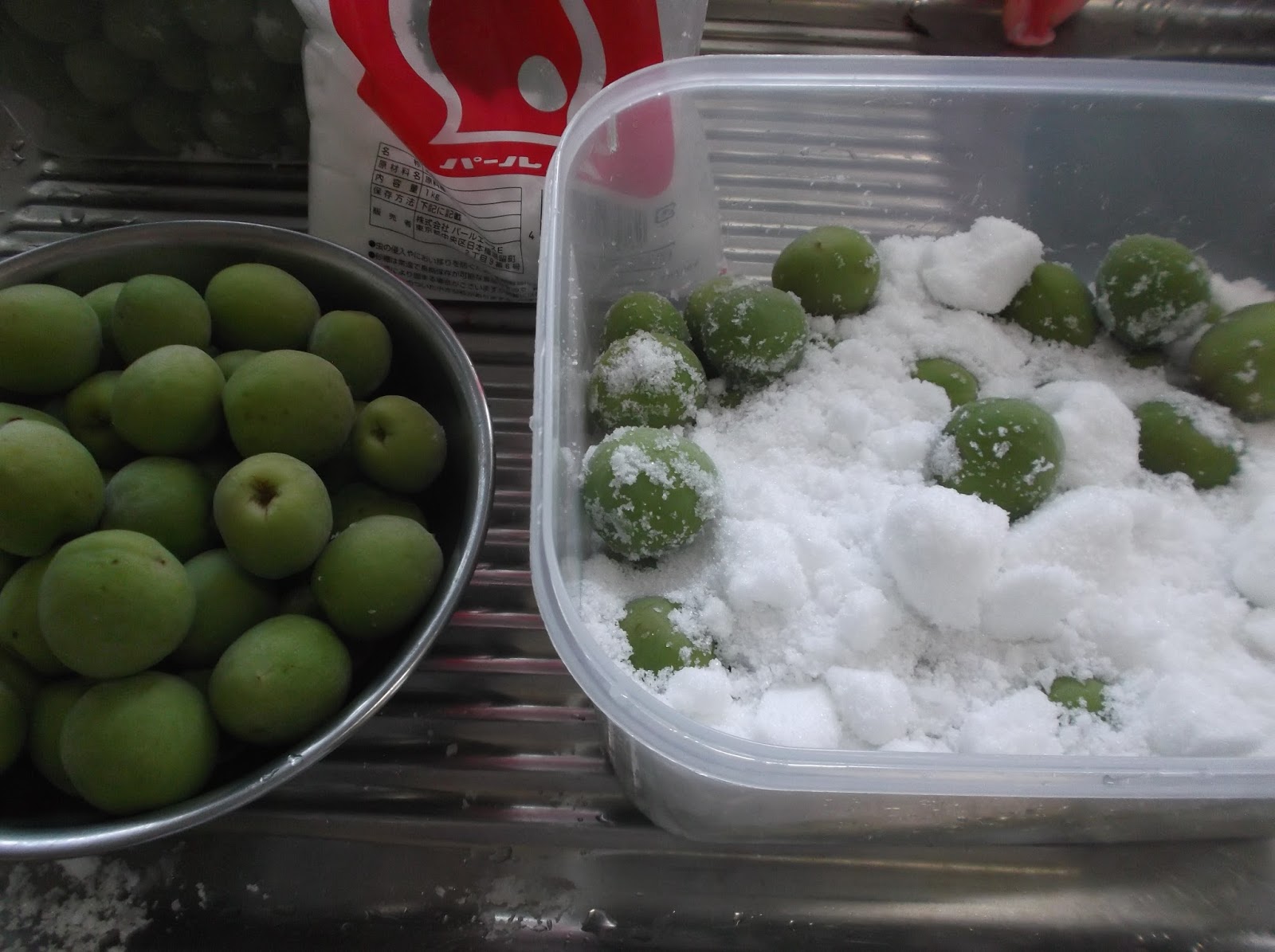
Each of the 5-liter Tupperware container contains 2.5 kg ume.
5リットルのタッパー容器にはそれぞれ、梅が2.5 kg入っています。
5 kg sugar (cheap shiro zato, also called johaku to):
砂糖(安い白砂糖(上白糖とも言う)5 kg:
First put half the ume in the container, add half the sugar,
まず、容器に梅を半分入れ、砂糖を半分入れ、
add the other half ume, and add the other half sugar.
残りの梅を入れ、残りの砂糖を入れます。
Put the lid on the container and shake the container slightly.
容器にふたをして、少し容器を振ります。

To be continued.
続く。

Edited to add on July 6:
6/6追記:

On the evening of July 5:
6/5の夕方:
On the morning of July 6:
6/6の朝:
I have shaken each container for more than ten times in total so far.
今まで、10回以上も、各容器を振ってきました。

Around noon, I came up with another idea: Remove the lid and stir with a large spoon.
昼頃、別のアイディアを思いつきました。ふたを取って、大きなスプーンで混ぜることです。

I think this is much better than shaking the whole container.
容器全体を振るよりずっといいと思います。

I tasted the syrup in each container. I found it was not sour enough yet.
各容器のシロップを味見すると、まだ酸っぱさが足りませんでした。

To be continued.
続く。

Edited to add on June 9:
6/9追記:

Ume on June 8:
6/8の梅:

I tasted the syrup, and found it was now sour!
シロップを味見すると、今度は、酸っぱかったです!

The ume in one of the containers are slightly bubbling. Maybe a sign of fermentation.
一つの容器の梅が少し泡立っています。発酵の兆候かも。
I decided to separate the syrup from the ume the next day (June 9).
シロップと梅を翌日(6/9)に分けることにしました。

Edited to add on June 10:
6/10追記:

I was unable to separate the syrup from the ume on June 9.
6/9にはシロップと梅を分けることができませんでした。

On July 10, I thought I had to do this because the ume showed clear signs of fermentation.
6/10、梅が発酵している確かな兆候があるので、やらなければ、と思いました。 
The ume are bubbling.
泡立っています。
I separate the syrup from the ume, using a colander. I didn't bother to strain the syrup. Last time when I tried to strain it using a paper towel, I failed because the syrup would not pass through the paper towel due to tiny bubbles.
ザルを使って、シロップと梅を分けました。わざわざシロップを濾すのは止めました。前にキッチンペーパーで濾そうとした時、小さな泡のせいでシロップがキッチンペーパーを通らず、失敗したことがあります。
I first microwaved the ume in each container for 6 minutes.
最初に、各容器の梅を電子レンジで6分加熱しました。
I put one half the ume in the container (one-fourth the total ume) in an enameled pot, added 250 g of sugar and 100 ml of water. Heat over medium heat until a boil, stirring with a wooden spatula occasionally. Turn the heat to low, stir constantly for 2-3 minutes until the ume turns into a paste.
容器の梅の半分(全部の梅の1/4)をホーロー鍋に入れ、砂糖を250 g、水を100 ml入れました。沸騰するまでは中火で、時折、木製のヘラで混ぜます。それから、弱火にして、2、3分、梅がペースト状になるまで、ヘラでかき混ぜ続けます。
 
Remove the seeds, if you want to.
種を取りたかったら、取ってください。

The next step is sterilize the syrup by heating in an attempt to stop fermentation.
次のステップは、発酵を止めるため、シロップを加熱殺菌することです。
Heat for several minutes at around 80 degrees C. Never bring to a boil.
80度程度で数分加熱します。沸騰はさせないでください。

From 10 kg of ume and 5 + 1 = 6 kg sugar, I made more than 8 liters of ume syrup and more than 6 kg of ume jam.
梅10 kg、砂糖5 + 1 = 6 kgから、梅シロップが8リットル以上、梅ジャムが6キロ以上できました。


May 22, 2017

Preparing Fuki (Butterbur Leaf Stalks)/ふきの下ごしらえ

My father picked up some fuki (butterbur leaf stalks).
父が、ふきを取ってきました。
Don't confuse fuki with fukinoto (butterbur flower stalks).
ふき(ふきの葉柄)とふきのとう(ふきの花茎)を混同しないでください。

First sprinkle some salt over them, and roll them on the cooking board.
まず、ふきに塩を振り、まな板で転がします。
Technique known as ita zuri (lit. board rubbing).
板ずりという技法です。

Then put them in a pot of boiling water and boil for 2 minutes or so.
次に沸騰水に入れ、2分程度茹でます。

Drain and soak in cold water.
お湯を切り、冷水に漬けます。
The next step is tiring and time-consuming: peeling.
次は、皮をむくという、疲れるし、手間のかかる作業です。

My parents did most of the work for me. They complained that the fuki were tough. I guess I should have boiled them much longer (10 minutes or more).
両親がこの作業の大半をやってくれました。ふきが固いと言われました。もっと長く(10分以上?)茹でるべきだったかも知れません。

May 20, 2017

Seri Tempura/せりの天ぷら

As I described here in my blog, I planted the roots of store-bought seri in a small patch in the yard around the house late February.
このブログのここで述べたように、2月下旬、家の周りの庭に、市販のせりの根を植えました。
They are now thriving!
すくすく育っています。
As requested by my father, I made seri tempura using some of the seri as part of supper tonight.
父のリクエストで、このせりを少し使って、せりの天ぷらを夕飯に作りました。
First, I separated them into leaves (left) and stems (right).
まず、葉(左)と茎(右)に分けました。
I sprinkled some cake flour over the leaves, and added the egg and water mixture.
葉には薄力粉を振り掛け、卵と水を混ぜたものを入れました。
I added some more flour to adjust the texture of the batter.
薄力粉をもう少し足して、衣の硬さを調整しました。
I separated them into three batches.
3回に分けました。
 
First batch:
一回目:

Then I added the chopped stems to the bowl of the leftover batter.
刻んだ茎を、残りの衣が入ったボールに入れました。
 I put some flour to adjust the texture of the batter.
薄力粉を少し足して衣の硬さを調整しました。


My father and I agreed that the stem tempura was more aromatic and flavorful than the leaf tempura.
父も私も、葉の天ぷらより茎の天ぷらのほうがずっと香りがよく美味しいと思いました。
 
We also had soba (buckwheat noodles).
そばも食べました。